



ARTICLE CONTENTSOn this page 10 sections
Edemede nkọwa: Ịgụ nwa aha
Performance Objectives
By the end of the lesson, students should be able to:
- ịkọwa ihe bụ edemede nkọwa (explain what an expository essay is);
- ịkọwa ihe bụ ịgụ nwa aha (explain what child naming is);
- ikwupụta usoro a na-agbaso n’ime emume ịgụ nwa aha na ngosipụta onye mmadụ bụ (state the steps followed in a child naming ceremony and how it showcases identity);
- ịkọwapụta ụdị aha dị iche iche ndị Igbo na-agụ ụmuaka ha na mpụtara aha ndị a (explain different types of names Igbo people give their children and their meanings);
- ide nkenke edemede nkọwa banyere ịgụ nwa aha na uru ya (write a short expository essay on child naming and its benefits).
Meaning of Expository Essay (Nkọwa Edemede Nkọwa)
An expository essay is a piece of writing that explains, informs, or describes a specific topic in a clear, factual, and detailed manner.
In Igbo language, this type of writing is called “edemede nkọwa.” The primary goal of an expository essay is to provide information and educate the reader about a subject, such as a cultural practice, an object, or an event, without expressing personal opinions or arguments.
Writing essays is a fundamental part of learning. The main ways essay writing helps in studying the Igbo language include:
- It expands vocabulary by encouraging learners to search for and use appropriate Igbo words (ịmụta okwu ọhụrụ).
- It improves grammatical structure and sentence construction in Igbo (ịhazi ahịrịokwu nke ọma).
- It preserves cultural knowledge and historical facts through written records (idebe omenala na akụkọ ihe mere eme na rịkọdụ).
Meaning of Child Naming (Ịgụ Nwa Aha)
Child naming is the traditional or formal act of giving a specific name to a newborn baby.
In Igbo culture, a name is not just a label for identification. It carries deep spiritual, social, and historical significance. The name given to a child often reflects the circumstances of their birth, the family’s experiences, or their belief in God.
The ways child naming showcases identity and origin in Igboland include:
- It identifies the family lineage and ancestral roots of the child (na-egosi agbụrụ na ezinụlọ nwa si pụta).
- It reveals the specific circumstances, day, or season the child was born (na-egosi ọnọdụ ma ọ bụ ụbọchị a mụrụ nwa).
- It connects the child to the Igbo cultural heritage and belief system (na-ejikọta nwa na omenala na nkwenye ndị Igbo).
The Child Naming Ceremony (Emume Ịgụ Nwa Aha)
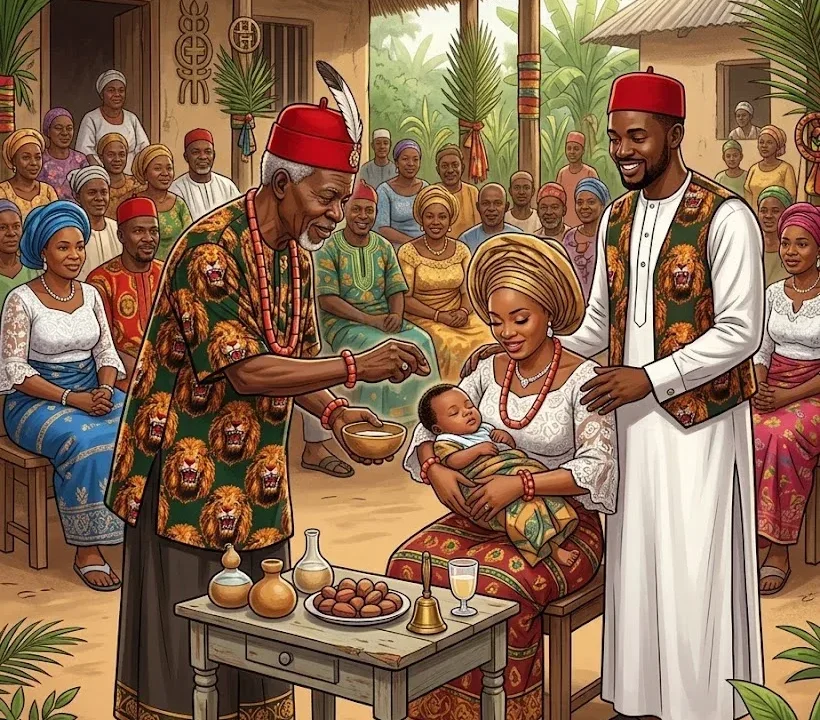
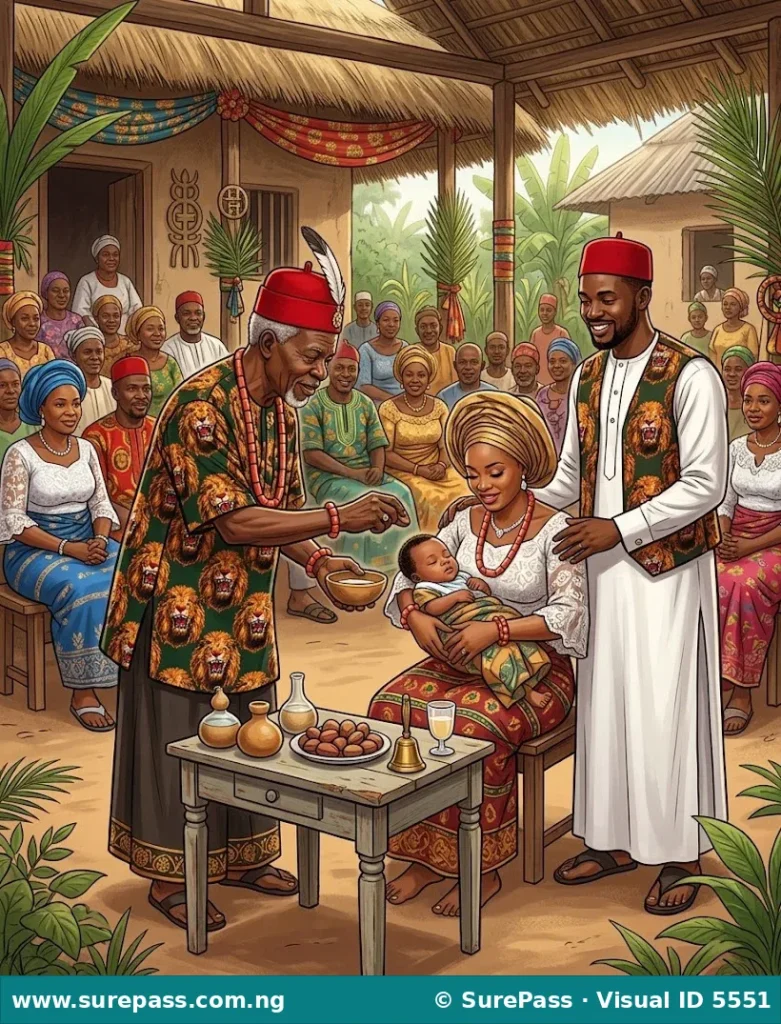
A child naming ceremony is a cultural event where family members, relatives, and community members gather to formally welcome a newborn baby and announce the baby’s names.
Among the Igbo, this ceremony is traditionally performed on the eighth day after the child is born. It is a joyful event that brings families and communities together.
The main reasons for performing the child naming ceremony include:
- To formally welcome the newborn baby into the physical world, the family, and the community (ịnabata nwa ọhụrụ n’obodo).
- To offer prayers and blessings for the child’s long life, good health, and prosperity (ịrịọrọ nwa ngọzi na ahụ ike).
- To strengthen social bonds and unity among family members, friends, and neighbors (ime ka mmekọrịta dị n’etiti ndị ikwu na ibe sie ike).
The traditional procedure for an Igbo child naming ceremony involves specific steps:
- The gathering of family members, elders, and well-wishers at the father’s compound.
- The presentation of traditional items such as kola nut (ọjị), alligator pepper (ose ọjị), water (mmiri), palm oil (mmanụ nri), and honey (mmanụ aṅụ).
- The offering of prayers (igo ọjị na ikpe ekpere) by the family head or elders, using the traditional items to bless the child.
- The formal pronouncement of names by the father, followed by other family members.
- The symbolic tasting of the ceremonial items by the baby, guided by an elder, to symbolize the different experiences of life.
- The sharing of food, drinks, and gifts among the guests.
Types of Igbo Names and Their Meanings (Ụdị Aha Igbo na Mpụtara Ha)
The Igbo people do not give names randomly. Every name has a root meaning and a reason behind it.
The main reasons different names are given to children include:
- To honor the specific Igbo market day on which the child was born (ịsọpụrụ ụbọchị a mụrụ nwa).
- To express gratitude, praise, or submission to God (Chineke/Chukwu) for the gift of the child.
- To reflect the family’s state of mind, hopes, or experiences during the period of pregnancy and birth.
Igbo names can be classified into different categories based on their origins:
- Aha Ụbọchị (Market Day Names): These names are derived from the four traditional market days in the Igbo calendar: Eke, Orie, Afor, and Nkwo.
- Aha Ndị Na-egosi Okpukpe (Theophoric/Religious Names): These names contain the word “Chi” or “Chukwu” (God) and show the parents’ faith.
- Aha Olileanya na Ọnọdụ (Circumstantial and Hope Names): These names describe the family’s situation, expectations, or values.
The table below shows examples of different Igbo names, their categories, and their meanings:
| Aha (Name) | Ụdị Aha (Type of Name) | Mpụtara Aha (Meaning of Name) |
|---|---|---|
| Okonkwo | Aha Ụbọchị (Market Day Name) | A male child born on Nkwo market day. |
| Mgbeke | Aha Ụbọchị (Market Day Name) | A female child born on Eke market day. |
| Chinedu | Aha Okpukpe (Religious Name) | God leads / God guides. |
| Chiamaka | Aha Okpukpe (Religious Name) | God is beautiful / God is good. |
| Ndidi | Aha Olileanya (Hope Name) | Patience. |
| Obianuju | Aha Ọnọdụ (Circumstantial Name) | One who came in the midst of plenty. |
| Nwabugwu | Aha Olileanya (Hope Name) | A child is a source of prestige/honor. |
Benefits of Child Naming (Uru dị n’ịgụ nwa aha)
Naming a child is a vital cultural practice that yields several benefits to the individual, the family, and society.
The key benefits of child naming include:
- Identity (Njirimara): It gives the child a unique identity and distinguishes them from other individuals.
- Cultural Preservation (Ichekwa Omenala): It keeps the rich linguistic and cultural heritage of the Igbo people alive across generations.
- Sense of Belonging (Mmetụta Nwoke/Nwanyị n’Obodo): It integrates the child into the family and community, giving them a sense of belonging.
- Historical Record (Rịkọdụ Akụkọ): It serves as a historical marker of the family’s circumstances and testimony at the time of the child’s birth.
How to Write a Short Expository Essay on Child Naming
Writing an expository essay requires a clear structure consisting of an introduction, body paragraphs, and a conclusion.
The following model essay demonstrates how to write a short expository essay on child naming and its benefits in Igbo, with English translations for study support.
Ịgụ Nwa Aha n’Ala Igbo na Uru Ya (Child Naming in Igboland and Its Benefits)
Mmalite (Introduction):
Ịgụ nwa aha bụ omenala dị mkpa n’ala Igbo. Ọ bụ emume a na-eme iji nye nwa ọhụrụ aha ọ ga-aza na ndụ ya. Ndị Igbo kwenyere na aha nwa na-aza na-emetụta ndụ ya na ebe ọ si pụta. (Child naming is an important tradition in Igboland. It is a ceremony performed to give a newborn baby a name they will answer throughout life. The Igbo believe that the name a child answers affects their life and origin.)
Ahụ Edemede (Body Paragraphs):
A na-eme emume a n’ụbọchị nkeasatọ a mụrụ nwa. Ndị okenye na ndị ezinụlọ na-ezukọ, jiri ọjị, mmiri, na mmanụ nri gọzie nwa ọhụrụ tupu a gụọ ya aha. E nwere ụdị aha dị iche iche dịka aha ụbọchị nwa mụrụ (dịka Okeke ma ọ bụ Okonkwo) na aha na-egosi okpukpe (dịka Chinedu na Ngozichukwu). (This ceremony is performed on the eighth day after the child is born. Elders and family members gather, using kola nut, water, and palm oil to bless the newborn before naming. There are different types of names, such as market day names and religious names.)
Mmechi (Conclusion):
Uru dị n’ịgụ nwa aha hiri nne. Ọ na-enye nwa njirimara, na-echekwa omenala Igbo, ma na-egosipụta ekele n’ebe Chineke nọ. Ịgụ nwa aha bụ ezigbo omenala kwesịrị ka a na-asọpụrụ. (The benefits of child naming are numerous. It gives the child identity, preserves Igbo culture, and expresses gratitude to God. Child naming is a good tradition that deserves to be respected.)
Summary
An expository essay (edemede nkọwa) explains a topic factually. In Igbo culture, child naming (ịgụ nwa aha) is a significant event performed on the eighth day of birth. Names are chosen based on market days, religious beliefs, or family circumstances. This practice provides identity, preserves culture, and fosters community unity.
Evaluation Questions
Answer the following questions to test your understanding:
- Kọwaa ụzọ atọ edemede si enye aka n’ọmụmụ asụsụ Igbo (Explain three ways writing essays helps in studying the Igbo language).
- Kọwaa ụzọ atọ ịgụ nwa aha si ezipụta onye mmadụ bụ na ebe mmadụ si (Explain three ways child naming showcases identity and origin).
- Kọwaa ihe atọ kpatara e ji agụ aha dị iche iche n’ala Igbo (Explain three reasons different names are given in Igboland).
- Kọwapụta ihe atọ kpatara e ji eme emume ịgụ nwa aha (Explain three reasons for performing the child naming ceremony).


0 comments
Open the discussion when you need it. Comments stay collapsed until requested so the initial article remains light.