


ARTICLE CONTENTSOn this page 11 sections
Edemede Leta
Performance Objectives
By the end of the lesson, students should be able to:
- ịkọwa akara edemede na ụdị ya dị iche iche;
- ịkọwa leta;
- ịkọwa ụdị leta dị iche iche;
- ikwu etu e si ahazi ụdị leta dị iche iche;
- ịkọwa ndịiche n’etiti leta nkeonye, nkempụnụdị na nke anamachọihe;
- ide ụdị leta dị iche iche;
- ịkọwa etu e si ezipụ leta.
Akara Edemede na Ụdị Ya Dị Iche Iche (Punctuation Marks)
Akara edemede bụ ihe ịrịba ama dị iche iche a na-eji achọ mma ma ọ bụ na-eme ka ihe a gụrụ nwee nghọta doro anya na nkwupụta okwu.
Without punctuation marks, written Igbo sentences would run together, making it difficult for readers to know where a thought ends, where a pause occurs, or when a question is being asked. Punctuation marks guide the flow of written language.
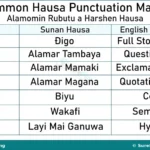
The main types of punctuation marks used in Igbo writing include:
- Kpọm / Rikom-uju (Full Stop – .): This mark is used at the end of a complete statement or sentence. It shows that the thought is finished.
- Rikom / Kọma (Comma – ,): This mark indicates a brief pause within a sentence or separates items in a list.
- Akara Ajụjụ (Question Mark – ?): This mark is placed at the end of a sentence that asks a direct question.
- Akara Mkpu (Exclamation Mark – !): This mark is used to express strong emotions such as surprise, anger, joy, or command.
- Kpọmrikom (Semicolon – ;): This mark is used to link independent clauses that are closely related in thought.
- Kpọm-na-kpọm (Colon – :): This mark is used to introduce a list, an explanation, or a quotation.
Functions and Examples of Three Key Punctuation Marks
To write effectively in Igbo, learners must understand how to apply these marks. Below are three essential punctuation marks, their functions, and examples of their usage:
- Kpọm (Full Stop): It is used to close a declarative sentence. For example: “Chike gara ahịa.” (Chike went to the market.)
- Rikom (Comma): It is used to separate items in a list or to create a pause. For example: “Ada zụrụ ose, nnu, na mmanụ.” (Ada bought pepper, salt, and oil.)
- Akara Ajụjụ (Question Mark): It is used to show that a sentence is a query. For example: “Ebee ka I siri bịa?” (Where did you come from?)
Nkọwa Leta (Definition of a Letter)
Leta bụ ozi a na-ede n’akwụkwọ e zigara mmadụ ma ọ bụ otu nzukọ iji kparịta ụka, kọọ akụkọ, ma ọ bụ rịọ ihe.
Letter writing is a vital tool for human interaction. Even with the rise of modern technology, the structure and principles of letter writing remain highly relevant in personal, academic, and professional fields.
Letter writing contributes to communication and information dissemination in the following ways:
- Idokwa Ozi (Preservation of Information): Letters serve as written evidence or records that can be referred to in the future.
- Izipụ Ozi n’Ebe Dị Anya (Long-Distance Communication): Letters allow people to send detailed messages to individuals or organizations located far away.
- Nkwupụta n’Ụzọ Iwu (Official Documentation): Formal letters provide a structured, legally recognized way to make requests, apply for jobs, or lodge complaints.
Ụdị Leta Dị Iche Iche (Types of Letters)
Letters are categorized based on their purpose, the relationship between the writer and the recipient, and the tone of the language used.
The three main types of letters are:
- Leta Nkeonye (Informal or Personal Letter)
- Leta Mpụnụdị (Semi-Formal Letter)
- Leta Anamachọihe (Formal or Official Letter)
Leta Nkeonye (Informal Letter)
Leta nkeonye bụ leta a na-edegara ndị enyi, ndị mụrụ nwa, ma ọ bụ ndị ikwu na ibe iji kọọ akụkọ ma ọ bụ jụọ maka ọdịmma ha.
The tone of this letter is friendly, relaxed, and conversational. Slang, colloquial Igbo expressions, and personal jokes can be used because the writer shares a close relationship with the recipient.
Leta Mpụnụdị (Semi-Formal Letter)
Leta mpụnụdị bụ leta a na-edegara onye a maara nke ọma mana ọ nọ n’ọkwa dị elu, dịka onye nkuzi, onye isi ụlọakwụkwọ, ma ọ bụ onye agbata obi meworo agadi.
The tone is polite and respectful. While the writer knows the recipient personally, they must maintain a level of decorum and avoid overly casual language.
Leta Anamachọihe (Formal Letter)
Leta anamachọihe bụ leta a na-edegara ndị ọrụ gọọmentị, ndị isi ụlọọrụ, ma ọ bụ ụlọakwụkwọ iji rịọ ọrụ, mkpesa, ma ọ bụ ihe ọzọ gbasara ọrụ.
The tone is strictly professional, direct, and objective. There is no room for personal pleasantries or informal language.
Nhazi Ụdị Leta Dị Iche Iche (Structure of Different Letters)
Each type of letter has a specific layout that must be followed to ensure clarity and correctness.
Structure of Leta Nkeonye (Informal Letter)
An informal letter consists of the following parts:
- Adreesị Onye Dere Leta (Writer’s Address): Written at the top right corner of the page.
- Ụbọchị (Date): Written directly below the address.
- Ekele Mmalite (Salutation): Written on the left side (e.g., Ezigbo Chidi,).
- Ahụ Leta (Body): Divided into paragraphs (introduction, main message, and conclusion).
- Ekele Mmechi (Subscription): Written on the bottom right (e.g., Onye nke gị,).
- Aha Onye Dere Leta (Writer’s Name): Usually just the first name.
Observe the layout diagram of an informal letter below.
Structure of Leta Mpụnụdị (Semi-Formal Letter)
A semi-formal letter is structured similarly to an informal letter but differs in tone and subscription:
- Adreesị na Ụbọchị (Address and Date): Written at the top right corner.
- Ekele Mmalite (Salutation): Respectful (e.g., Ezigbo Onye Nkuzi,).
- Ahụ Leta (Body): Polite, respectful, and focused on the main topic.
- Ekele Mmechi (Subscription): Written on the bottom right (e.g., Onye nke gị n’eziokwu,).
- Aha Zuru Ezu (Full Name): The writer’s first name and surname.
Structure of Leta Anamachọihe (Formal Letter)
A formal letter is highly structured and contains the following parts:
- Adreesị Onye Dere Leta na Ụbọchị (Writer’s Address and Date): Written at the top right corner.
- Adreesị Onye A na-edegara Leta (Recipient’s Address): Written on the left side, below the level of the date.
- Ekele Mmalite (Salutation): Formal (e.g., Ezigbo Onye Isi, or Onye Isi Ọrụ,).
- Isiokwu Leta (Letter Title/Heading): Written in capital letters or underlined, stating the purpose of the letter (e.g., ARỊRỊỌ MAKA ỌRỤ).
- Ahụ Leta (Body): Direct, concise, and professional.
- Ekele Mmechi (Subscription): Written on the bottom right (e.g., Onye nke gị n’ikwesị ntụkwasị obi,).
- Akaebe / Arịrị (Signature): Signed above the writer’s name.
- Aha Zuru Ezu (Full Name): Written in block letters below the signature.
Observe the layout diagram of a formal letter below.
How Letter Layout Helps in Writing Other Essays
Learning the structure and layout of letters helps students develop broader writing skills in the following ways:
- Nhazi Paragraf (Paragraph Organization): It teaches writers how to group thoughts logically into introductions, body paragraphs, and conclusions, which is essential for narrative and argumentative essays.
- Nghọta Ndị Na-agụ Ihe (Audience Awareness): It helps writers understand how to adjust their tone, vocabulary, and style depending on who will read the writing, a skill necessary for all forms of creative and academic writing.
Ndịiche dị n’etiti Leta Nkeonye, nke Mpụnụdị na nke Anamachọihe
The differences between these three types of letters are summarized in the table below:
| Akụkụ Leta (Part of Letter) | Leta Nkeonye (Informal) | Leta Mpụnụdị (Semi-Formal) | Leta Anamachọihe (Formal) |
|---|---|---|---|
| Adreesị (Address) | Otu adreesị (One address – top right) | Otu adreesị (One address – top right) | Adreesị abụọ (Two addresses – top right and left) |
| Isiokwu (Title) | Ọ dịghị (No title) | Ọ dịghị (No title) | Ọ na-enwe isiokwu doro anya (Has a clear title) |
| Asụsụ / Ụda (Language/Tone) | Enyi na enyi, nkịtị (Friendly, casual) | Nkwanye ùgwù, nwayọọ (Polite, respectful) | Nke gọọmentị, nke siri ike (Official, strict) |
| Ekele Mmechi (Subscription) | Onye nke gị (Yours) | Onye nke gị n’eziokwu (Yours sincerely) | Onye nke gị n’ikwesị ntụkwasị obi (Yours faithfully) |
| Akaebe (Signature) | Ọ dịghị mkpa (Not needed) | Ọ dịghị mkpa (Not needed) | Ọ na-enwe akaebe (Requires a signature) |
| Aha (Name) | Aha mbụ naanị (First name only) | Aha zuru ezu (Full name) | Aha zuru ezu (Full name) |
Nka Odide Leta (Letter Writing Models)
Below are sample models of the three types of letters written in Igbo.
1. Ụdị Leta Nkeonye (Informal Letter Model)
This is a letter written to a friend describing a new school.
Community Secondary School,
P.M.B. 1040,
Enugu.
Ọktoba 24, 2023.
Ezigbo Chidi,
Aka m na-ede leta a iji gwa gị gbasara ụlọakwụkwọ ọhụrụ m. Ebe a mara mma nke ukwuu. Anyị nwere nnukwu ọba akwụkwọ na ebe a na-agba bọọlụ.
Ndị nkuzi anyị na-akụzi nke ọma, enwetala m ndị enyi ọhụrụ n’ebe a. Agbanyeghị nke ahụ, m ka na-echeta oge anyị na-egwu egwu n’ụlọakwụkwọ anyị ochie.
Biko deere m leta ozugbo i nwetara nke m iji gwa m otu ebe ahụ gị dị. Ndewo.
Onye nke gị,
Obinna
2. Ụdị Leta Mpụnụdị (Semi-Formal Letter Model)
This is a letter written to a class teacher explaining an absence due to illness.
Community Secondary School,
P.M.B. 1040,
Enugu.
Ọktoba 24, 2023.
Ezigbo Onye Nkuzi,
Ana m ede leta a iji gwa gị ihe kpatara na m agaghị abịa ụlọakwụkwọ taa. Ahụ ọkụ na-esiri m ike kemgbe ụnyaahụ n’anyasị.
Nne m kpọrọ m gaa ụlọọgwụ ebe dọkịta nyere m ọgwụ ma gwa m ka m zuru ike ụbọchị abụọ. M ga-abịa ụlọakwụkwọ ozugbo ahụ m ruru ala.
Biko meere m ebere nabata akwụkwọ arịrịọ m.
Onye nke gị n’eziokwu,
Obinna Okeke
3. Ụdị Leta Anamachọihe (Formal Letter Model)
This is an official letter written to a school principal requesting permission to start an Igbo cultural club.
Community Secondary School,
P.M.B. 1040,
Enugu.
Ọktoba 24, 2023.
Onye Isi Ụlọakwụkwọ,
Community Secondary School,
Enugu.
Ezigbo Onye Isi,
ARỊRỊỌ MAKA ISORIE N’ÒTÙ IGBO CULTURAL CLUB
Ana m ede leta a n’aha ụmụakwụkwọ JSS 1 iji rịọ ikike ka anyị malite òtù ọdịnala Igbo n’ụlọakwụkwọ anyị. Òtù a ga-enyere anyị aka ịmụta asụsụ, egwu, na omenala Igbo nke ọma.
Anyị ahọrọla Onye Nkuzi Igbo ka ọ bụrụ onye ga-ahụ maka òtù a. Anyị ga-enwe nzukọ anyị naanị n’ụbọchị Wednesde ọ bụla ma anyị mechie akwụkwọ.
Anyị na-atụ anya na ị ga-anabata arịrịọ anyị a. Ndewo.
Onye nke gị n’ikwesị ntụkwasị obi,
(Signature)
Obinna Okeke
Etu E Si Ezipụ Leta (How Letters Are Sent)
Once a letter is written, it must be delivered to the recipient. There are different methods of sending letters depending on the urgency, distance, and type of letter.
The three main ways of sending letters are:
- Iji Ụlọ Ọrụ Nzipu Ozi (Post Office): The letter is placed inside an envelope (ọ́bọ́ leta), a postage stamp (stampụ) is pasted on it, and it is dropped into a post box. The postal service then delivers it to the recipient’s address.
- Izipụ ya n’aka (Hand Delivery): The writer or a messenger physically carries the letter and delivers it directly to the recipient or their office. This is common for local formal letters and invitations.
- Izipụ ya n’igwe ịntanet (Electronic Mail / E-mail): Using a computer or mobile phone connected to the internet, a letter can be typed and sent instantly to the recipient’s email address. This is the fastest modern method.
Summary
This unit has covered the definition and types of punctuation marks in Igbo, the definition of a letter, and the three main types of letters: informal, semi-formal, and formal. It also explained the structural differences between these letters, provided writing models, and outlined the methods of sending letters in both traditional and modern ways.
Questions for Evaluation
Answer the following questions based on the lesson:
- Gosi akara edemede atọ dị iche iche na ọrụ ha n’edemede Igbo.
- Dee otu leta nkeonye, otu leta nke mpụnụdị, na otu leta anamachọihe site na iji usoro ziri ezi.
- Kwuo ụzọ atọ edemede leta si enye aka na mgbasa ozi na nkwurịta okwu.
- Kwuo ụzọ abụọ nhazi leta si enye aka n’ide ụdị edemede ndị ọzọ dịka akụkọ ma ọ bụ rụmarụ ụka.
- Kwuo ụzọ atọ e si ezipụ leta site n’oge gboo ruo n’oge ugbu a.
0 comments
Open the discussion when you need it. Comments stay collapsed until requested so the initial article remains light.