


Livestock Feeds, Feed Classes and Nutrient Sources for SS 1
Livestock feeds include roughages and concentrates. Their nutrient content and quality determine how well an animal's diet meets production needs.
Read guide
Teacher/Educational Writer
Royal Alikor is an educator with six years of classroom teaching and three years of elementary school leadership experience and is still teaching. He develops and reviews practical, curriculum-aligned learning materials for Nigerian schools and teachers.
Lessons ◉ 0 views
Livestock feeds include roughages and concentrates. Their nutrient content and quality determine how well an animal's diet meets production needs.
Read guide→
Lessons ◉ 0 views
Feed formulation combines ingredients to meet an animal's nutrient needs at manageable cost. Rations depend on species, age and purpose of production.
Read guide→
Lessons ◉ 0 views
Livestock breeds differ in size, colour, hardiness and production traits. Recognising breed characteristics helps farmers match animals to local needs.
Read guide→
Lessons ◉ 0 views
Livestock are domesticated animals raised for meat, milk, eggs or other products. Feed costs, diseases and housing can affect farm productivity.
Read guide→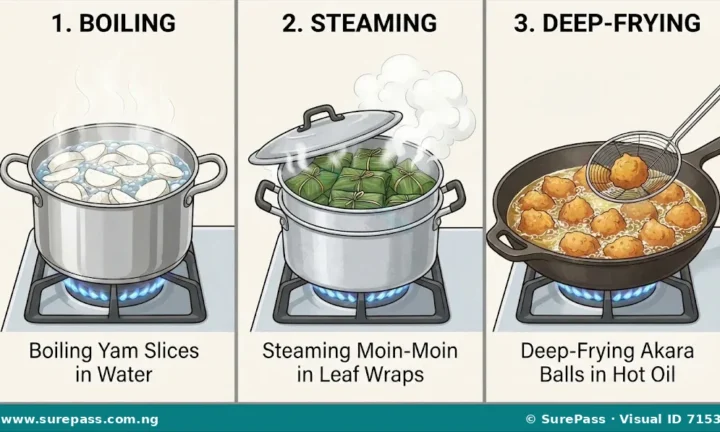 Lessons ◉ 0 views
Boiling, steaming, frying and baking use heat differently. Safe handling, prompt attention to accidents and suitable serving methods protect diners.
Read guide→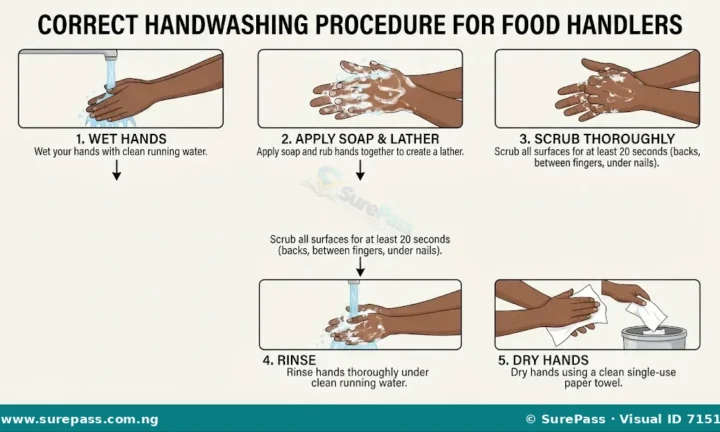 Lessons ◉ 0 views
Safe food preparation begins with choosing good ingredients, washing hands and utensils, preventing cross-contamination and cooking food thoroughly.
Read guide→An adequate diet supplies essential nutrients, energy and water in amounts suited to age, health and activity. Food access and habits shape dietary…
Read guide→ Lessons ◉ 0 views
Knives and graters prepare food, pots and stoves cook it, and serving utensils present it. Proper washing and storage keep kitchen tools safe.
Read guide→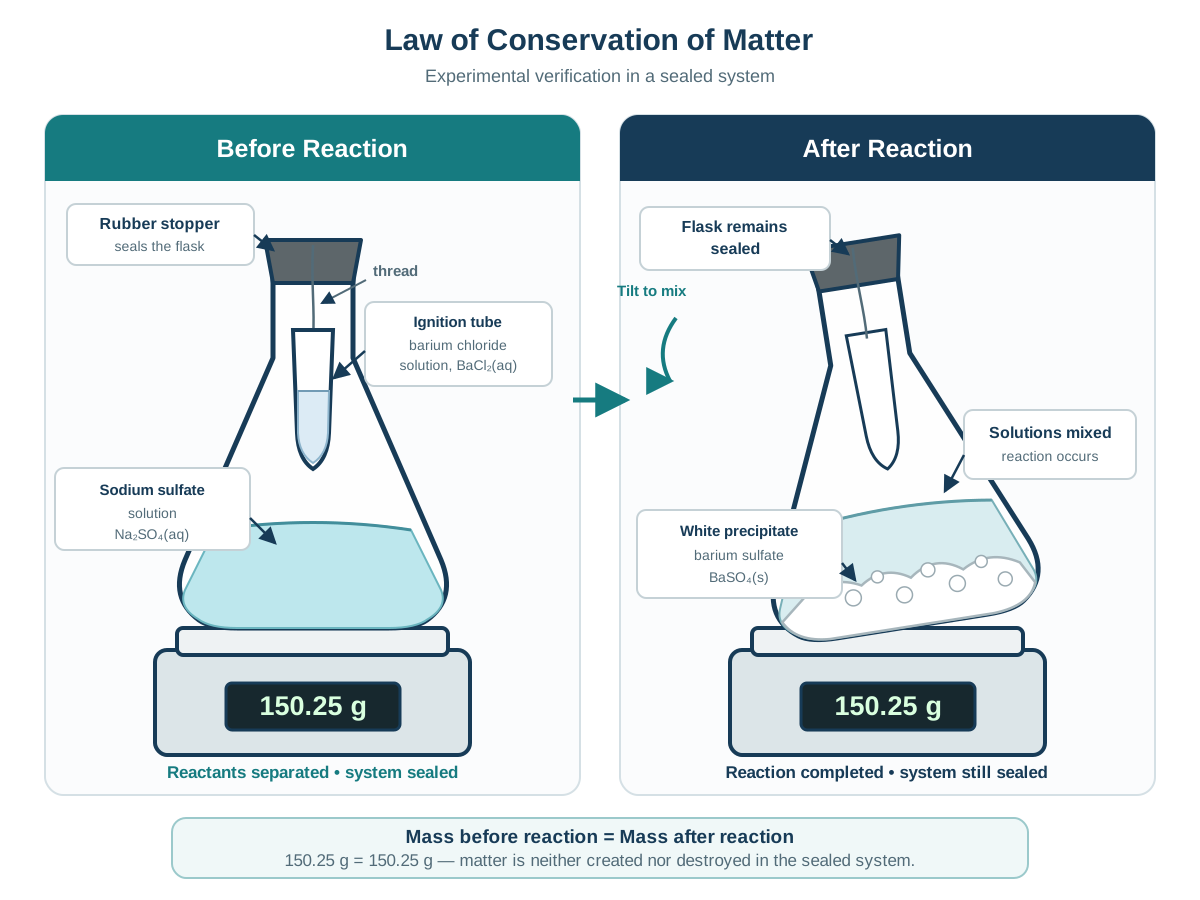 Lessons ◉ 0 views
The law of conservation of mass requires equal total mass before and after a chemical reaction. Valency helps predict how atoms combine in…
Read guide→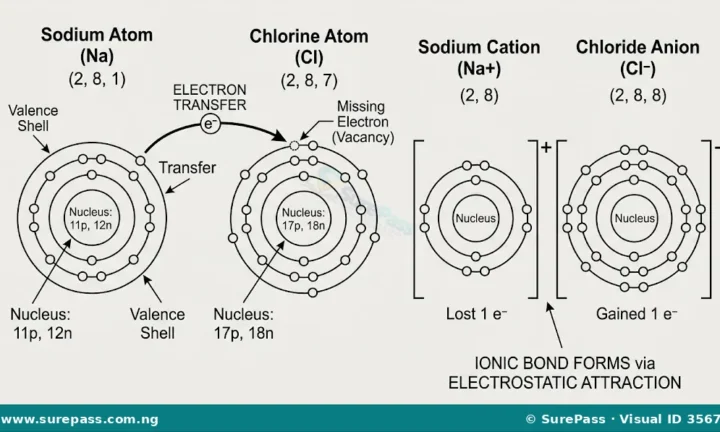 Lessons ◉ 0 views
Ionic bonds involve electron transfer and attraction between ions; covalent bonds involve shared electrons, while metallic bonds hold metal atoms together.
Read guide→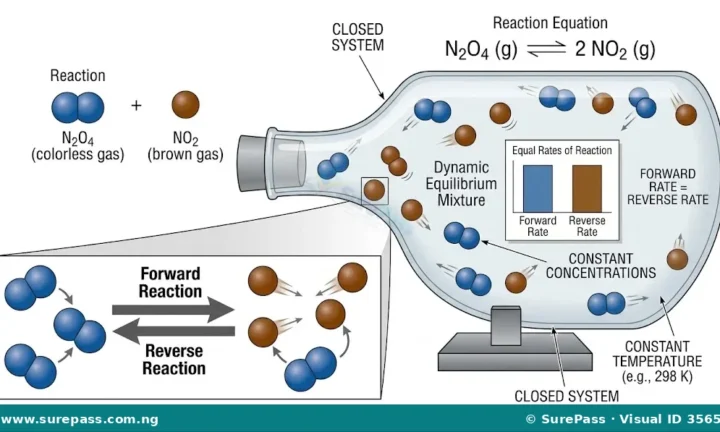 Lessons ◉ 0 views
Dynamic equilibrium occurs when forward and reverse reactions proceed at equal rates. Temperature, pressure and concentration can shift equilibrium position.
Read guide→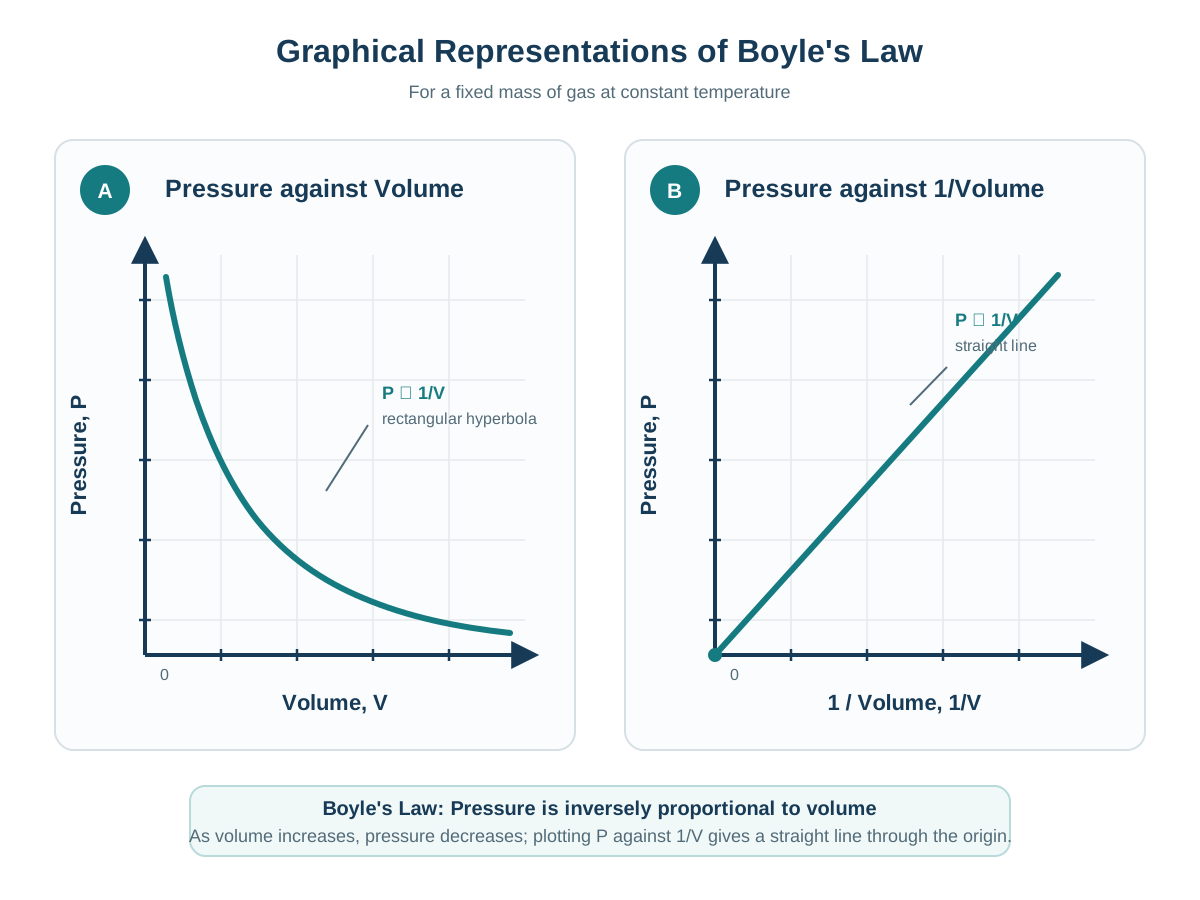 Lessons ◉ 0 views
Boyle's and Charles's laws relate gas pressure, volume and temperature. Mole calculations connect particle amounts to measurable quantities of gases.
Read guide→Pick your class and subject. SurePass opens the matching lesson shelf and keeps the clock with you as you move around the site.
You stayed with it for 25 focused minutes. That counts.