


Reading: Reading for Summary and Identifying Main Ideas for SS 1
A good summary retains a passage's central ideas in fewer words, discarding examples and details that do not support the main point.
Read guide
Teacher/Educational Writer
Royal Alikor is an educator with six years of classroom teaching and three years of elementary school leadership experience and is still teaching. He develops and reviews practical, curriculum-aligned learning materials for Nigerian schools and teachers.
Lessons ◉ 0 views
A good summary retains a passage's central ideas in fewer words, discarding examples and details that do not support the main point.
Read guide→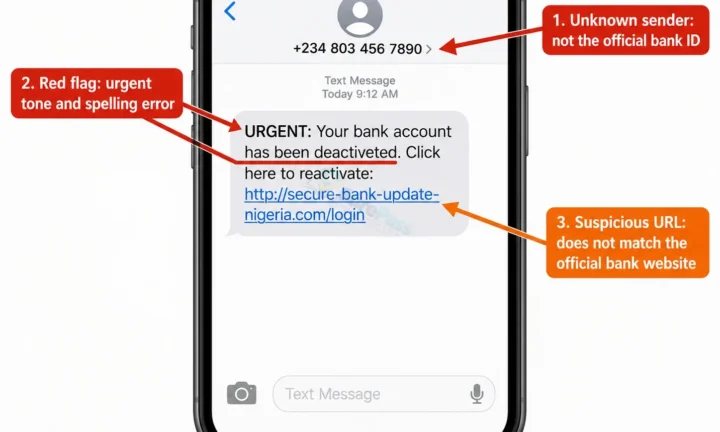 Lessons ◉ 1 views
Cybersecurity reading requires identifying threats such as phishing and unsafe links, separating factual safety advice from unsupported online claims.
Read guide→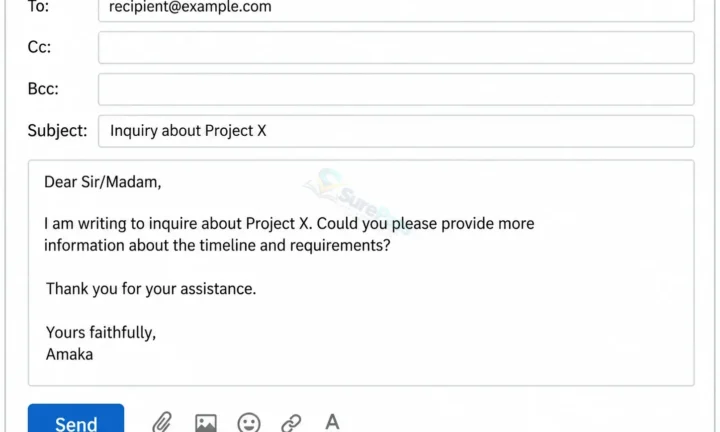 Lessons ◉ 1 views
A clear email uses an informative subject line, suitable greeting and concise body; tone and proofreading matter in formal digital communication.
Read guide→
Lessons ◉ 0 views
Social-media messages reach different audiences quickly; respectful tone, appropriate language and privacy checks help prevent avoidable conflict.
Read guide→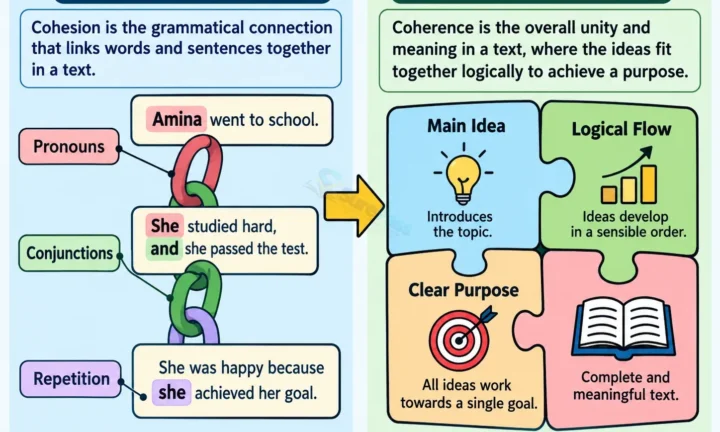 Lessons ◉ 1 views
Cohesion links sentences through references and connecting words, while coherence ensures that ideas follow a logical sequence readers can understand.
Read guide→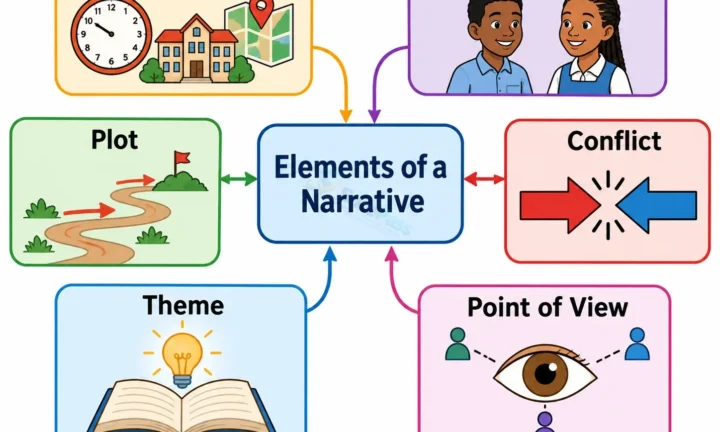 Lessons ◉ 0 views
A narrative develops events around characters and a setting, with a conflict, sequence of actions and an ending that resolves or reflects on…
Read guide→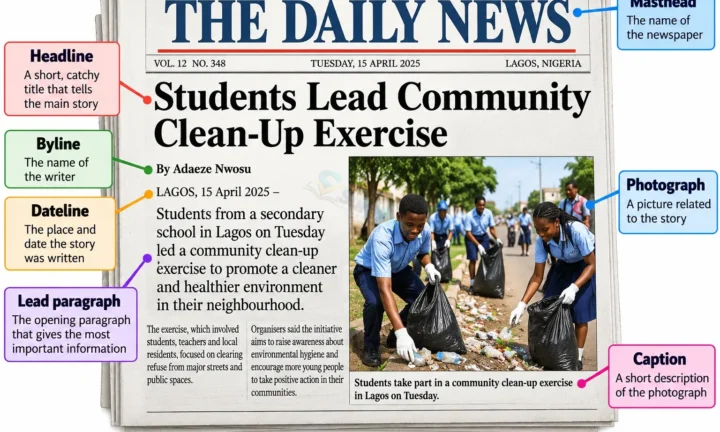 Lessons ◉ 0 views
Journalism, advertising and publishing use specialised terms such as headline, copy, audience and edition to describe distinct communication tasks.
Read guide→ Lessons ◉ 0 views
Entrepreneurs use terms such as start-up capital, profit margin, cash flow and market demand to describe business financing and performance.
Read guide→ Lessons ◉ 0 views
Capital-market vocabulary includes shares, bonds, dividends and brokers; these terms describe securities, investment returns and trading roles.
Read guide→ Lessons ◉ 0 views
Different fields use specialist terms: 'diagnosis' belongs to medicine, 'deposit' to banking, and 'plaintiff' to legal proceedings.
Read guide→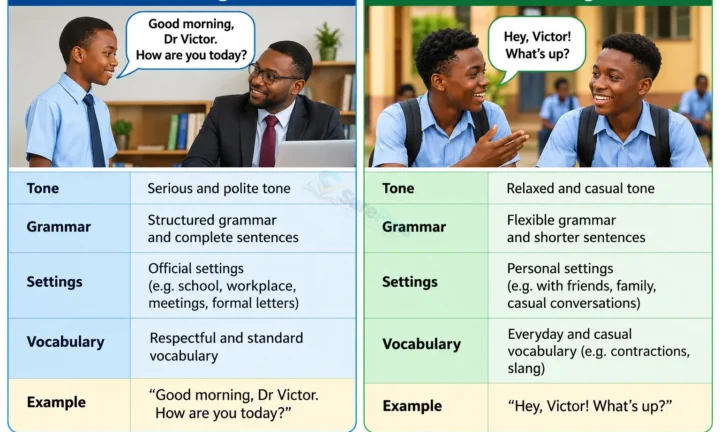 Lessons ◉ 0 views
Language register changes with audience and purpose: formal speech suits official settings, while informal language is common among friends.
Read guide→
Lessons ◉ 0 views
Prefixes and suffixes change a word's meaning or grammatical role: 'un-' reverses meaning, while '-ness' can form a noun from an adjective.
Read guide→Pick your class and subject. SurePass opens the matching lesson shelf and keeps the clock with you as you move around the site.
You stayed with it for 25 focused minutes. That counts.