




ARTICLE CONTENTSOn this page 8 sections
Registers (Houses and homes, Family Relations, Medicine, Banking, Law)
Performance Objectives
By the end of the lesson, students should be able to:
- identify words associated with such fields as medicine, banking, law, etc.
- state the meanings of the terms.
In English Language, a register refers to a variety of language used for a particular purpose or in a particular social setting. It is the specific vocabulary, grammar and style of language used in a certain field or profession. Understanding different registers helps in communicating effectively and appropriately in various situations.
This unit focuses on identifying and understanding words associated with specific fields such as houses and homes, family relations, medicine, banking and law. Knowing these words helps in understanding conversations, news and documents related to these areas.
Register for Houses and Homes
The register for houses and homes includes words used to describe different types of dwellings, parts of a house, household items and activities related to living in a home.
Words associated with houses and homes include:
- Apartment: A set of rooms forming a separate residence within a larger building.
- Bungalow: A house, usually small, with all the main rooms on one floor.
- Mansion: A very large, impressive house.
- Duplex: A house divided into two separate apartments, usually one on each floor.
- Terrace house: One of a row of similar houses joined together by their side walls.
- Cottage: A small, simple house, typically in the countryside.
- Compound: An open area enclosed by a fence or wall, usually containing a house or houses.
- Veranda: A roofed, open-air porch or balcony attached to the outside of a house.
- Kitchen: A room where food is prepared and cooked.
- Living room: The main room in a house for relaxing and entertaining guests.
- Bedroom: A room used for sleeping.
- Bathroom: A room containing a toilet, washbasin and often a bath or shower.
- Furniture: Movable objects that are used to make a room or building suitable for living or working, such as tables, chairs and beds.
- Appliance: A device or piece of equipment designed to perform a specific task, especially a domestic one, such as a refrigerator or washing machine.
- Landlord: A person who owns a house or apartment and rents it to others.
- Tenant: A person who rents a house or apartment from a landlord.
- Mortgage: A legal agreement by which a bank or other financial institution lends money at interest in exchange for taking title to the debtor’s property, with the condition that the conveyance of title becomes void upon the payment of the debt.
- Rent: A tenant’s regular payment to a landlord for the use of property or land.

Register for Family Relations
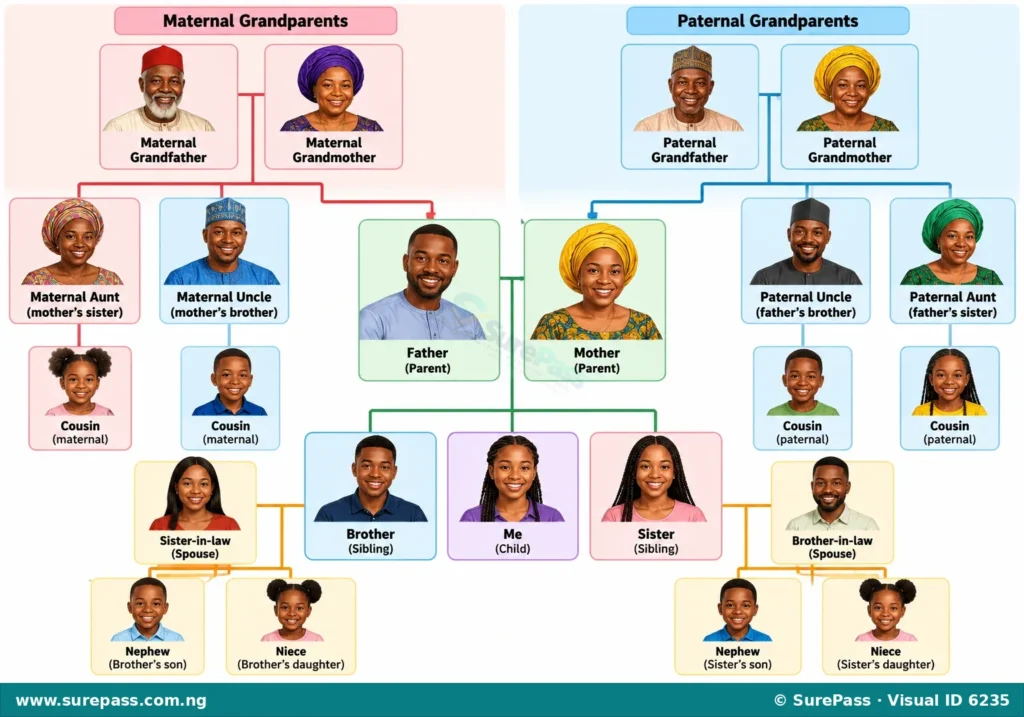
The register for family relations includes words used to describe different family members, their roles and the relationships between them.
Words associated with family relations include:
- Parent: A father or mother.
- Sibling: A brother or sister.
- Spouse: A husband or wife.
- Offspring: A person’s child or children.
- Ancestor: A person, typically one more remote than a grandparent, from whom one is descended.
- Descendant: A person, plant or animal that is descended from a particular ancestor.
- Maternal: Relating to a mother, especially through the mother’s side of the family.
- Paternal: Relating to a father, especially through the father’s side of the family.
- Nephew: The son of one’s brother or sister, or of one’s brother-in-law or sister-in-law.
- Niece: The daughter of one’s brother or sister, or of one’s brother-in-law or sister-in-law.
- Cousin: A child of one’s aunt or uncle.
- In-laws: Relatives by marriage. For example, a mother-in-law is the mother of one’s spouse.
- Guardian: A person who is legally responsible for the care of another person, especially a child whose parents are deceased or absent.
- Ward: A person, especially a child, who is under the care and protection of a guardian or court.
- Lineage: Direct descent from an ancestor; ancestry or pedigree.
- Kinship: The state of being related by blood or marriage.
Register for Medicine
The register for medicine includes words used in the field of healthcare, describing illnesses, treatments, medical professionals and procedures.
Words associated with medicine include:
- Diagnosis: The identification of the nature of an illness or other problem by examination of the symptoms.
- Prognosis: The likely course of a disease or ailment.
- Symptom: A physical or mental feature that indicates a disease or medical condition.
- Prescription: A written order from a doctor for a patient to receive a particular medicine or treatment.
- Dosage: The size or frequency of a dose of a medicine or drug.
- Vaccine: A substance used to stimulate the production of antibodies and provide immunity against one or several diseases.
- Antibiotic: A medicine that inhibits the growth of or destroys microorganisms.
- Surgery: The treatment of injuries or diseases in people or animals by cutting open the body and removing or repairing the damaged part.
- Anaesthesia: A state of controlled, temporary loss of sensation or awareness induced for medical purposes.
- Therapy: Treatment intended to relieve or heal a disorder.
- Consultation: A meeting with a doctor to seek advice or treatment.
- Ward: A separate room or area in a hospital for people requiring similar care.
- Clinic: A place or hospital department where outpatients are given medical treatment or advice.
- Pharmacist: A person who is professionally qualified to prepare and dispense medicinal drugs.
- Paediatrician: A medical doctor who specialises in the care of children.
- Cardiologist: A medical doctor who specialises in the diagnosis and treatment of heart conditions.
- Radiology: The science dealing with X-rays and other high-energy radiation, especially for the diagnosis and treatment of disease.
- Pathology: The science of the causes and effects of diseases, especially the branch of medicine that deals with the laboratory examination of samples of body tissue for diagnostic or forensic purposes.

Register for Banking
The register for banking includes words used in financial services, describing transactions, accounts, loans and financial institutions.
Words associated with banking include:
- Account: A record of money deposited, withdrawn, or transferred by a customer with a bank.
- Deposit: A sum of money placed or kept in a bank account.
- Withdrawal: The act of taking money out of a bank account.
- Loan: A sum of money that is borrowed and is expected to be paid back with interest.
- Interest: Money paid regularly at a particular rate for the use of money lent, or for delaying the repayment of a debt.
- Teller: A person who works in a bank and deals with customers’ transactions.
- ATM (Automated Teller Machine): An electronic machine that allows bank customers to perform basic transactions without the help of a teller.
- Debit card: A plastic card that allows money to be transferred directly from a customer’s bank account when a purchase is made.
- Credit card: A plastic card issued by a bank, allowing the holder to purchase goods or services on credit.
- Overdraft: A deficit in a bank account caused by drawing more money than the account holds.
- Mortgage: A legal agreement by which a bank or other financial institution lends money at interest in exchange for taking title to the debtor’s property, with the condition that the conveyance of title becomes void upon the payment of the debt.
- Collateral: Something pledged as security for repayment of a loan, to be forfeited in the event of a default.
- Transaction: An instance of buying or selling something; a business deal.
- Statement: A printed record of the balance in a bank account and the amounts that have been paid into it and withdrawn from it.
- Savings account: A bank account that earns interest and is typically used for saving money.
- Current account: A bank account from which money can be withdrawn at any time by cheque or debit card, and which is typically used for day-to-day transactions.

Register for Law
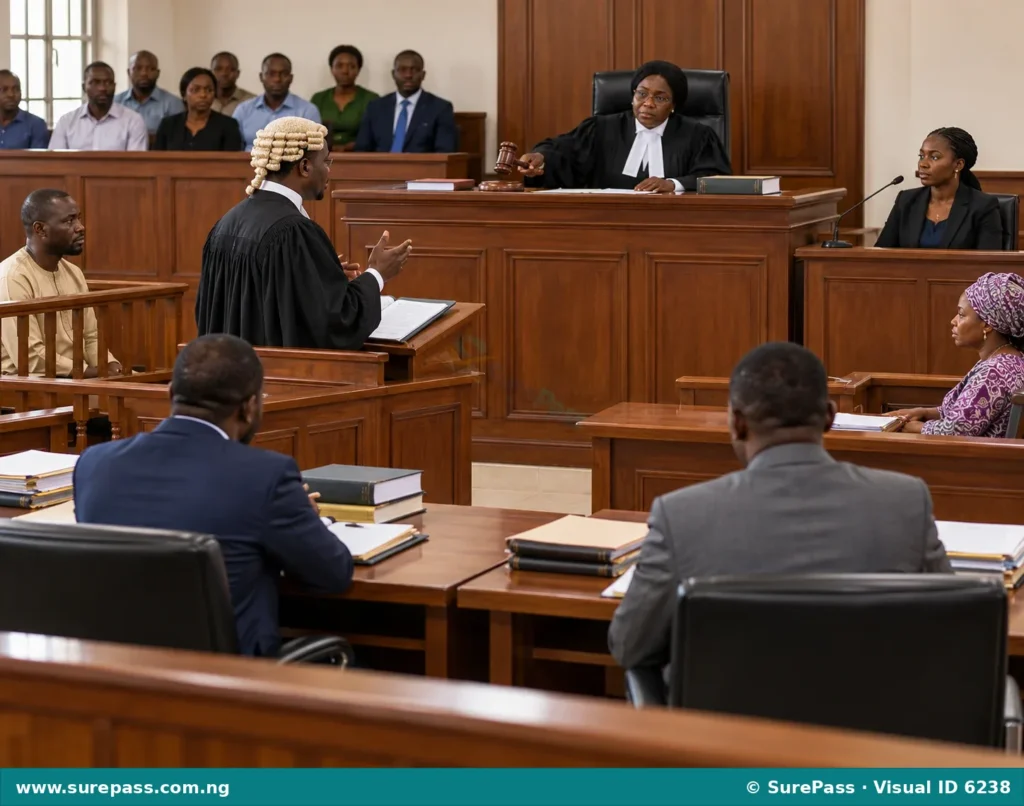
The register for law includes words used in the legal system, describing crimes, legal processes, legal professionals and court proceedings.
Words associated with law include:
- Plaintiff: A person who brings a case against another in a court of law.
- Defendant: An individual, company or institution sued or accused in a court of law.
- Prosecutor: A legal official who institutes legal proceedings against someone.
- Barrister: A lawyer who is qualified to plead in the higher courts.
- Solicitor: A lawyer who deals with legal matters, advises clients and prepares legal documents.
- Judge: A public official appointed to decide cases in a court of law.
- Jury: A body of people sworn to give a verdict in a legal case on the basis of evidence submitted to them in court.
- Verdict: A decision on a disputed issue in a civil or criminal case or an inquest.
- Sentence: The punishment assigned to a defendant found guilty by a court.
- Testimony: Formal written or spoken statement, especially one given in a court of law.
- Evidence: The available body of facts or information indicating whether a belief or proposition is true or valid.
- Plea: A formal statement by or on behalf of a defendant or prisoner, stating guilt or innocence in response to a charge.
- Appeal: A request made to a higher court for a review of a lower court’s decision.
- Bail: The temporary release of an accused person awaiting trial, sometimes on condition that a sum of money is lodged to guarantee their appearance in court.
- Warrant: A document issued by a legal or government official authorising an arrest, search or other action.
- Statute: A written law passed by a legislative body.
- Litigation: The process of taking legal action.
- Jurisdiction: The official power to make legal decisions and judgments.
Using Identified Terms in Sentences
Understanding the meaning of these terms is important, but it is equally important to be able to use them correctly in sentences. This demonstrates a deeper understanding of their context and application.
Examples of using identified terms in sentences:
- Houses and Homes:
- The tenant paid his rent to the landlord at the end of the month.
- They decided to buy a bungalow because it was easier to manage than a multi-storey house.
- The family gathered in the living room to watch television.
- Family Relations:
- My maternal grandmother lives in the village.
- She is the youngest offspring of her parents.
- His niece is visiting from Abuja next week.
- Medicine:
- The doctor gave a clear diagnosis of the patient’s illness.
- The pharmacist explained the correct dosage for the medicine.
- Many children receive a vaccine to protect them from diseases.
- Banking:
- He made a large deposit into his savings account.
- The bank approved her loan after she provided sufficient collateral.
- She used her debit card to pay for groceries.
- Law:
- The defendant pleaded not guilty to the charges.
- The judge delivered the verdict after the jury’s deliberation.
- The barrister presented strong evidence in court.




0 comments
Open the discussion when you need it. Comments stay collapsed until requested so the initial article remains light.