



ARTICLE CONTENTSOn this page 5 sections
Stress in Two-syllable Words
Performance Objectives
By the end of the lesson, students should be able to:
- identify the stressed syllables in two syllable words;
- Recognise patterns of stress in two- syllable words;
- pronounce two- syllable words correctly using the right stress.
Understanding Word Stress
Word stress refers to the emphasis placed on a particular syllable within a word. When a syllable is stressed, it is pronounced with more force, a higher pitch, and is often longer than unstressed syllables. This emphasis helps to make words clear and understandable in spoken English.
In English, stress is an important feature of pronunciation. Placing stress on the wrong syllable can sometimes change the meaning of a word or make it difficult for listeners to understand what is being said.
Stress in Two-Syllable Words
Many English words have two syllables. In these words, one syllable is typically stressed, while the other is unstressed. The position of the stress often follows certain patterns, especially depending on whether the word is a noun, an adjective, or a verb.
Identifying the stressed syllable involves listening for the part of the word that stands out. This syllable will sound louder, clearer, and slightly higher in pitch compared to the other syllable.
Patterns of Stress in Two-Syllable Words
The stress pattern in two-syllable words often depends on the word’s grammatical function. While there are exceptions, general tendencies can be observed.
Stress on the First Syllable (Nouns and Adjectives)
Many two-syllable nouns and adjectives have the stress on the first syllable. This means the first part of the word is pronounced with more emphasis.
Examples of two-syllable nouns with stress on the first syllable include:
- TEAcher (TEA-cher)
- DOCtor (DOC-tor)
- TAble (TA-ble)
- GARden (GAR-den)
- PREsent (PRE-sent) – (as a gift)
- REcord (RE-cord) – (as a musical item)
- PROject (PRO-ject) – (as a plan)
- OBject (OB-ject) – (as a thing)
- CONduct (CON-duct) – (as behaviour)
Examples of two-syllable adjectives with stress on the first syllable include:
- HAPpy (HAP-py)
- CLEver (CLE-ver)
- PRETty (PRET-ty)
- YELlow (YEL-low)
- ACtive (AC-tive)

Stress on the Second Syllable (Verbs)
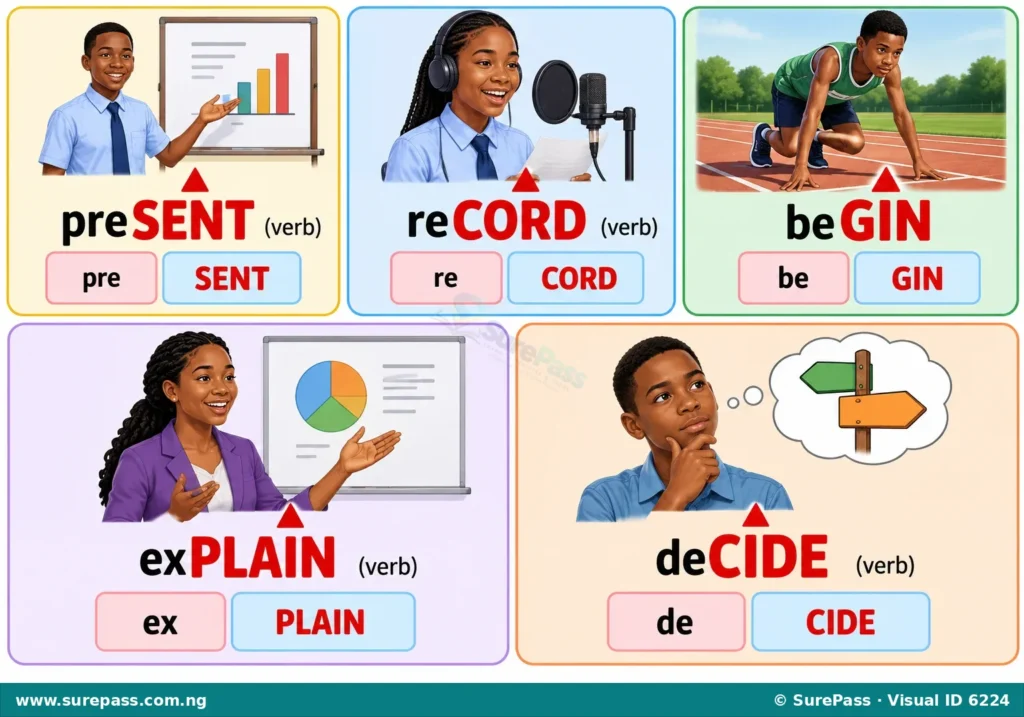
Many two-syllable verbs have the stress on the second syllable. This means the second part of the word is pronounced with more emphasis.
Examples of two-syllable verbs with stress on the second syllable include:
- preSENT (pre-SENT) – (to give something)
- reCORD (re-CORD) – (to save sound or video)
- proJECT (pro-JECT) – (to throw forward or forecast)
- obJECT (ob-JECT) – (to disagree)
- conDUCT (con-DUCT) – (to lead or manage)
- beGIN (be-GIN)
- exPLAIN (ex-PLAIN)
- deCIDE (de-CIDE)
- rePEAT (re-PEAT)
- aGREE (a-GREE)
Words with Dual Stress Patterns (Nouns/Verbs)
Some two-syllable words can function as both nouns and verbs. In these cases, the stress pattern changes depending on the word’s grammatical role. This is a common feature in English and helps to distinguish the meaning and function of the word.
Consider the following examples:
-
PREsent (noun): A gift. “She received a beautiful PREsent.”
preSENT (verb): To give or show. “He will preSENT his ideas to the class.”
-
REcord (noun): A piece of music or a document. “The old REcord played a sweet melody.”
reCORD (verb): To store sound or images. “The journalist will reCORD the interview.”
-
PROject (noun): A plan or task. “The students worked on a science PROject.”
proJECT (verb): To throw forward or forecast. “The company will proJECT its sales for next year.”
-
OBject (noun): A thing. “There was a strange OBject on the table.”
obJECT (verb): To express disagreement. “The lawyer decided to obJECT to the ruling.”
-
CONduct (noun): Behaviour. “His good CONduct earned him praise.”
conDUCT (verb): To lead or manage. “The choir will conDUCT a performance.”
Pronouncing Two-Syllable Words with Correct Stress
Correctly pronouncing two-syllable words involves identifying the stressed syllable and then giving it the appropriate emphasis. This means making the stressed syllable louder, slightly higher in pitch, and often longer than the unstressed syllable.
Steps for Articulating Words with Correct Stress
The procedure for articulating words with correct stress involves the following steps:
-
Identify the Syllables: Break the word into its individual syllables. For example, “teacher” has two syllables: “teach” and “er”.
-
Determine the Word Type: Decide if the word is primarily a noun, adjective, or verb. This helps in predicting the stress pattern.
-
Locate the Stressed Syllable: Based on the word type and common patterns, identify which syllable should receive the stress. For “teacher” (a noun), the stress is on the first syllable: TEAcher.
-
Emphasise the Stressed Syllable: When pronouncing the word, make the stressed syllable louder, clearer, and slightly higher in pitch. The unstressed syllable should be softer and shorter.
-
Practice: Repeat the word several times, focusing on the correct stress. Listen to native speakers or use a dictionary with pronunciation guides to confirm the stress placement.
Practice Examples for Pronunciation
Practice pronouncing the following words, paying attention to the stressed syllable:
- Nouns/Adjectives (Stress on first syllable):
- FORward
- COMfort
- GARment
- PERfect (adjective)
- CONtext
- Verbs (Stress on second syllable):
- forWARD (to send on)
- comFORT (to console)
- perFECT (to make flawless)
- conTEST (to dispute)
- reCALL
Regular practice with different two-syllable words helps to develop a natural sense of English word stress, improving overall pronunciation and communication skills.




0 comments
Open the discussion when you need it. Comments stay collapsed until requested so the initial article remains light.