



ARTICLE CONTENTSOn this page 8 sections
Phonological awareness
Performance Objectives
By the end of the lesson, students should be able to:
- Identifying beginning/middle/ending sounds;
- identify and pronounce words with similar sounds;
- blend sounds to form mono- syllabic words;
- blend syllables to form words;
- break words into syllables;
- listen to words and count the syllables.
What is Phonological Awareness?
Phonological awareness is the ability to hear and play with the sounds in words. It helps children learn to read and spell.
This skill helps a person notice and think about the sounds in spoken language. It is about listening to words and understanding how sounds work together.
Hearing Sounds in Words
Every word is made up of different sounds. These sounds can be at the beginning, in the middle, or at the end of a word.
Beginning Sounds
The beginning sound is the first sound heard in a word. It is like the starting sound of a car engine.
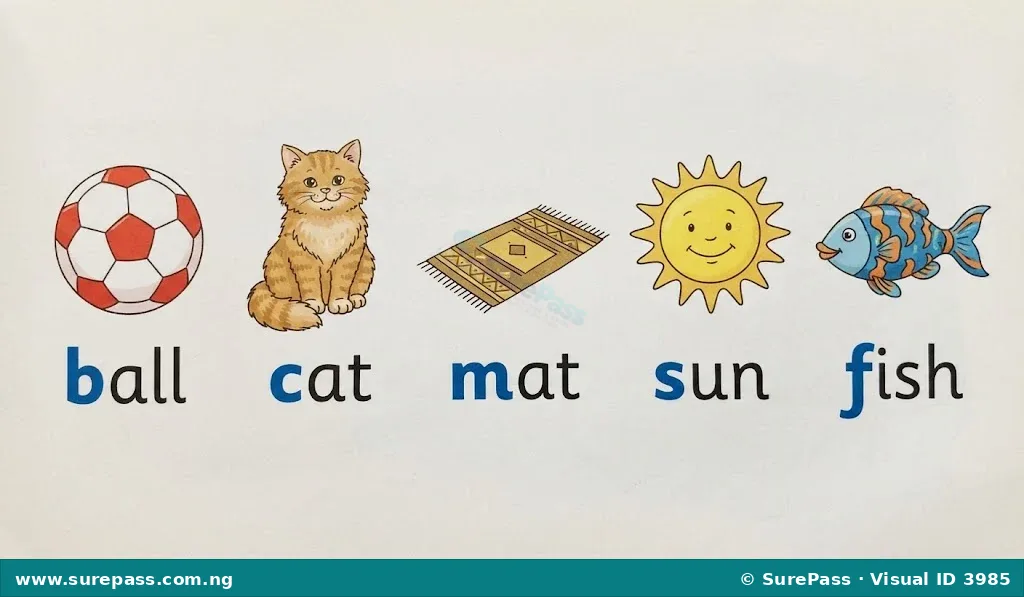
Examples of words and their beginning sounds include:
- /b/ in ball
- /c/ in cat
- /m/ in mat
- /s/ in sun
- /f/ in fish
Middle Sounds
The middle sound is the sound heard in the middle of a word. This sound is often a vowel sound.
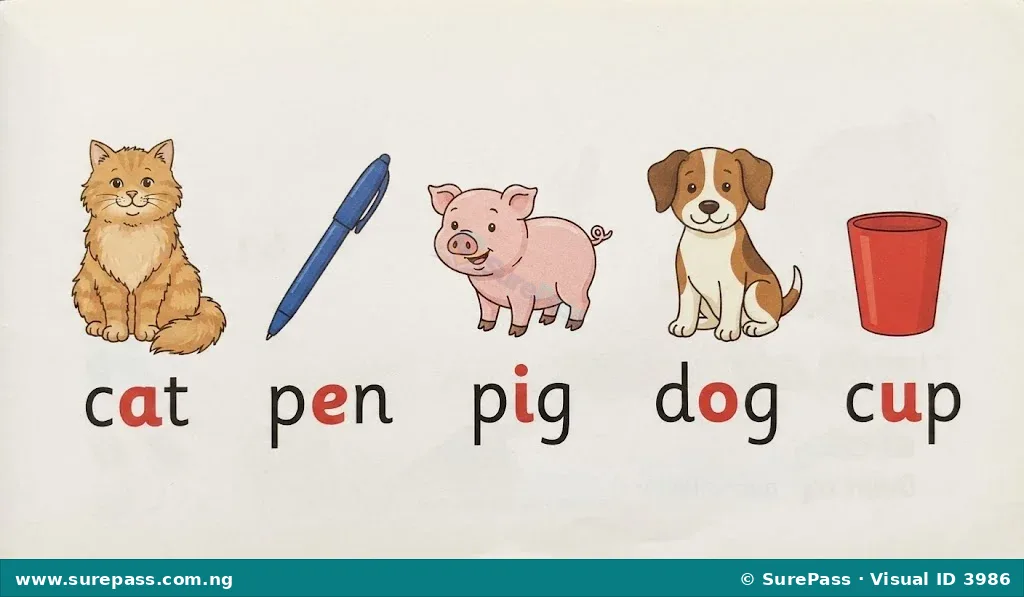
Examples of words and their middle sounds include:
- /a/ in cat
- /e/ in pen
- /i/ in pig
- /o/ in dog
- /u/ in cup
Ending Sounds
The ending sound is the last sound heard in a word. It is the sound that finishes the word.
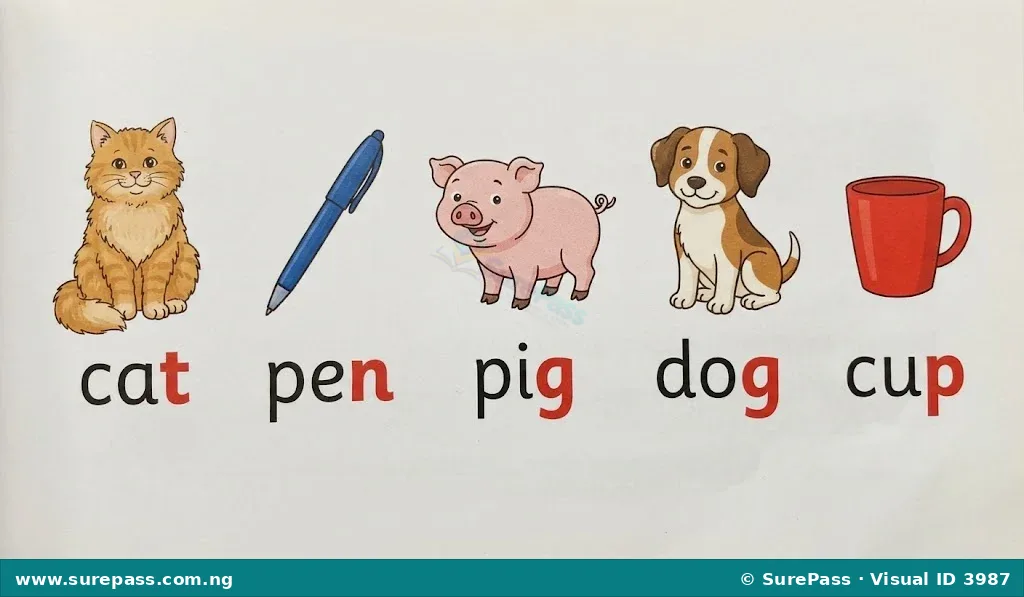
Examples of words and their ending sounds include:
- /t/ in cat
- /n/ in pen
- /g/ in pig
- /d/ in dog
- /p/ in cup
Words with Similar Sounds (Rhyming Words)
Words with similar sounds are words that sound alike at the end. These are called rhyming words.
Rhyming words often have the same ending sound pattern, even if their beginning sounds are different.
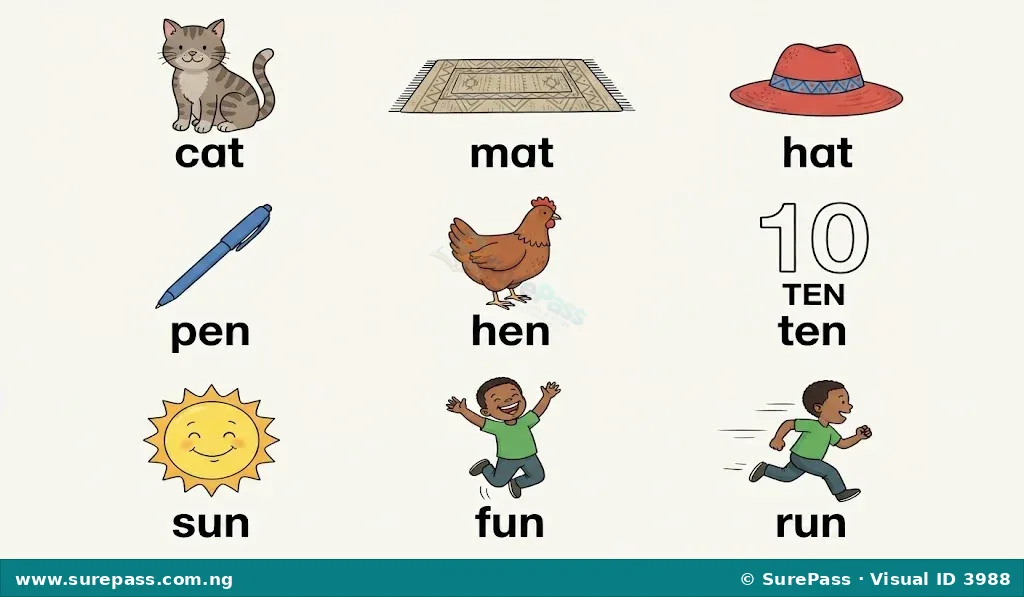
Examples of rhyming words include:
- cat, mat, hat
- pen, hen, ten
- pig, dig, big
- dog, log, fog
- sun, fun, run
When pronouncing rhyming words, pay attention to how the ending parts sound the same.
Blending Sounds to Make Words
Blending sounds means putting individual sounds together to form a complete word. This helps in reading new words.
When sounds are blended, they form a mono-syllabic word, which is a word with only one syllable or one sound part.
The procedure for blending sounds involves the following steps:
- Listen to each individual sound clearly.
- Say the sounds slowly, one after the other.
- Speed up the sounds until they join together to form a word.
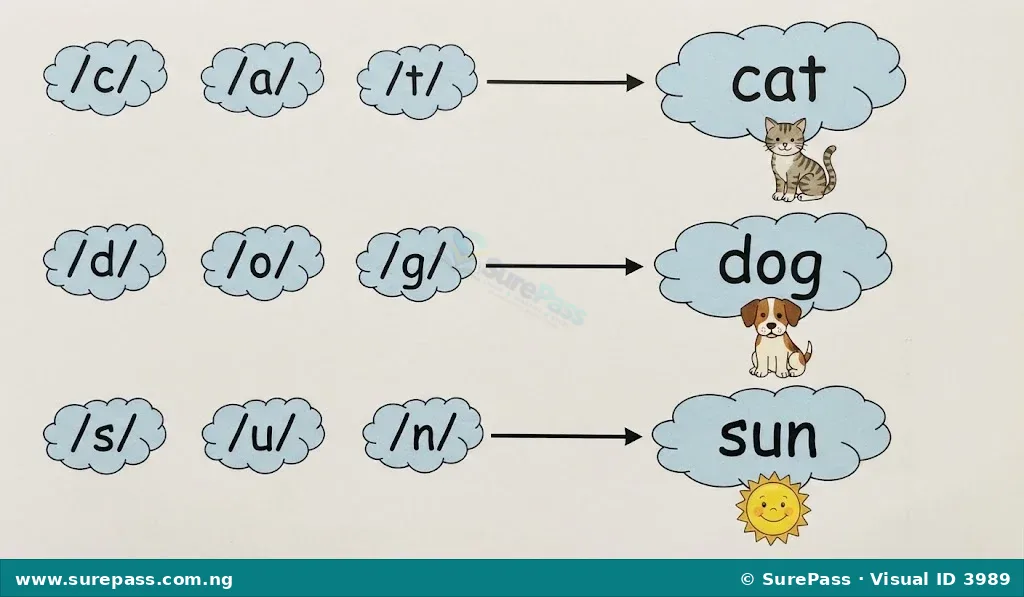
Examples of blending sounds to form mono-syllabic words include:
- /c/ + /a/ + /t/ makes cat
- /p/ + /e/ + /n/ makes pen
- /d/ + /o/ + /g/ makes dog
- /s/ + /u/ + /n/ makes sun
- /b/ + /a/ + /g/ makes bag
Understanding Syllables
Words are not just made of individual sounds; they are also made of bigger sound parts called syllables.
What is a Syllable?
A syllable is a single unit of sound in a word. It usually has one vowel sound and can have one or more consonant sounds around it.
When a person says a word, they can often feel or hear the different beats or parts of the word. Each beat is a syllable.
Breaking Words into Syllables
Breaking words into syllables means dividing a word into its sound parts. This is also called segmenting syllables.
The procedure for breaking words into syllables involves the following steps:
- Say the word slowly and clearly.
- Listen for the natural breaks or beats in the word.
- Clap your hands for each sound part you hear. Each clap represents a syllable.
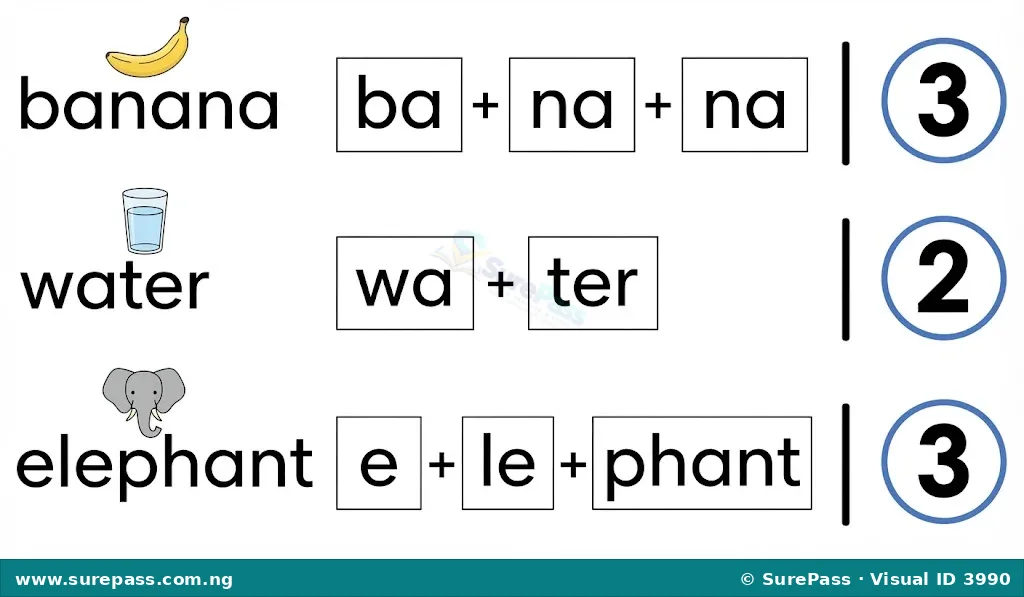
Examples of breaking words into syllables include:
- ba-na-na (3 syllables)
- wa-ter (2 syllables)
- e-le-phant (3 syllables)
- ta-ble (2 syllables)
- com-pu-ter (3 syllables)
Counting Syllables
Counting syllables means finding out how many sound parts are in a word. This can be done by listening carefully and clapping.
The procedure for counting syllables involves the following steps:
- Say a word out loud.
- Place a hand under your chin.
- Count how many times your chin drops as you say the word. Each drop is a syllable.
Examples of words and their syllable counts include:
- book (1 syllable)
- pencil (2 syllables)
- teacher (2 syllables)
- family (3 syllables)
- Nigeria (4 syllables)
Blending Syllables to Make Words
Just as individual sounds can be blended, syllables can also be blended together to form complete words.
This skill helps a person to put word parts together to understand the whole word.
The procedure for blending syllables involves the following steps:
- Listen to each syllable separately.
- Say the syllables one after the other.
- Join the syllables together smoothly to form the full word.
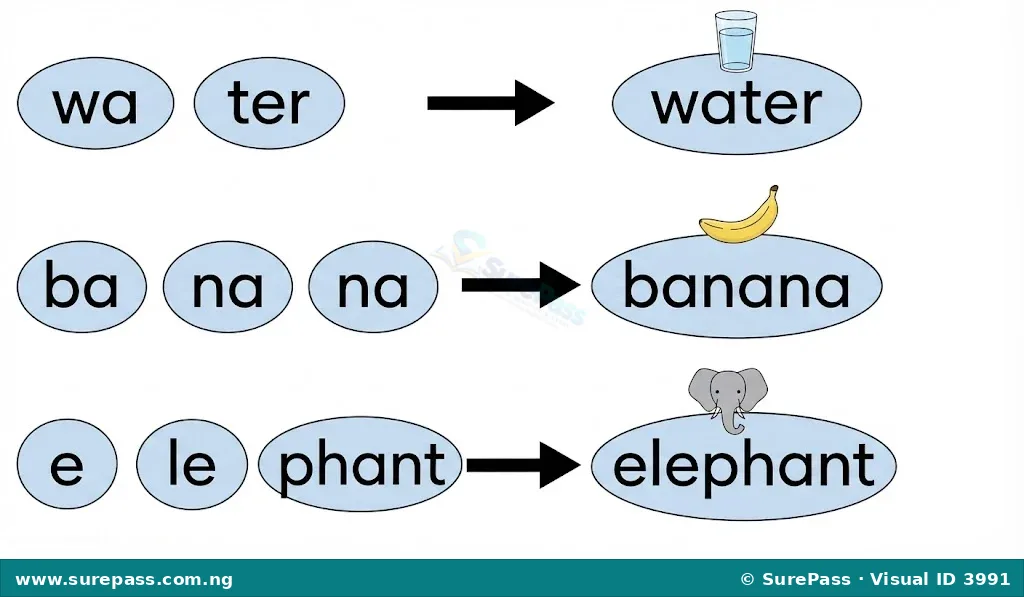
Examples of blending syllables to form words include:
- wa + ter makes water
- ba + na + na makes banana
- e + le + phant makes elephant
- com + pu + ter makes computer
- fa + mi + ly makes family





0 comments
Open the discussion when you need it. Comments stay collapsed until requested so the initial article remains light.