


ARTICLE CONTENTSOn this page 9 sections
Retelling Stories
Performance Objectives
By the end of the lesson, students should be able to:
- read or listen to short stories;
- retell stories in their own words;
- Answer simple questions on the stories.
What is a Story?
A story is an account of events, real or imagined, told to entertain or inform people. Stories can be about people, animals or things.
Stories help people learn new things and understand the world around them. They can also be very fun to listen to or read.
Listening to Short Stories
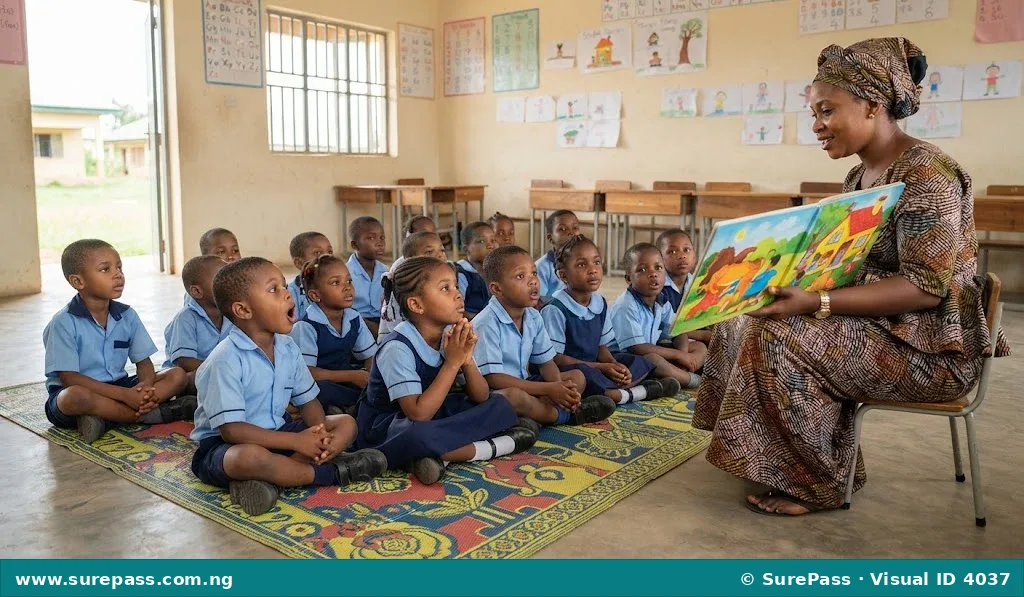
Listening to stories means paying close attention when someone reads a story aloud or when a story is played from an audio recording. It is important to listen carefully to understand what is happening in the story.
When listening, children should try to hear the characters’ names, where the story takes place and what happens to the characters.
Stories on Important Issues
Some stories teach about important issues that affect people and the community. These stories help children understand different situations and how to act in them.
Examples of important issues that stories can cover include:
- Insecurity: Stories about staying safe and knowing who to trust.
- Human Trafficking: Simple stories about not going with strangers and telling an adult if someone tries to take them away.
- Climate Change: Stories about keeping the environment clean, planting trees and saving water.
- Gender Equality: Stories showing that boys and girls can do the same things and have the same opportunities.
Reading Short Stories
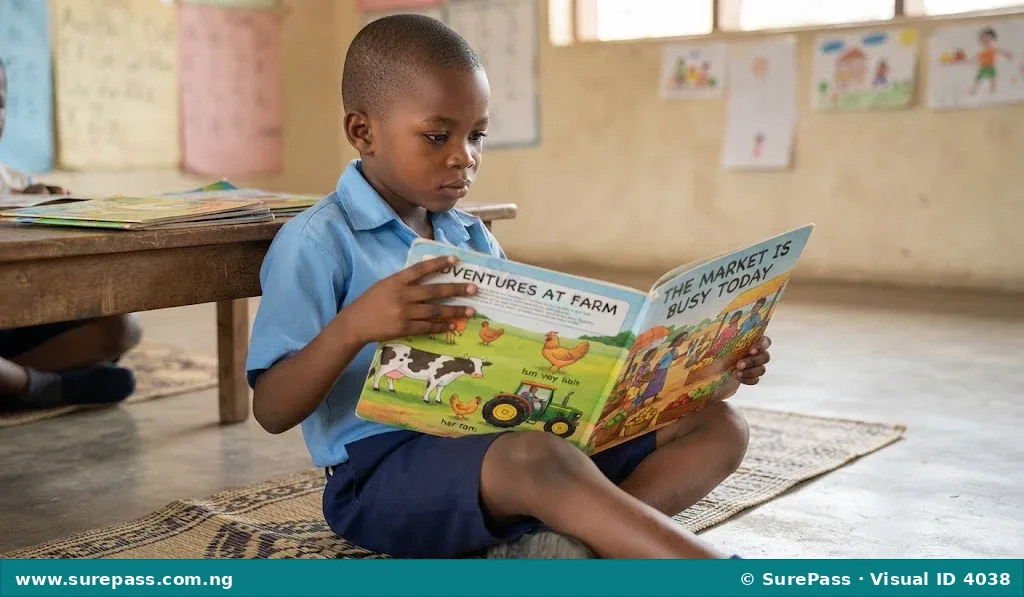
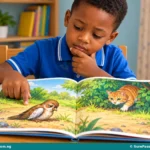
Reading a story means looking at the words on a page and understanding what they mean. For Primary 1, this often involves reading simple stories with clear pictures.
When reading, children should try to follow the words with their eyes and understand the events as they unfold. Pictures in storybooks often help to understand the story better.
Understanding Story Structure
Every story has a structure, which means it has different parts that come together to make a complete story. Understanding these parts helps in retelling the story clearly.
The main parts of a story are:
- Beginning: This part introduces the characters and where the story takes place. It sets the scene.
- Middle: This is where most of the events happen. The characters face challenges or go on adventures.
- End: This part tells how the story finishes. It shows what happens to the characters after all the events.
Thinking about these three parts helps to remember the story in order.
Storytelling Techniques
Storytelling techniques are different ways a story can be told to make it interesting. Even in simple stories, some techniques can be noticed.
Common storytelling techniques include:
- Dialogue: This is when characters in the story talk to each other. Dialogue makes the story feel real and helps to show what the characters are thinking or feeling.
- Suspense: This is when the storyteller makes the listener or reader curious about what will happen next. It creates excitement and makes people want to keep listening or reading.
Retelling Short Stories
Retelling a story means telling it again in your own words after you have listened to it or read it. It shows that you understood the story.
When retelling a story, it is important to remember the main parts: the beginning, the middle and the end. You should also try to remember the characters and what they did.
Steps for Retelling a Story
The procedure for retelling a story involves the following steps:
- Listen or Read Carefully: Pay close attention to all the details in the story.
- Identify Characters: Think about who the story is about.
- Identify the Setting: Think about where the story takes place.
- Remember the Beginning: What happened first? Who was introduced?
- Remember the Middle: What were the main events? What challenges did the characters face?
- Remember the End: How did the story finish? What happened to the characters?
- Tell in Your Own Words: Use simple sentences to explain what happened, from beginning to end. You do not need to use the exact words from the story.
- Answer Simple Questions: Be ready to answer questions about the characters, events or what you learned from the story.
Answering Simple Questions on Stories
After listening to or reading a story, answering questions helps to check understanding. Simple questions usually ask about the main characters, what happened or where the story took place.
Examples of simple questions include:
- Who are the characters in the story?
- Where did the story happen?
- What was the problem in the story?
- How did the story end?
- What did you learn from the story?
Answering these questions shows that you understood the story well.

0 comments
Open the discussion when you need it. Comments stay collapsed until requested so the initial article remains light.