



ARTICLE CONTENTSOn this page 8 sections
Comprehension
Performance Objectives
By the end of the lesson, students should be able to:
- describe information gained from a text in their own words;
- answer written comprehension questions based on materials read;
- make predictions based on illustrations in stories or portions of stories; and
- justify predictions of events in stories (draw a conclusion)
Understanding Stories
Reading a story is fun, but it is even better when a person understands what they read. Understanding a story means knowing what happened, who the characters are, where the story takes place and what message the story teaches.
What Happens in a Story (Plot)
Every story has a beginning, a middle and an end. The plot is all the things that happen in the story. It tells about the characters and the events they experience. When reading, it is important to follow the events to understand the story well.
Where and When a Story Happens (Setting)
The setting of a story tells where and when the story takes place. It could be in a village, a city, a school, a market or a home. It could happen in the morning, at night, or during a special time like a festival. Knowing the setting helps a person imagine the story better.
What a Story Teaches (Theme)
Many stories teach a lesson or have a main message. This message is called the theme. For example, a story might teach about the importance of being kind, working hard, or sharing with others. Thinking about the theme helps a person learn from the story.
Describing Information from a Story
After reading a story, a person should be able to tell what happened in their own words. This means explaining the main events and ideas without just repeating the exact sentences from the book. It shows that the story has been understood.
To describe information, a person can think about:
- Who the story is about.
- What happened first.
- What happened next.
- How the story ended.
Answering Questions about a Story
Answering questions about a story helps to check understanding. The answers to these questions are usually found directly in the text. It is important to read the questions carefully and then look back at the story to find the correct information.
When answering questions, a person should:
- Read the question slowly.
- Look for keywords in the question that are also in the story.
- Find the part of the story that talks about the keyword.
- Write the answer clearly.
Making Predictions from Pictures
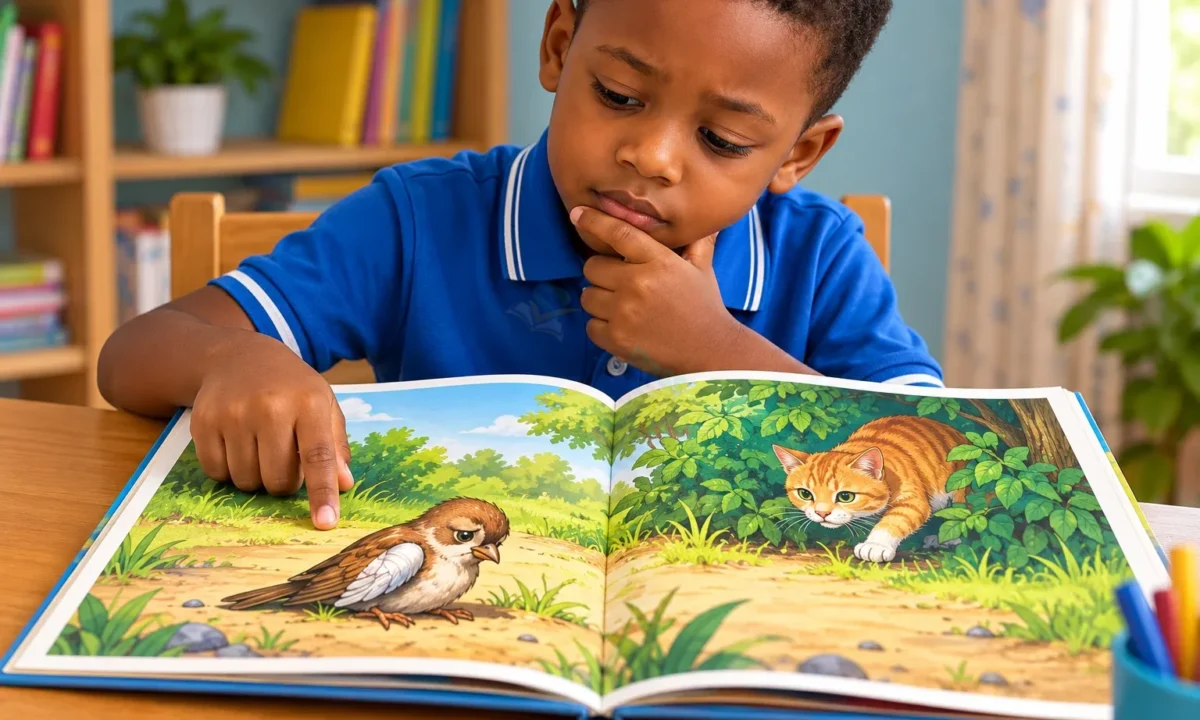
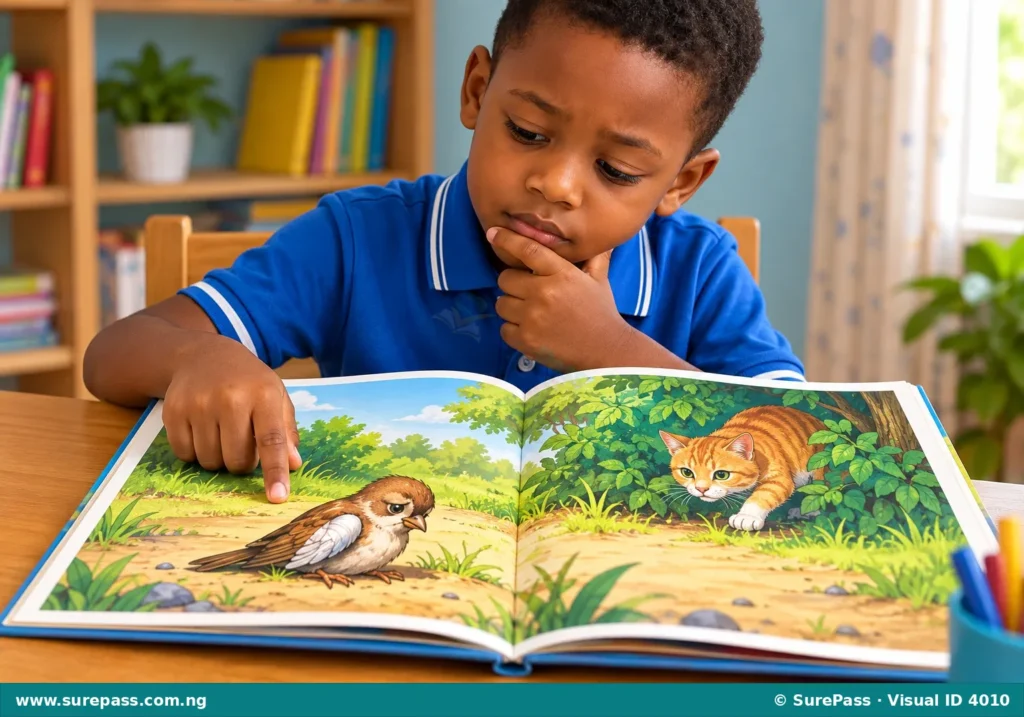
Sometimes, before reading a story or while reading, there are pictures or illustrations. These pictures give clues about what might happen in the story. Making a prediction means guessing what will happen next based on these clues.
To make a prediction, a person should:
- Look closely at the pictures.
- Notice what the characters are doing.
- Think about where they are.
- Guess what might happen next in the story.
Justifying Predictions
After making a prediction, it is important to explain why that guess was made. This is called justifying a prediction. It means using the clues from the pictures or the words in the story to show why the prediction makes sense.
For example, if a picture shows a boy holding an umbrella and dark clouds in the sky, a person might predict it will rain. The justification for this prediction is “because the boy has an umbrella and the sky has dark clouds.”
Practice Story: Ada’s Garden
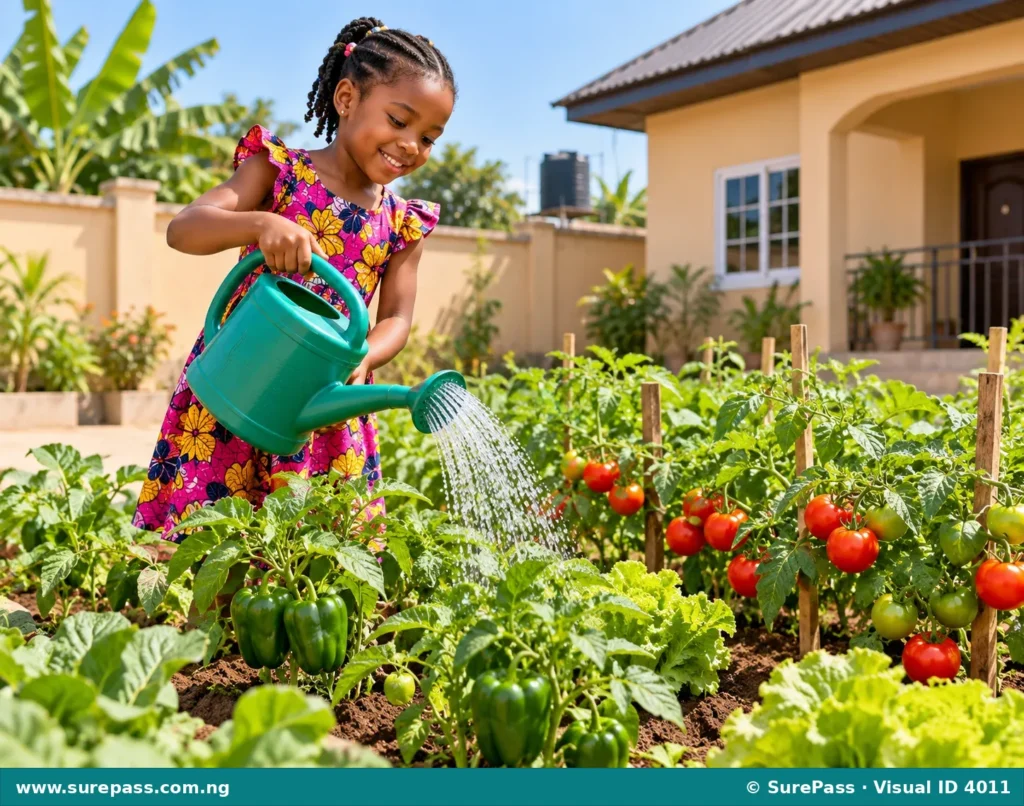
Ada loved to play, but she also knew the value of hard work. Her mother gave her a small patch of land in their compound to plant some vegetables. Ada was very excited.
Every morning, before going to school, Ada would water her plants. After school, she would carefully remove any weeds growing around them. Sometimes, her friends would call her to play, but Ada would finish her work first.
One day, her mother saw how green and healthy Ada’s garden looked. The tomatoes were red and ripe, and the pepper plants were full. Her mother smiled and said, “Ada, your hard work has paid off! We will have fresh vegetables for dinner.”
Ada felt very happy. She knew that working hard made good things happen.
Questions about “Ada’s Garden”
Read the story “Ada’s Garden” again and answer the following questions:
- What did Ada’s mother give her?
- What did Ada do every morning before school?
- What did Ada do after school?
- What did Ada’s mother say when she saw the garden?
- How did Ada feel at the end of the story?
Making and Justifying Predictions
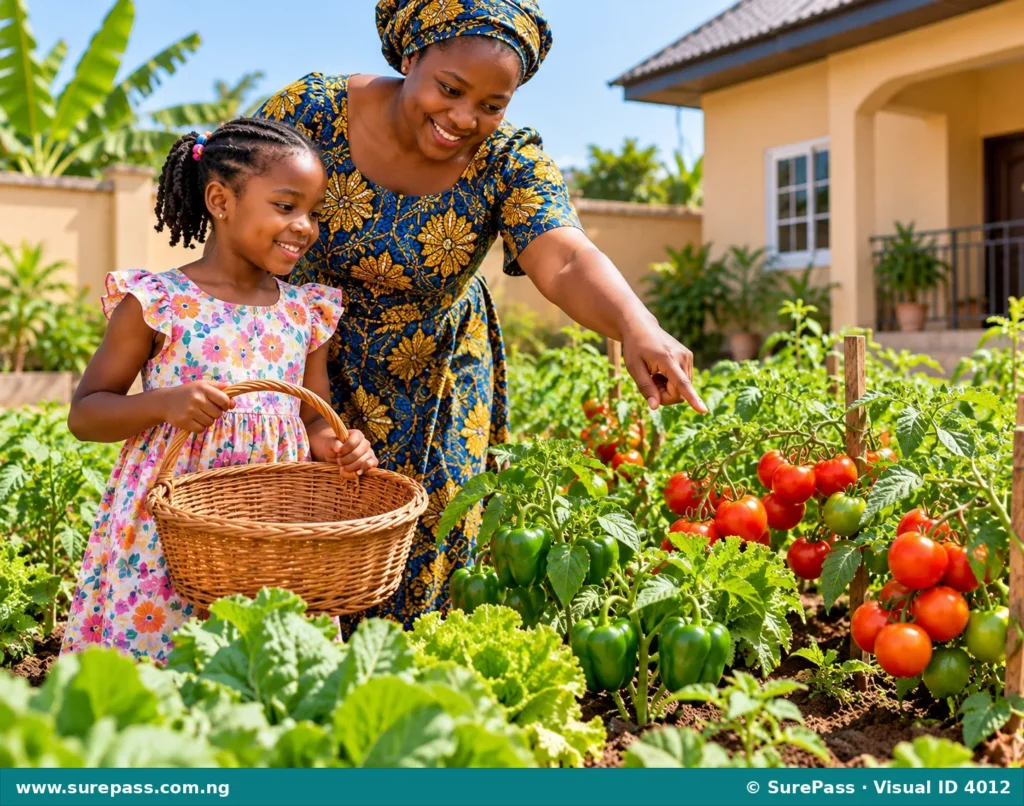
Imagine the story continues. Look at the picture below and try to predict what might happen next.
Now, answer these questions:
- What do you think Ada and her mother will do next in the garden?
- Why do you think they will do that? (Justify your prediction using clues from the picture and the story.)



0 comments
Open the discussion when you need it. Comments stay collapsed until requested so the initial article remains light.