



ARTICLE CONTENTSOn this page 6 sections
Handwriting
Performance Objectives
By the end of the lesson, students should be able to:
- copy sentences into their exercise books in their own handwriting;
- write clearly and legibly; and
- observe the spacing between letters in a word and words in a sentence.
- Observe descending and ascending letters in writing
Handwriting is the way people write using their hands. Good handwriting is important because it helps others read what is written easily. When writing, it is important to make sure the letters are clear, the words are spaced correctly, and some letters go up or down properly.
Writing Clearly and Legibly
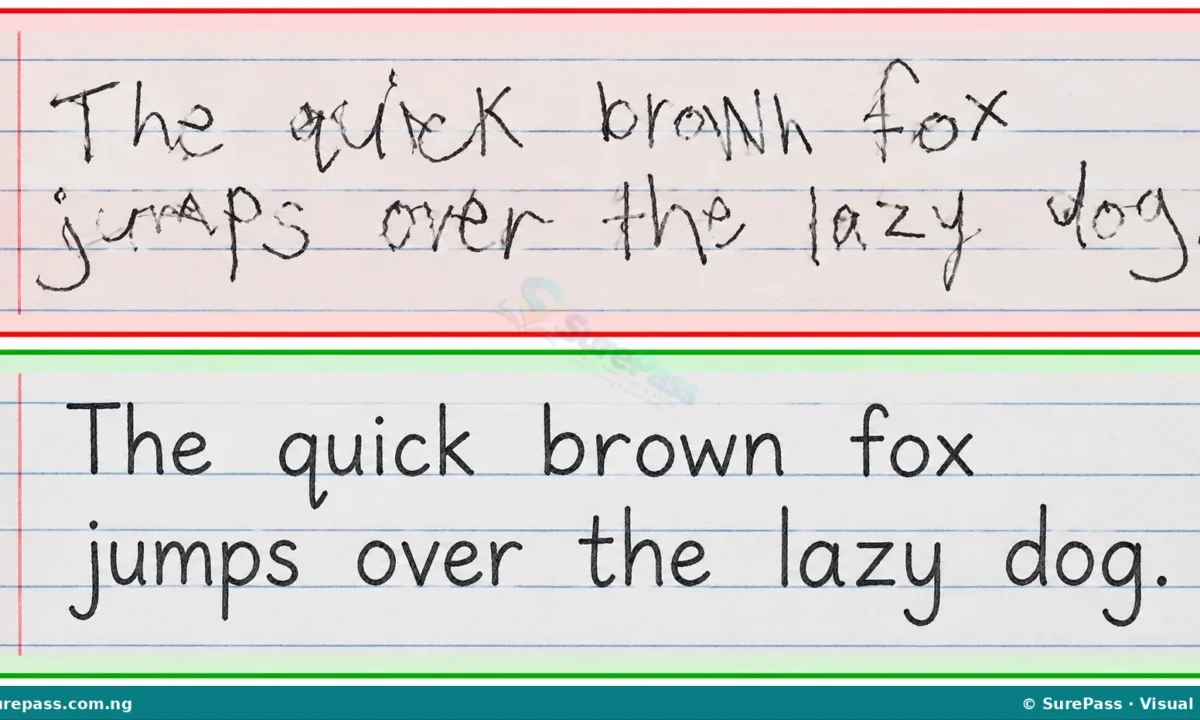
Writing clearly means making sure each letter can be easily seen and understood. Legible writing means that anyone who reads it can understand the words without difficulty. When letters are not clear, it can be hard to know what a word says.
To write clearly, form each letter carefully. Avoid making letters too small or too big. Each letter should have its own shape that is easy to recognise.
Observing Spacing
Good spacing makes writing easy to read. There are two main types of spacing to observe:
- Spacing between letters in a word.
- Spacing between words in a sentence.
Spacing Between Letters in a Word
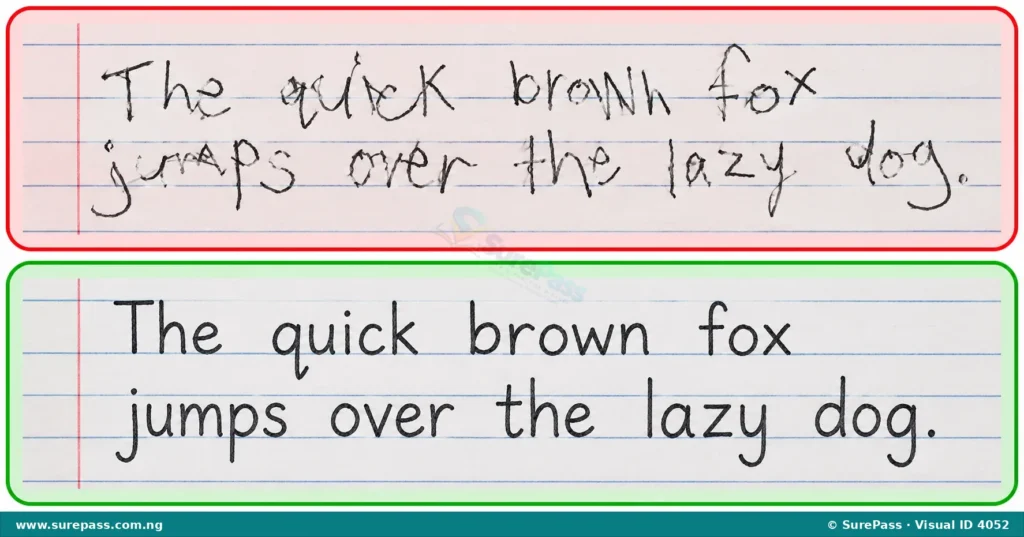
When writing a word, the letters should be close enough to each other to form a single word, but not touching or overlapping. Each letter needs its own small space so it does not get mixed up with the next letter.
Spacing Between Words in a Sentence
After writing a word, leave a small space before starting the next word. This space helps to separate one word from another. A good way to remember this is to imagine a small finger space between each word. This makes it easy to see where one word ends and the next one begins.
Observing Descending and Ascending Letters
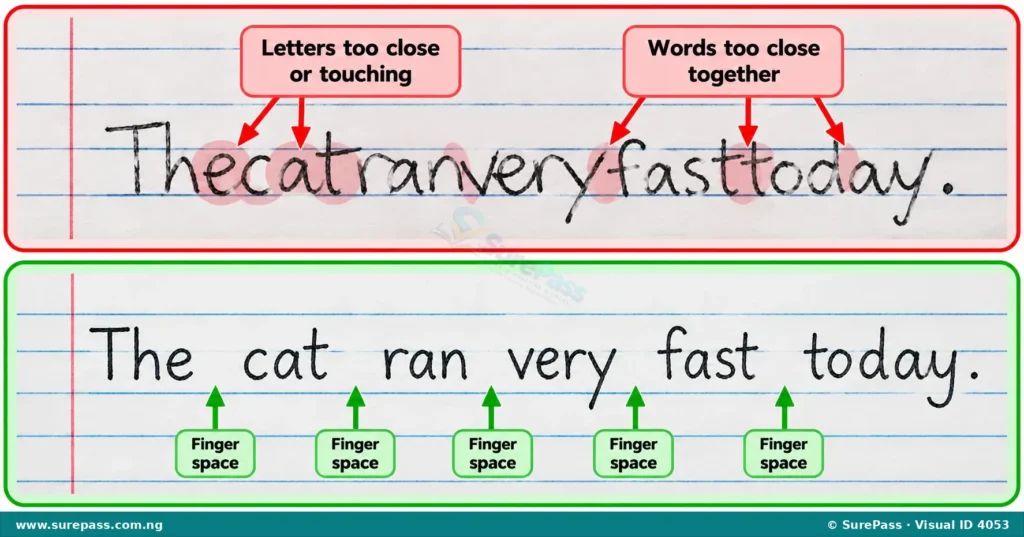
Some letters have parts that go above the main writing line, and some have parts that go below it. Paying attention to these parts helps make handwriting neat and correct.
Descending Letters (b, d, f, h, k, l, t)
In our curriculum, letters like ‘b’, ‘d’, ‘f’, ‘h’, ‘k’, ‘l’, and ‘t’ are called descending letters. These letters have parts that go up from the main body of the letter. For example, the tall stick of ‘b’ goes up, and the top part of ‘h’ also goes up. It is important to make these parts tall enough so they are clear.
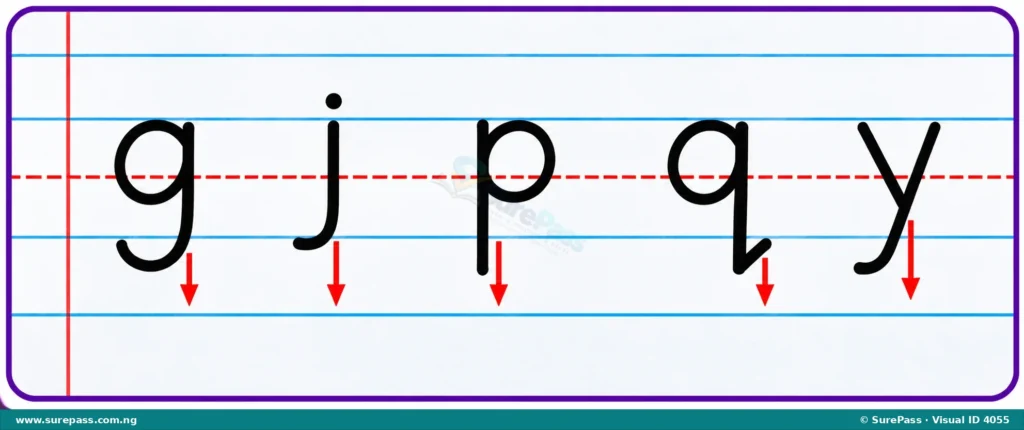
Ascending Letters (g, j, p, q, y)
Letters like ‘g’, ‘j’, ‘p’, ‘q’, and ‘y’ are called ascending letters in our curriculum. These letters have parts that go down below the main body of the letter. For example, the tail of ‘g’ goes down, and the bottom part of ‘j’ also goes down. These parts should go below the writing line to make the letters look correct.
Copying Sentences
Copying sentences helps to practise good handwriting. When copying, remember all the rules for clear writing, spacing, and letter formation.
How to Copy a Sentence Neatly
Copying a sentence neatly involves the following steps:
- Read the sentence: First, read the sentence you need to copy carefully. Understand what it says.
- Start at the beginning: Begin writing the first word of the sentence on the left side of your exercise book page.
- Form letters clearly: Write each letter carefully, making sure it is clear and easy to read.
- Observe letter heights: Pay attention to descending letters (b, d, f, h, k, l, t) that go up, and ascending letters (g, j, p, q, y) that go down.
- Space letters in a word: Make sure the letters within each word are close but do not touch.
- Space words in a sentence: Leave a small finger space after each word before writing the next word.
- Check your work: After copying the sentence, look at it. Is it clear? Is the spacing correct? Are the tall and long-tailed letters formed properly?
Practising these steps will help to improve handwriting and make it easy for everyone to read.




0 comments
Open the discussion when you need it. Comments stay collapsed until requested so the initial article remains light.