


ARTICLE CONTENTSOn this page 7 sections
Phonological Awareness (Syllable and word structure)
Performance Objectives
By the end of the lesson, students should be able to:
- Identify and count syllables in words;
- break simple words into syllables;
- break compound words into parts and identify the word parts;
What Are Syllables?
A syllable is a part of a word that has one sound. Words are made up of one or more syllables.
When a word is spoken, the mouth opens and closes for each syllable. Syllables help to break words into smaller, easier-to-say parts.
Identifying and Counting Syllables
One way to identify and count syllables is by clapping. Each time the mouth opens to make a sound in a word, a clap can be made. The number of claps tells how many syllables are in the word.
Another way to feel syllables is by placing a hand under the chin. Each time the chin drops when saying a word, it is usually a syllable.
Words with One Syllable
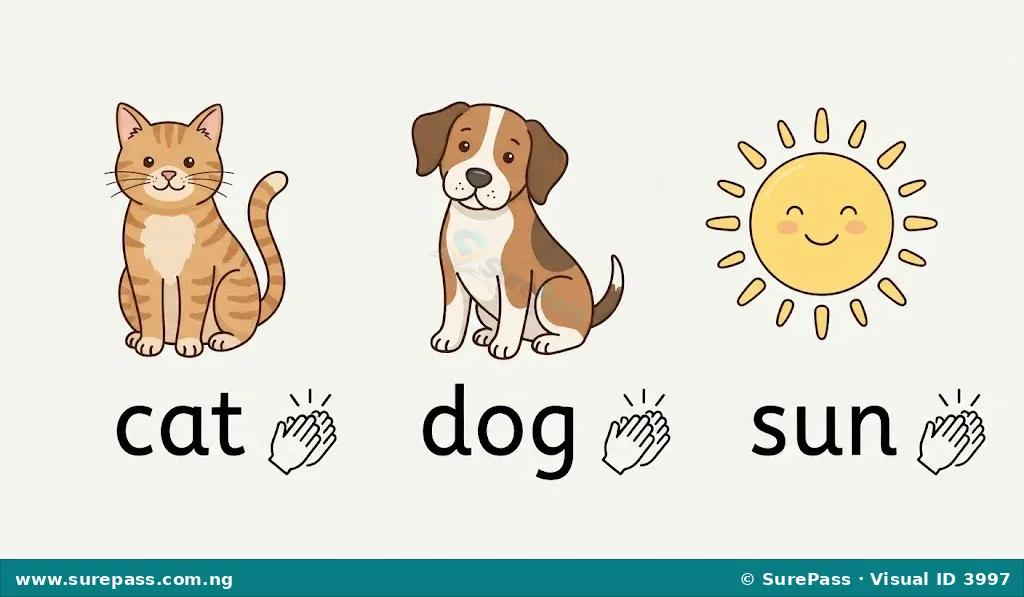
These words have only one sound part. The mouth opens once, and there is one clap.
Examples of one-syllable words include:
- cat (clap once: cat)
- dog (clap once: dog)
- sun (clap once: sun)
- fish (clap once: fish)
- run (clap once: run)
- go (clap once: go)
Words with Two Syllables
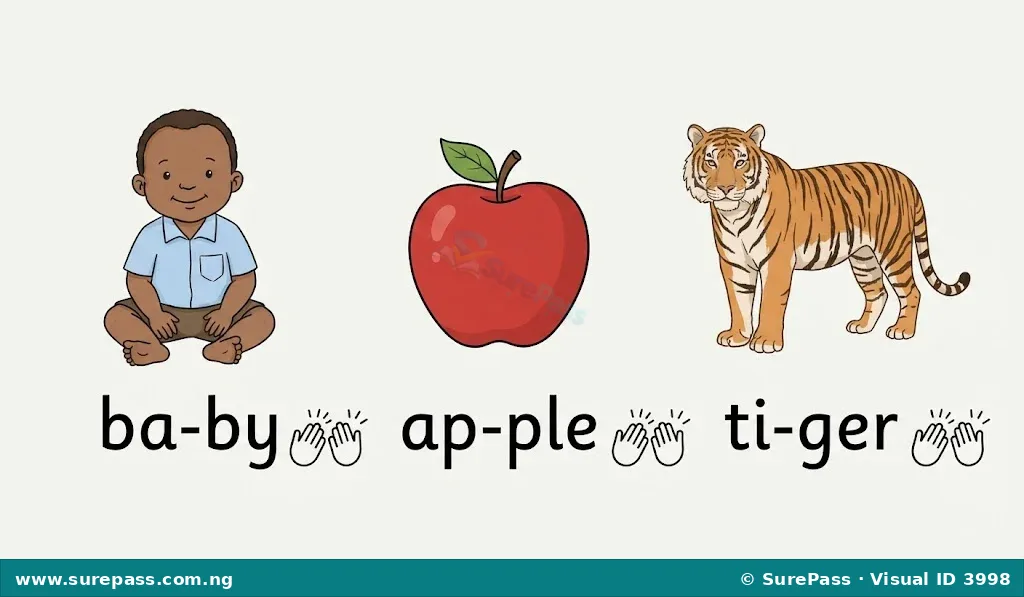
These words have two sound parts. The mouth opens twice, and there are two claps.
Examples of two-syllable words include:
- ba-by (clap twice: ba-by)
- wa-ter (clap twice: wa-ter)
- ap-ple (clap twice: ap-ple)
- ta-ble (clap twice: ta-ble)
- ti-ger (clap twice: ti-ger)
- mon-key (clap twice: mon-key)
Words with Three Syllables
These words have three sound parts. The mouth opens three times, and there are three claps.
Examples of three-syllable words include:
- ba-na-na (clap three times: ba-na-na)
- el-e-phant (clap three times: el-e-phant)
- com-pu-ter (clap three times: com-pu-ter)
Breaking Simple Words into Syllables
Breaking a simple word into syllables means showing its different sound parts. This helps in reading and spelling words correctly.
The procedure for breaking simple words into syllables involves the following steps:
- Say the word slowly.
- Clap for each sound part you hear.
- Write the word, putting a dash (-) between each syllable.
Here are some examples of simple words broken into syllables:
- pencil: pen-cil
- flower: flow-er
- happy: hap-py
- sister: sis-ter
- brother: bro-ther
- mango: man-go
What Are Compound Words?
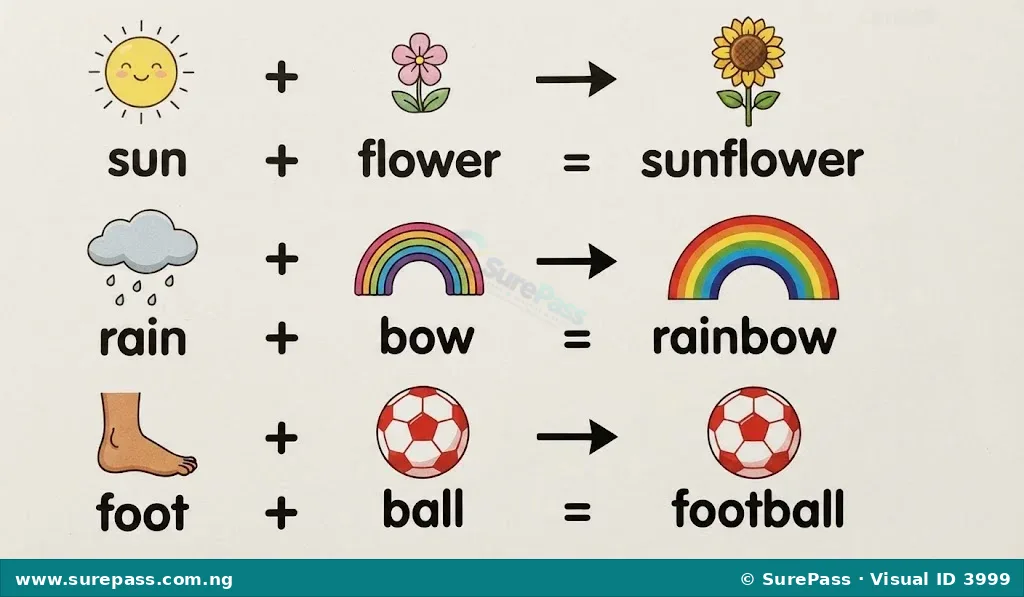
A compound word is a word made by joining two smaller, complete words together. When these two words are put together, they form a new word with its own meaning.
For example, the words “sun” and “flower” are two separate words. When they are joined, they make “sunflower,” which is a new word.
Breaking Compound Words into Parts
Breaking compound words into parts means finding the two smaller words that make up the bigger word. This helps to understand the meaning of the compound word.
The procedure for breaking compound words into parts involves the following steps:
- Say the compound word.
- Listen carefully for two smaller words inside it.
- Write down the two smaller words separately.
Here are some examples of compound words broken into their parts:
- sunflower: sun + flower
- rainbow: rain + bow
- football: foot + ball
- cupcake: cup + cake
- bedroom: bed + room
- toothbrush: tooth + brush
- playground: play + ground
- butterfly: butter + fly




0 comments
Open the discussion when you need it. Comments stay collapsed until requested so the initial article remains light.