



ARTICLE CONTENTSOn this page 9 sections
Sound clusters
Performance Objectives
By the end of the lesson, students should be able to:
- identify and pronounce initial consonant clusters;
- identify and pronounce final consonant clusters;
- blend sounds to form clusters;
- break clusters into individual sounds;
- clearly pronounce words with consonant clusters.
- identify and pronounce diagraphs.
What Are Sound Clusters?
Sound clusters are groups of two or three consonant sounds that are heard together in a word. Each consonant sound in the cluster is pronounced, but they are blended quickly.
For example, in the word “blue”, you can hear both the /b/ sound and the /l/ sound together. These sounds form a cluster.
Initial Consonant Clusters
Initial consonant clusters are groups of two or three consonant sounds that come at the beginning of a word. When these sounds are spoken, they blend smoothly together.
Learning to identify and pronounce these clusters helps in reading and speaking words correctly.
Identifying and Pronouncing Initial Consonant Clusters
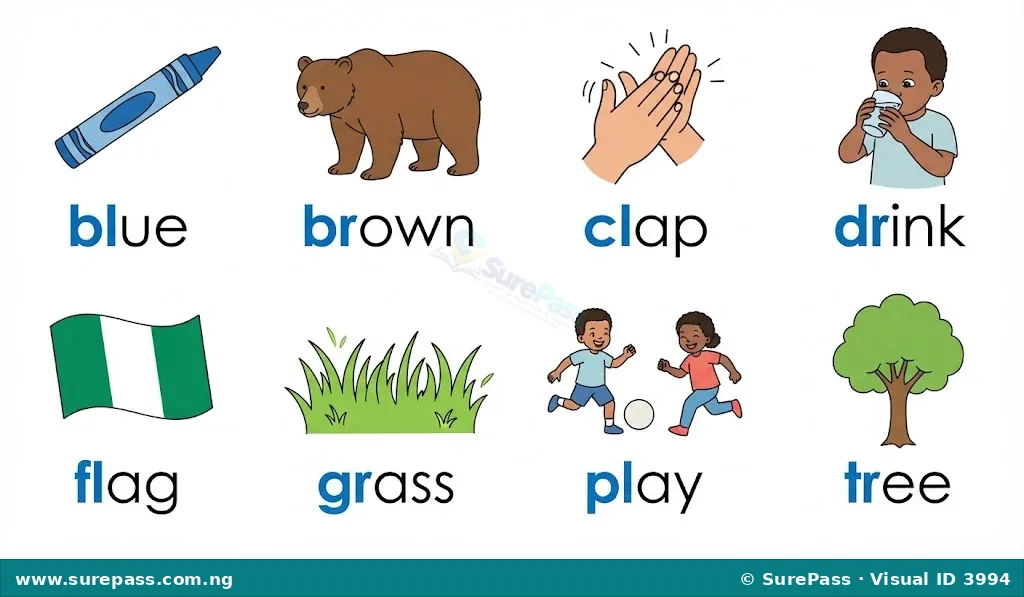
Here are some common initial consonant clusters and words that contain them:
- bl (as in blue, black, block)
- br (as in brown, bread, brush)
- cl (as in clap, clean, clock)
- dr (as in drink, drum, dress)
- fl (as in flag, flower, fly)
- gr (as in green, grape, grass)
- pl (as in play, plate, plant)
- tr (as in tree, train, truck)
Final Consonant Clusters
Final consonant clusters are groups of two or three consonant sounds that come at the end of a word. Just like initial clusters, these sounds blend together when spoken.
Recognising final clusters helps in sounding out words and improving pronunciation.
Identifying and Pronouncing Final Consonant Clusters
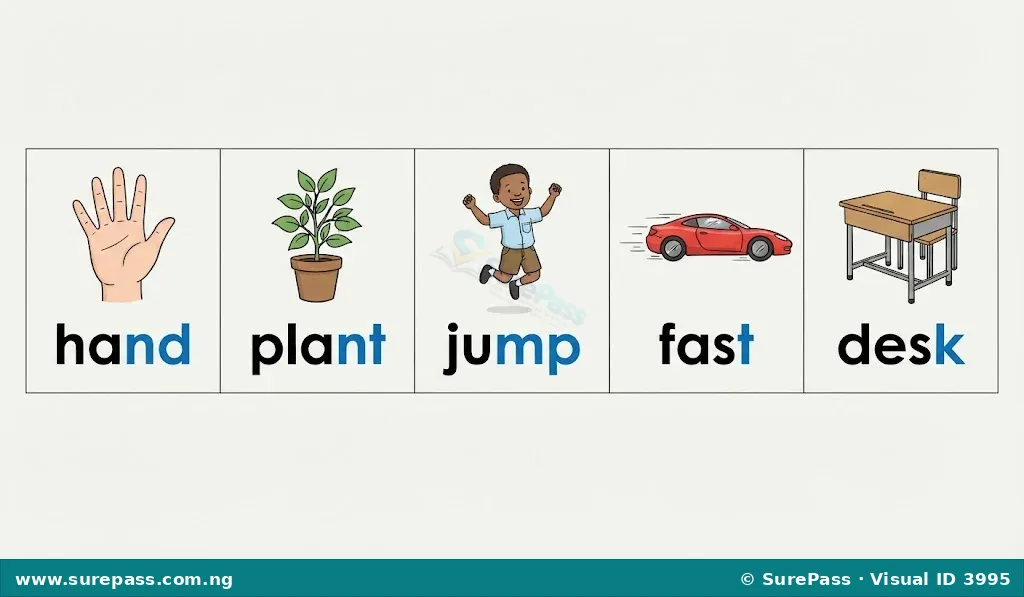
Here are some common final consonant clusters and words that contain them:
- nd (as in hand, sand, find)
- nt (as in plant, tent, hunt)
- mp (as in jump, lamp, stamp)
- st (as in fast, nest, test)
- sk (as in desk, task, mask)
Breaking Clusters into Individual Sounds
Breaking clusters means separating the consonant sounds that are blended together in a word. This skill helps in understanding how words are built from sounds.
How to Break Consonant Clusters
The procedure involves the following steps:
- Say the word slowly and clearly.
- Listen carefully to the sounds at the beginning or end of the word.
- Separate each consonant sound in the cluster.
For example:
- In the word “blue”, the cluster is bl. When broken, it sounds like /b/ and /l/.
- In the word “hand”, the cluster is nd. When broken, it sounds like /n/ and /d/.
- In the word “clap”, the cluster is cl. When broken, it sounds like /k/ and /l/.
Blending Sounds to Form Clusters
Blending sounds is the opposite of breaking them. It means putting individual consonant sounds together to form a cluster. This helps in building words from sounds.
How to Blend Sounds to Form Consonant Clusters
The procedure involves the following steps:
- Say two or three consonant sounds separately.
- Practice saying them quickly one after the other.
- Blend them smoothly to make a cluster sound.
For example:
- If you say /b/ and then /l/, blending them quickly gives you the bl sound.
- If you say /g/ and then /r/, blending them quickly gives you the gr sound.
- If you say /n/ and then /t/, blending them quickly gives you the nt sound.
Clear Pronunciation of Words with Consonant Clusters
Pronouncing words with consonant clusters clearly means making sure every sound in the cluster is heard. This makes speech easier to understand.
Practising Clear Pronunciation
To pronounce words with consonant clusters clearly, remember to:
- Listen carefully to how the cluster sounds.
- Say each sound in the cluster, but blend them quickly.
- Do not drop any sound in the cluster.
Practice saying these words aloud:
- black, bring, class, drop, flat, grow, plan, try
- lend, want, camp, best, desk
What Are Digraphs?
A digraph is a pair of two letters that make one single sound. Unlike consonant clusters where each sound is heard, in a digraph, the two letters work together to create a new, single sound.
For example, in the word “ship”, the letters ‘s’ and ‘h’ come together to make one /sh/ sound.
Identifying and Pronouncing Digraphs
Here are some common digraphs and words that contain them:
- sh (as in ship, fish, shoe)
- ch (as in chair, watch, chicken)
- th (as in thin, bath, mouth)
- wh (as in whale, wheel, white)
- ck (as in duck, neck, block)
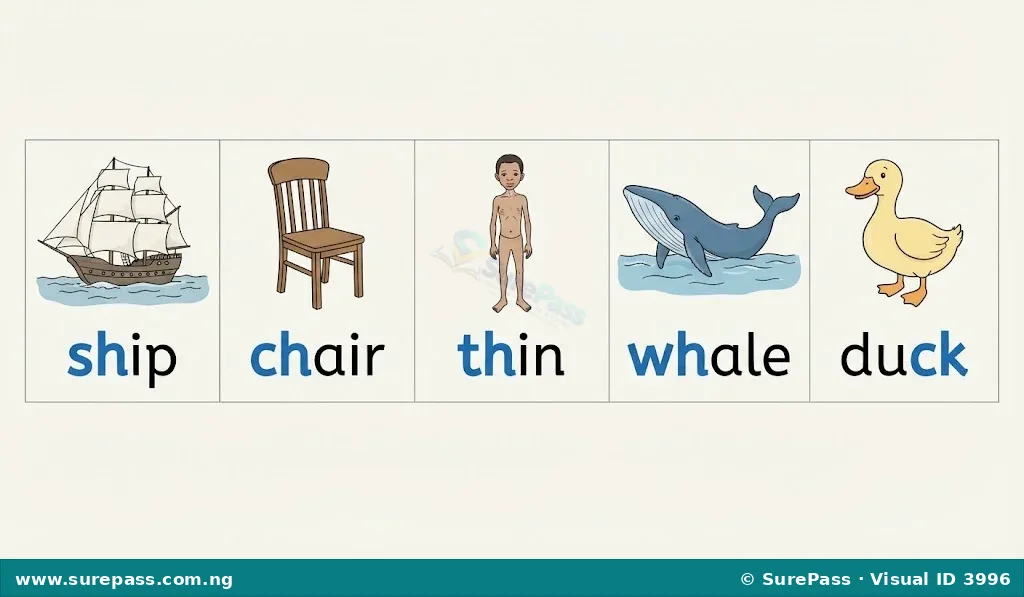
When you see these letter pairs, remember they make one sound, not two separate sounds like in consonant clusters.





0 comments
Open the discussion when you need it. Comments stay collapsed until requested so the initial article remains light.