


ARTICLE CONTENTSOn this page 12 sections
Identification of Common Objects
Performance Objectives
By the end of the lesson, students should be able to:
- identify simple objects and their names;
- explain shapes of objects;
- discuss objects, shapes and sizes;
- draw simple objects and shapes; and
- state the differences between shapes and sizes.
What Are Objects?
An object is anything that can be seen or touched. Objects are all around us, in our homes, schools and playgrounds.
Identifying objects means knowing their names and what they look like.
Identifying Objects in the Home
Many objects are found in the home. These objects are used for different tasks every day.
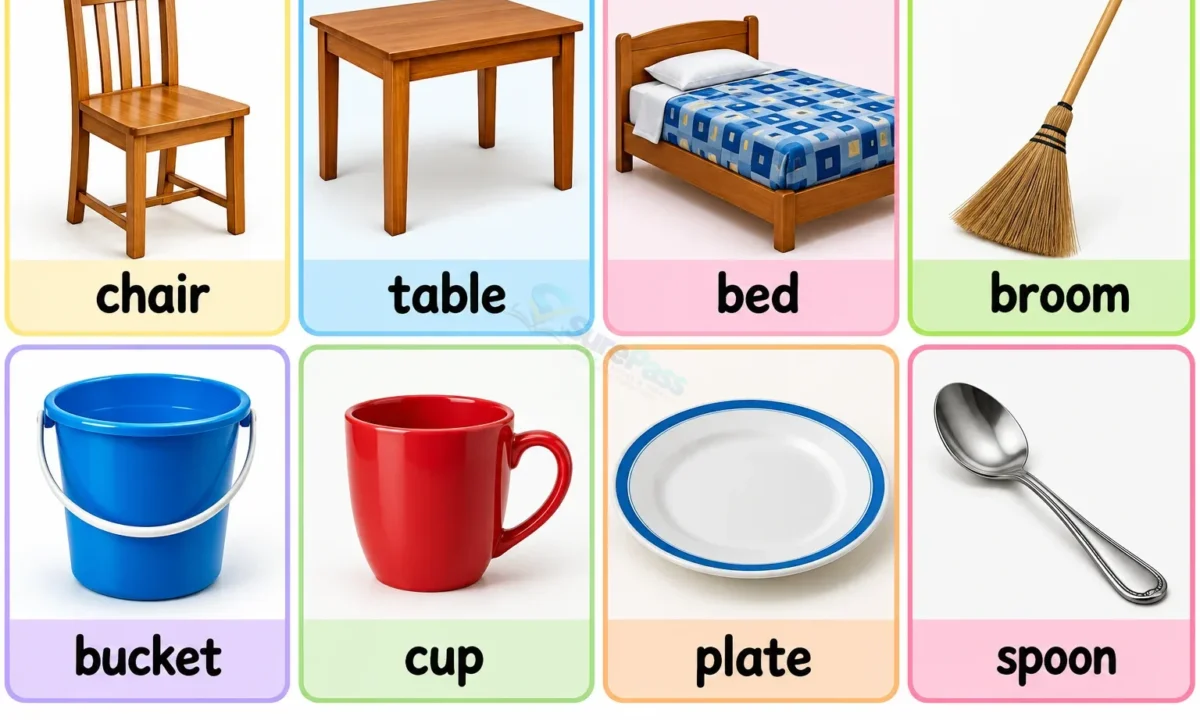
Common objects found in the home include:
- A chair
- A table
- A bed
- A broom
- A bucket
- A cup
- A plate
- A spoon
Identifying Objects in the School
The school also has many objects that pupils use for learning and playing.
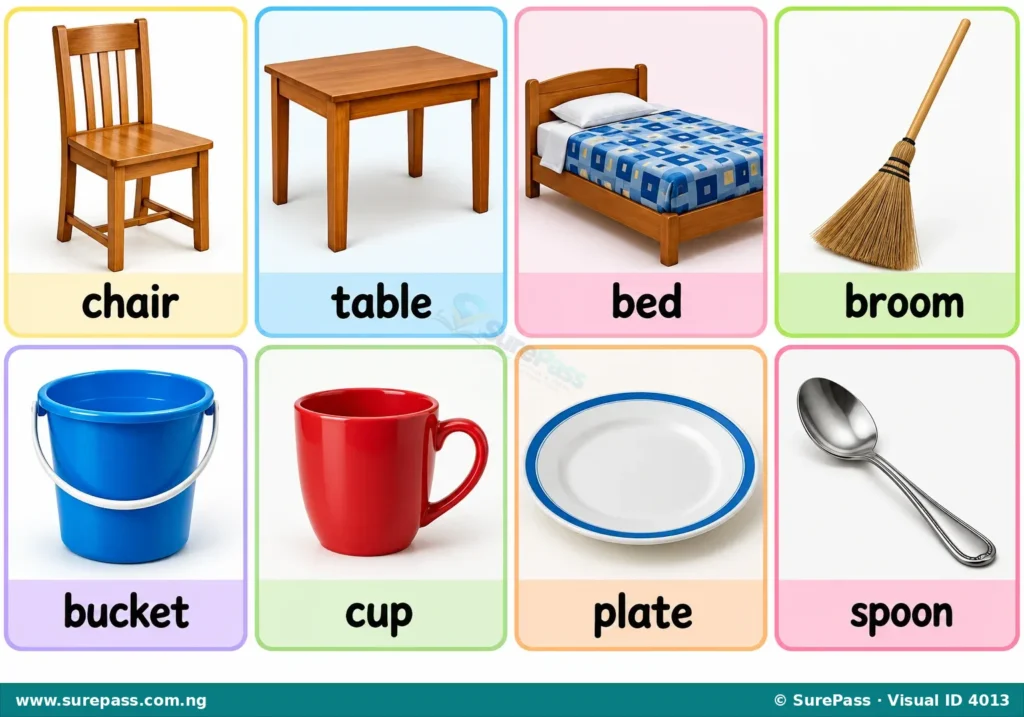
Common objects found in the school include:
- A desk
- A blackboard
- A book
- A pencil
- A crayon
- A ruler
- A bag
- A ball
Identifying Objects in the Playground
Playgrounds are places where children play. They have special objects for playing.
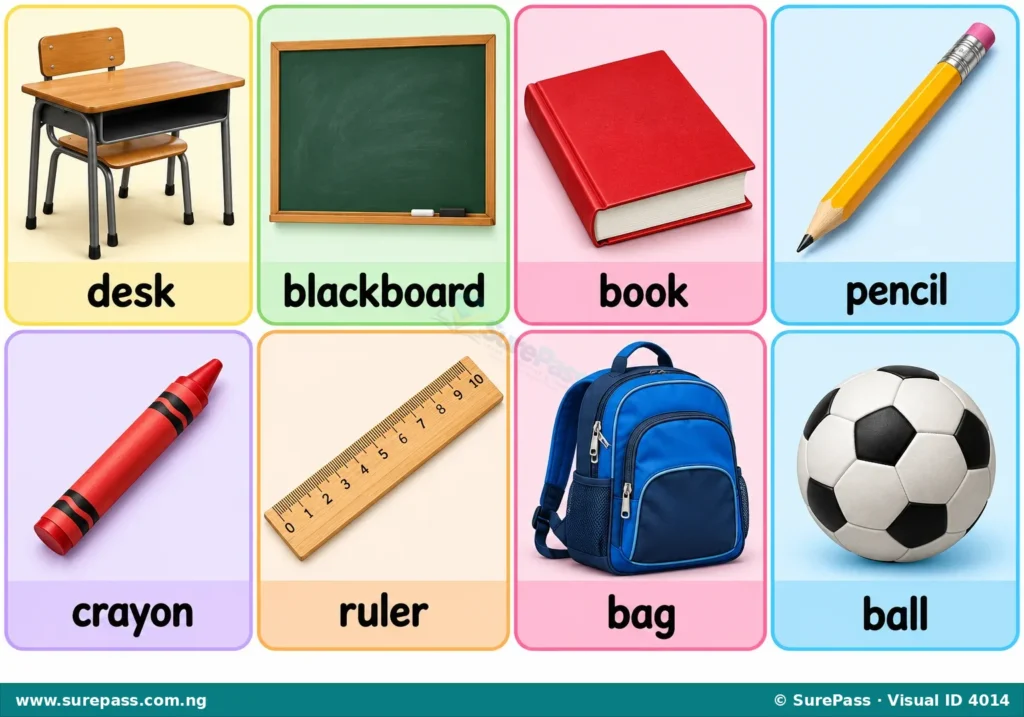
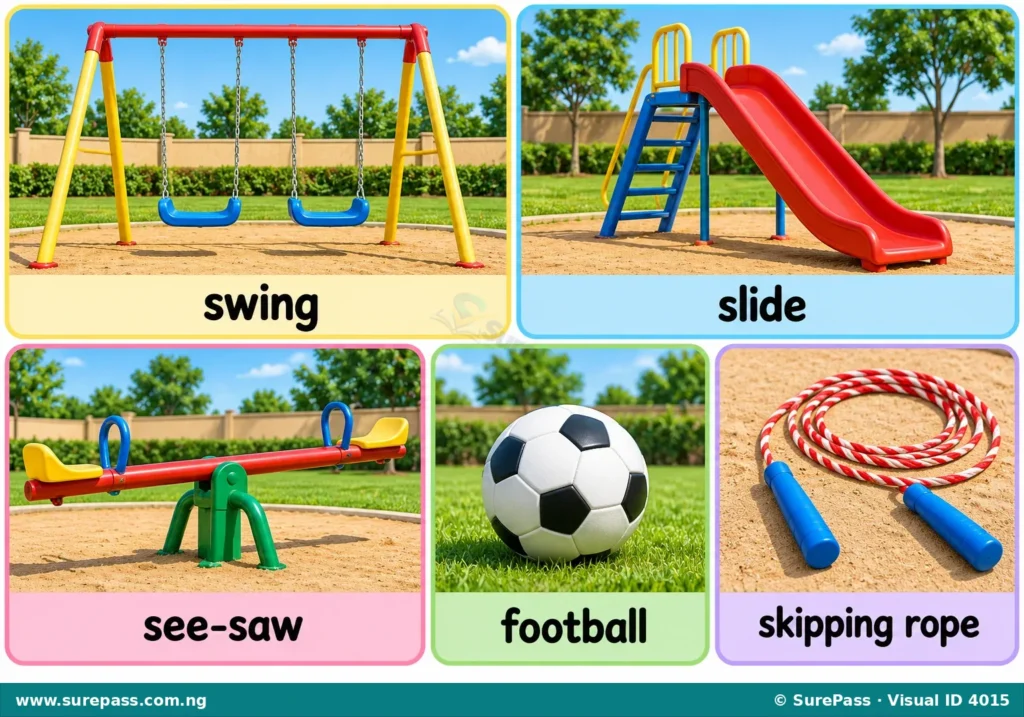
Common objects found in the playground include:
- A swing
- A slide
- A see-saw
- A football
- A skipping rope
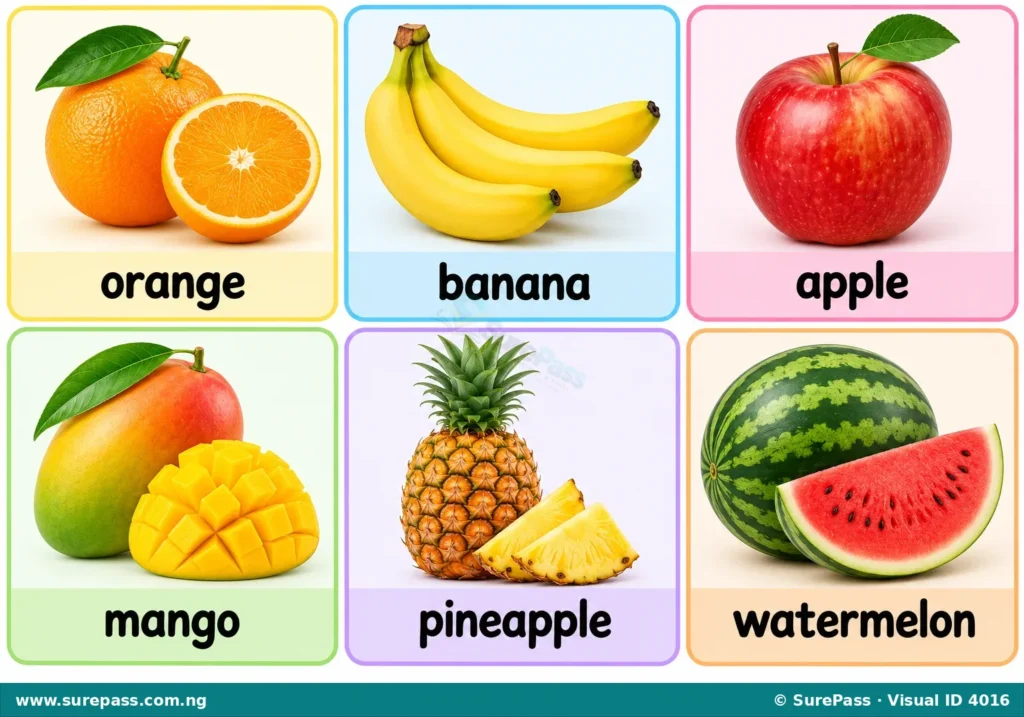
Identifying Common Fruits
Fruits are healthy foods that come from plants. They have different colours, shapes and sizes.
Common fruits include:
- An orange
- A banana
- An apple
- A mango
- A pineapple
- A watermelon
Major Colours
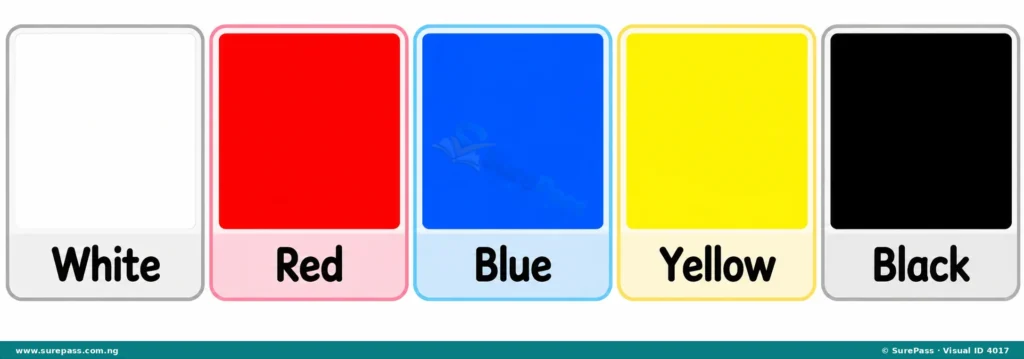
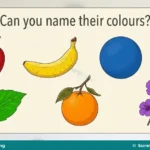
Colours help to describe objects. Many objects have different colours.
The major colours are:
- White
- Red
- Blue
- Yellow
- Black
Describing Objects by Colour and Size
Objects can be described by their colour and size. This helps to tell them apart.
When describing an object, the colour is usually mentioned first, then the object, and sometimes the size.
Examples of describing objects by colour and size include:
- A yellow bag
- A red bucket
- A green book
- A small blue ball
- A big black car
- A white plate
The size of an object can be described as big, small, long, short, tall or tiny.
Shapes of Objects
Objects also have different shapes. A shape is the outline or form of an object.
The basic shapes are:
- A triangle
- A circle
- A square
- A rectangle
Triangle
A triangle is a shape with three straight sides and three corners.
Objects that look like a triangle include a slice of pizza or a party hat.
Circle
A circle is a round shape with no straight sides or corners.
Objects that look like a circle include a ball, a plate or a clock face.
Square
A square is a shape with four equal straight sides and four corners. All sides of a square are the same length.
Objects that look like a square include a window pane or a small box.
Rectangle
A rectangle is a shape with four straight sides and four corners. It has two long sides and two short sides.
Objects that look like a rectangle include a book, a door or a blackboard.
Differentiating Shapes and Sizes
Differentiating shapes and sizes means telling the difference between them.
Shapes tell us about the form or outline of an object, such as whether it is round like a circle or has straight sides like a square.
Sizes tell us how big or small an object is. An object can be big or small, long or short, regardless of its shape.
For example, a big circle is different from a small circle because of its size, but both are still circles because of their shape. A square book is different from a rectangular door because of its shape, even if both are big objects.
Drawing Simple Objects and Shapes
Drawing helps to understand and remember objects and shapes. It is a fun way to practise identifying them.
How to Draw a Square
The procedure involves the following steps:
- Take a piece of paper and a pencil.
- Draw a straight line across the paper.
- From one end of the first line, draw another straight line downwards, making sure it is the same length as the first line.
- From the other end of the first line, draw another straight line downwards, also the same length.
- Connect the bottom ends of the two downward lines with a straight line.
- The shape formed is a square.
How to Draw a Circle
The procedure involves the following steps:
- Take a piece of paper and a pencil.
- Place the pencil on the paper.
- Move the pencil in a smooth, continuous curve until it meets the starting point, forming a round shape.
- The shape formed is a circle.
Drawing Simple Objects
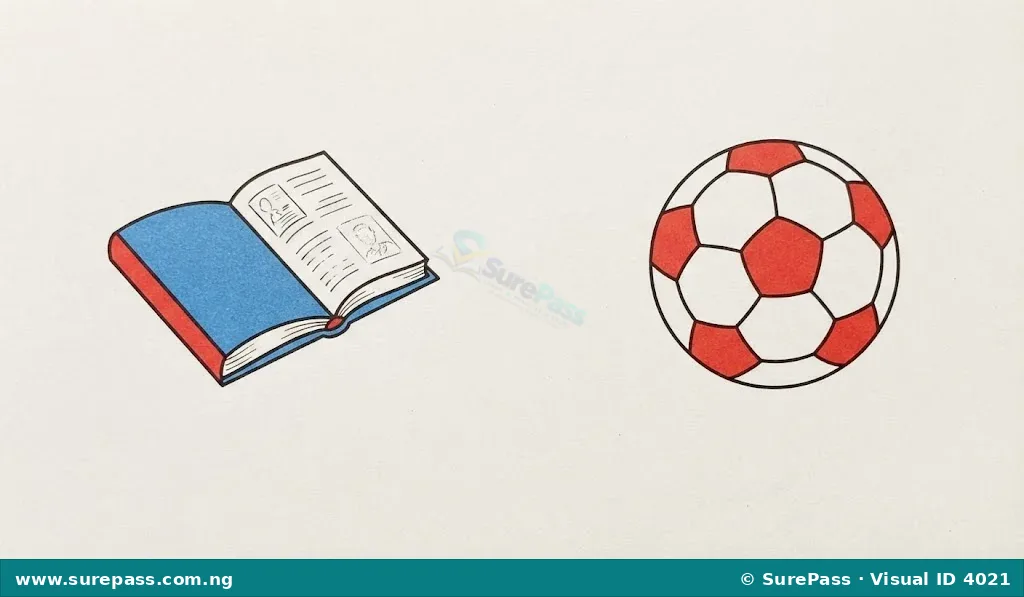
To draw a simple object like a book, combine shapes. A book is usually a rectangle. To draw a book:
- Draw a rectangle for the main body of the book.
- Add a smaller rectangle on one side for the spine.
- Draw a few lines inside the main rectangle to show pages.
To draw a simple object like a ball, draw a circle. To draw a ball:
- Draw a circle.
- Add a few curved lines inside the circle to give it a round look.


0 comments
Open the discussion when you need it. Comments stay collapsed until requested so the initial article remains light.