



ARTICLE CONTENTSOn this page 9 sections
Simple Commands
Performance Objectives
By the end of the lesson, students should be able to:
- give and carry out simple commands using appropriate tones;
- recognize simple commands;
- give examples of simple commands at home, school, etc.
What Are Simple Commands?
A simple command is a short instruction that tells someone to do something. It is a way of asking or telling a person to perform an action.
Commands are usually clear and easy to understand. They help people know what to do in different situations.
Recognising Simple Commands
People recognise simple commands by listening carefully to the words spoken. The words in a command often tell a person to perform an action, such as ‘stand’, ‘sit’, ‘go’, or ‘wash’.
When a command is given, the listener understands that an action is expected from them. For example, when someone says “Stand up!”, the listener knows they should rise to their feet.
Giving Simple Commands
Giving simple commands means telling someone what to do. When giving a command, it is important to speak clearly so that the listener can understand.
The tone of voice used when giving a command is also important. Commands should be given in a clear and firm voice, but not in an angry or rude way. Sometimes, adding ‘please’ can make a command sound more polite.

Following Simple Commands
Following simple commands means doing what you are told. It is important to listen carefully to the command and then carry out the action quickly and correctly.
Listening is a very important skill when following commands. When a person listens well, they can understand exactly what they need to do.

Simple Commands at Home
Many simple commands are used every day in the home. These commands help family members to do their chores and keep the house tidy.
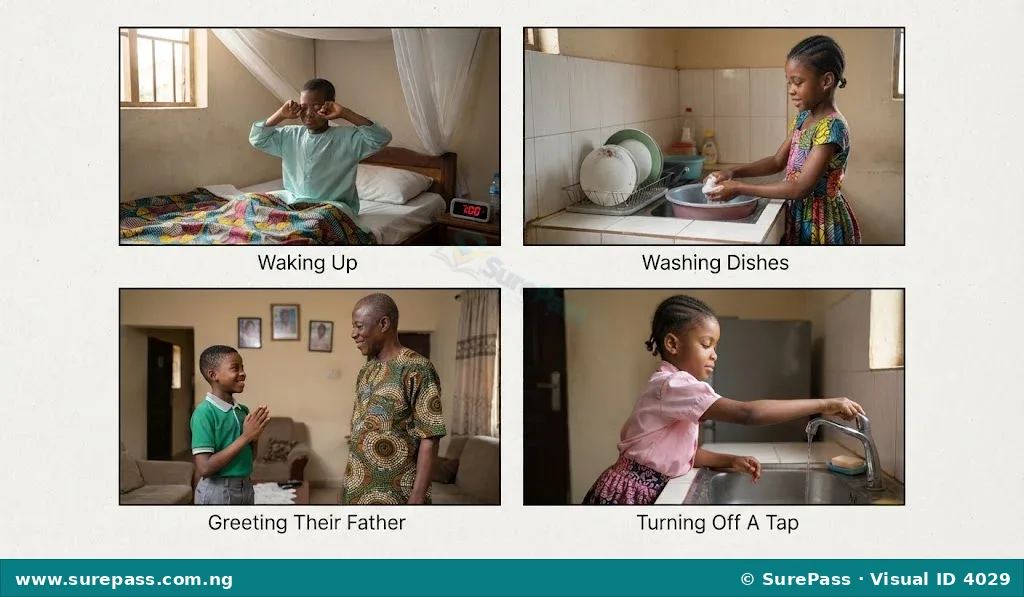
Examples of simple commands used at home include:
- Wake up! This command is used to tell someone to get out of bed in the morning.
- Go to bed! This command tells someone it is time to sleep.
- Greet your daddy! This command reminds a child to say hello to their father.
- Wash the dishes! This command tells someone to clean the plates, cups, and spoons after eating.
- Dress the bed! This command means to arrange the bedsheets and pillows neatly.
- Turn off the tap! This command tells someone to close the water tap to stop water from flowing.
Simple Commands at School
Simple commands are also used often in school. Teachers give commands to help pupils learn and keep the classroom organised.
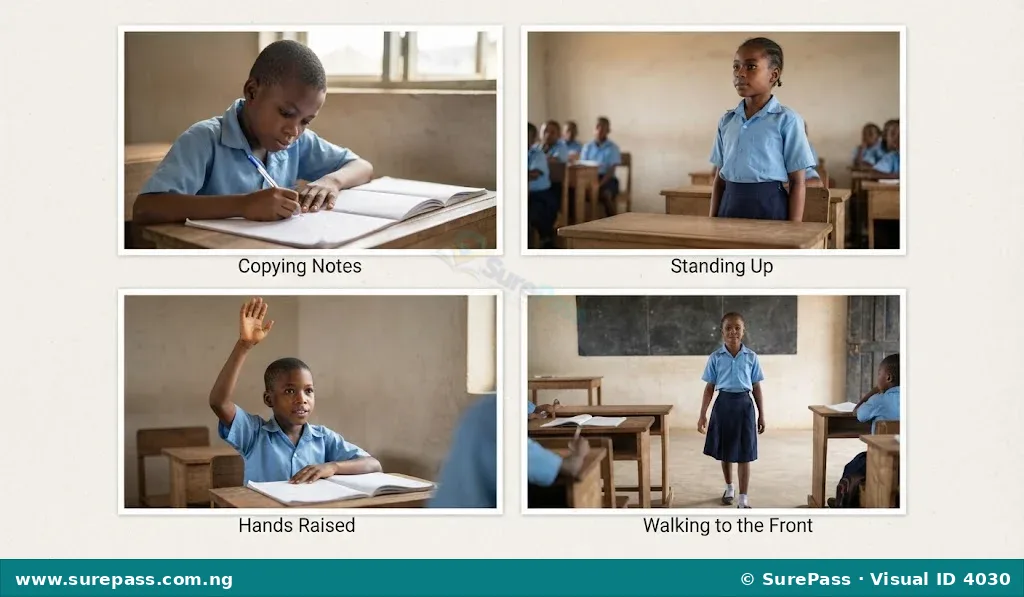
Examples of simple commands used at school include:
- Copy your note! This command tells pupils to write down the information from the board or a book into their notebooks.
- Stand up! This command tells pupils to rise from their seats.
- Put your hands up! This command tells pupils to raise their hands, often to answer a question or ask for permission.
- Come to the front of the class! This command tells a pupil to walk to the front part of the classroom.
Practising Giving and Following Commands
Practising giving and following commands helps to improve listening and speaking skills. It also helps people to understand each other better.
How to Give a Command Clearly
The procedure for giving a command clearly involves the following steps:
- Think about the action you want someone to do.
- Choose simple words that describe the action.
- Speak in a clear voice, not too fast or too slow.
- Use a friendly but firm tone.
- Look at the person you are giving the command to.
How to Follow a Command Correctly
The procedure for following a command correctly involves the following steps:
- Listen carefully to all the words in the command.
- Think about what action the command is asking you to do.
- Perform the action quickly and correctly.
- If you do not understand, you can politely ask for the command to be repeated.





0 comments
Open the discussion when you need it. Comments stay collapsed until requested so the initial article remains light.