



ARTICLE CONTENTSOn this page 5 sections
التحايا والاستئذان والتسامح
Performance Objectives
By the end of the lesson, students should be able to:
- ينطقوا بصيغة التحايا ابللغة العربية نطقا صحيحا ؛
- يذكروا ألفاظ االستئذان ابللغة العربية ؛
- يستخدموا صيغة التسامح ابللغة العربية.
Learning to speak Arabic includes knowing how to greet people, ask for permission, and use polite words. These words help people to talk to each other in a kind and respectful way.
التحايا: Greetings
Greetings are words used to say hello to people at different times of the day. Using the correct greeting shows respect and friendliness.
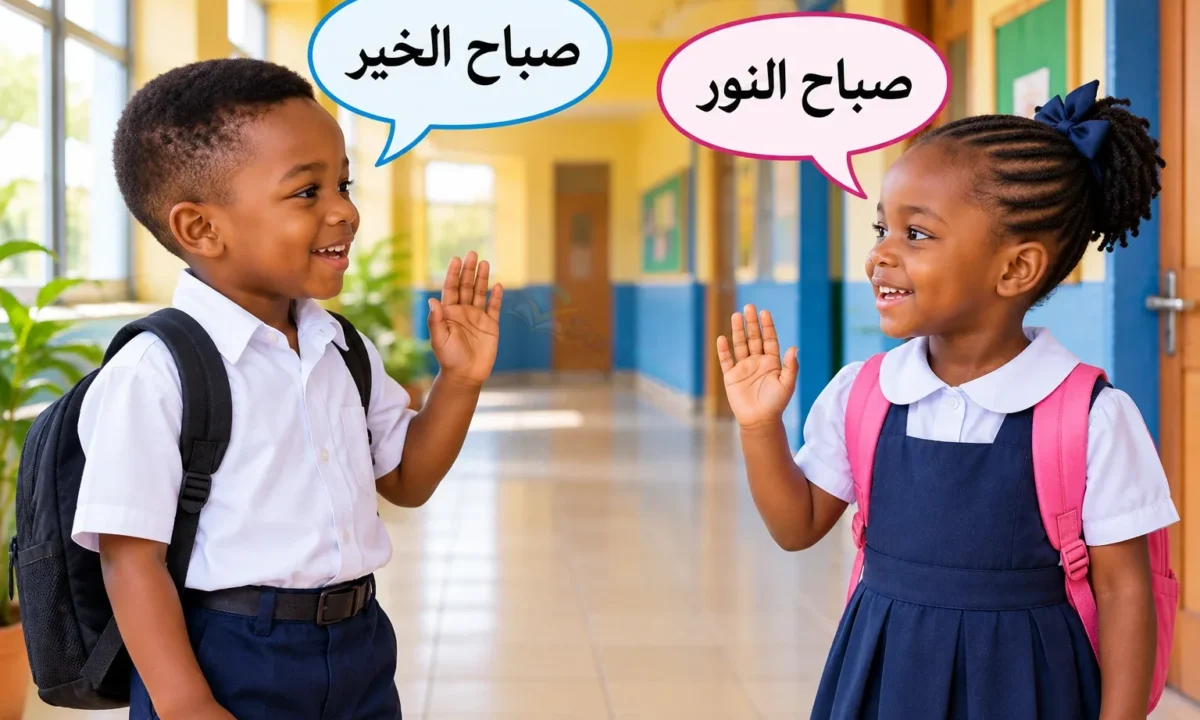
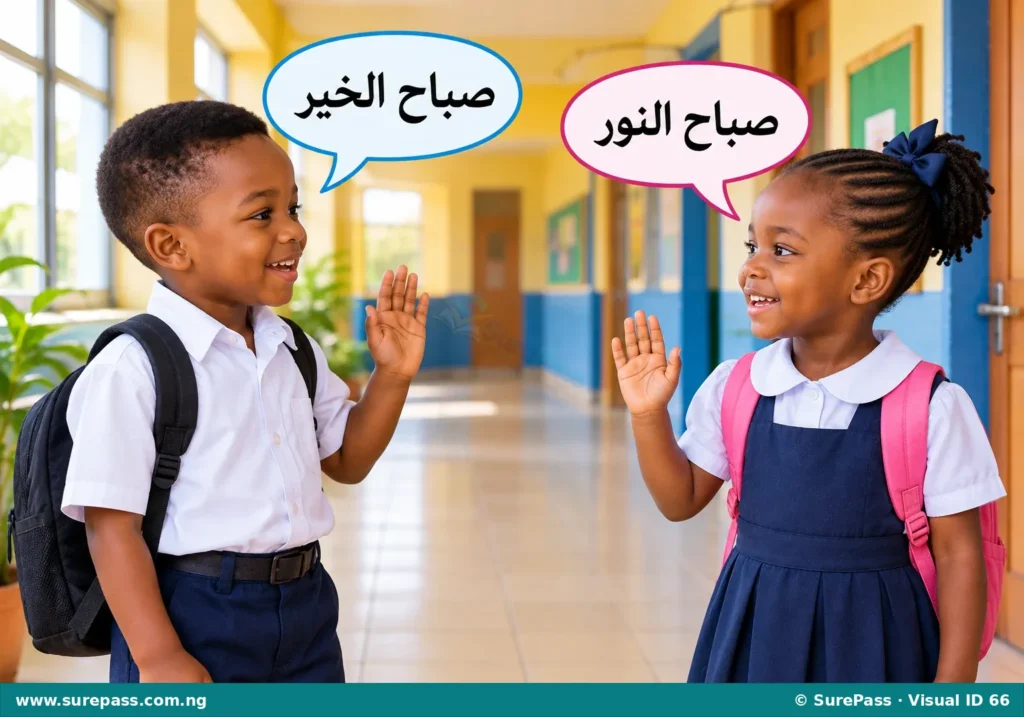
التحية الصباحية: Morning Greeting
When people meet in the morning, they say a special greeting. This greeting is used from sunrise until midday.
The morning greeting is:
- صباح الخير (Sabah al-khayr)
This means “Good morning”.
The reply to “صباح الخير” is:
- صباح النور (Sabah an-noor)
This means “Morning of light” or “Good morning to you too”.
التحية في النهار: Daytime Greeting
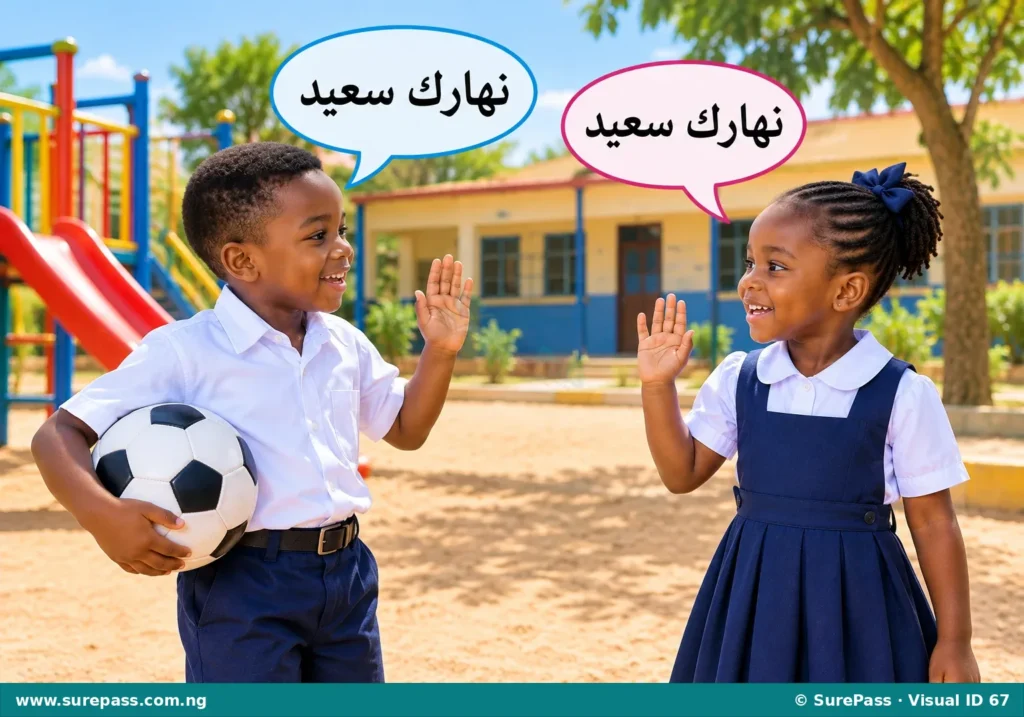
When people meet during the day, after morning and before evening, they use a daytime greeting. This greeting is used when the sun is high in the sky.
The daytime greeting is:
- نهارك سعيد (Naharak sa’eed)
This means “Have a happy day” or “Good day”.
The reply to “نهارك سعيد” is also:
- نهارك سعيد (Naharak sa’eed)
This means “Have a happy day to you too”.
التحية المسائية: Evening Greeting
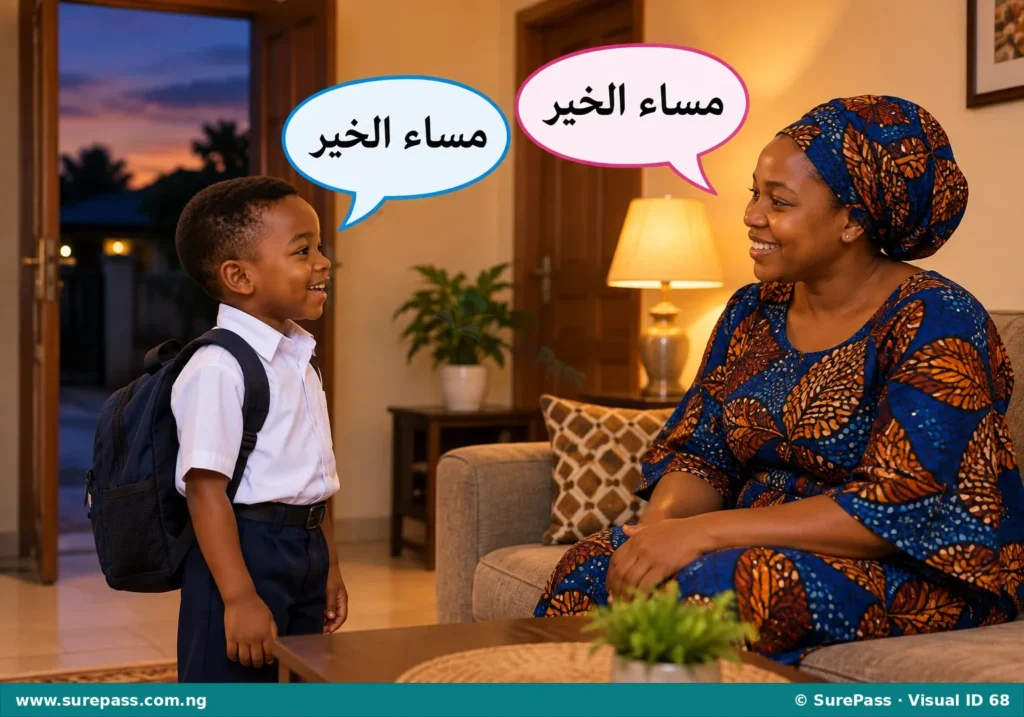
When people meet in the evening, after the day has ended and it starts to get dark, they use an evening greeting.
The evening greeting is:
- مساء الخير (Masa’ al-khayr)
This means “Good evening”.
The reply to “مساء الخير” is also:
- مساء الخير (Masa’ al-khayr)
This means “Good evening to you too”.
Practice: Saying Greetings
Practicing these greetings helps to say them correctly. Listen carefully and repeat the words.
The practice steps are:
- Listen to the teacher say each greeting and its reply.
- Repeat “صباح الخير” and “صباح النور” several times.
- Repeat “نهارك سعيد” and its reply several times.
- Repeat “مساء الخير” and its reply several times.
- Practice with a partner, taking turns to say the greeting and the reply.
الاستئذان: Asking Permission
Asking for permission means asking if it is okay to do something. It is polite to ask for permission before entering a room or sitting on someone’s chair.
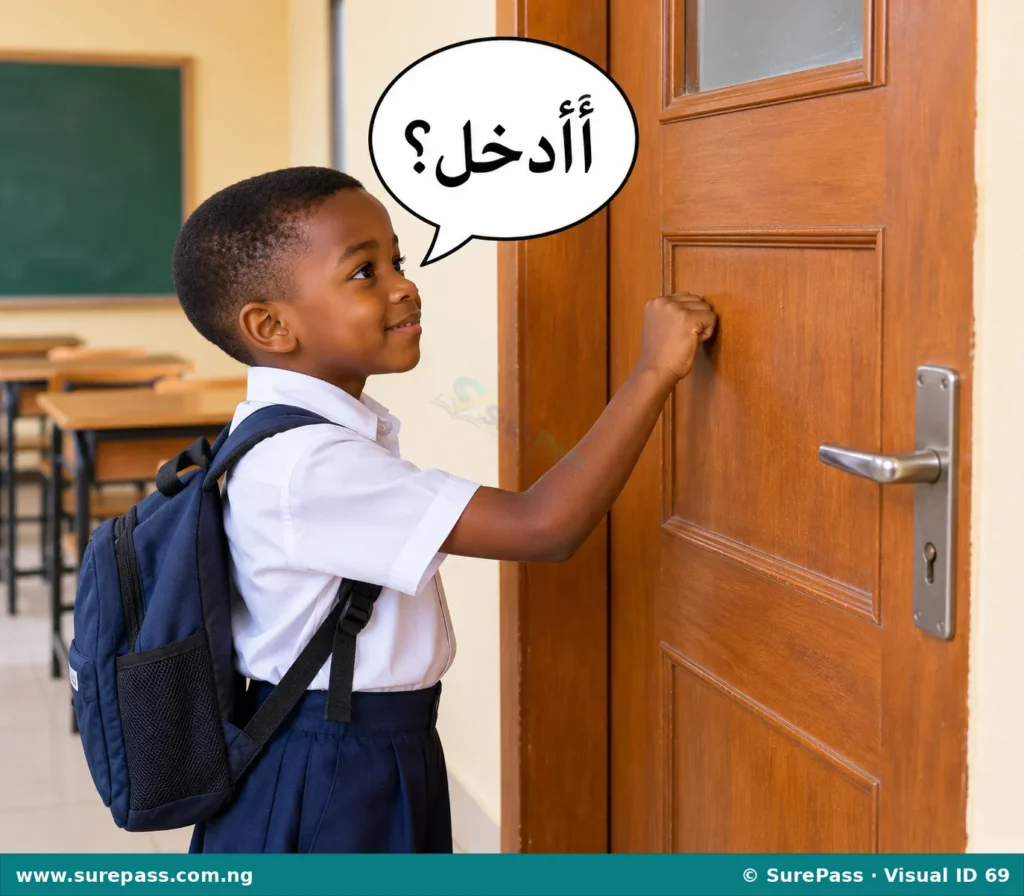
أأدخل؟ May I enter?
When a person wants to go into a room, they should ask for permission first. This shows respect for the people inside.
The phrase for asking to enter is:
- أأدخل؟ (A’adkhul?)
This means “May I enter?” or “Can I come in?”.
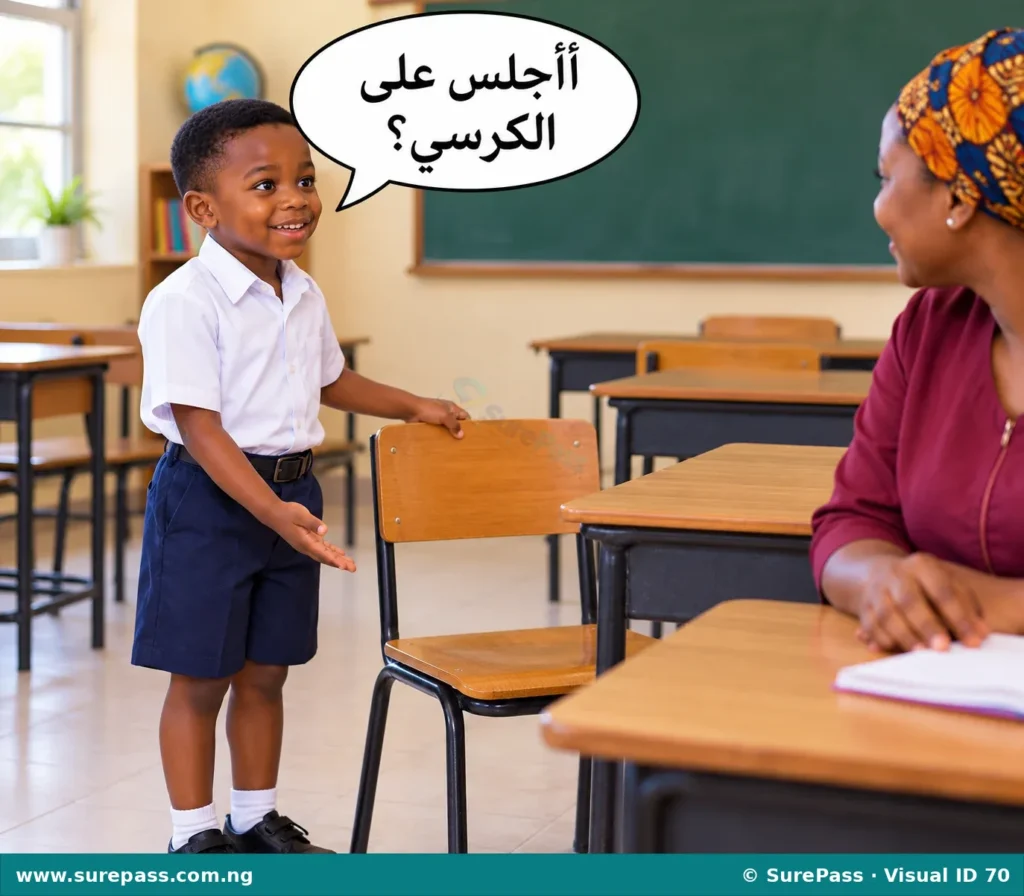
أأجلس على الكرسي؟ May I sit on the chair?
Before sitting on a chair that belongs to someone else, or if a person is unsure, it is polite to ask for permission.
The phrase for asking to sit on a chair is:
- أأجلس على الكرسي؟ (A’ajlis ‘ala al-kursi?)
This means “May I sit on the chair?”.
Practice: Asking Permission
Practicing these phrases helps to use them correctly in different situations.
The practice steps are:
- Listen to the teacher say “أأدخل؟” and “أأجلس على الكرسي؟”.
- Repeat “أأدخل؟” several times, imagining knocking on a door.
- Repeat “أأجلس على الكرسي؟” several times, imagining pointing to a chair.
- Practice with a partner, taking turns to ask for permission in simple role-play.
ألفاظ التسامح: Polite Phrases
Polite phrases are words that show kindness, apology, and respect. Using these words helps to be friendly and understanding with others.
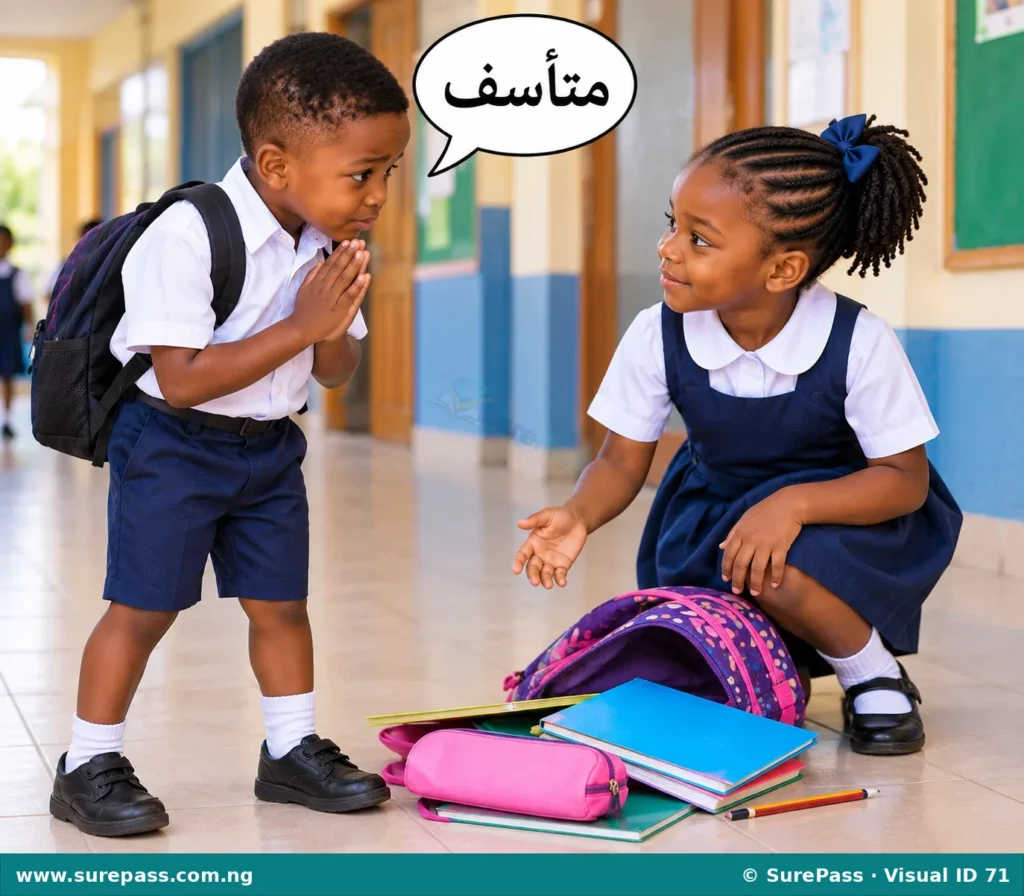
متأسف: I am sorry
When a person makes a mistake or accidentally hurts someone, it is important to say “I am sorry”. This shows that the person cares about others’ feelings.
The phrase for saying “I am sorry” is:
- متأسف (Muta’assif)
This means “I am sorry” or “My apologies”.
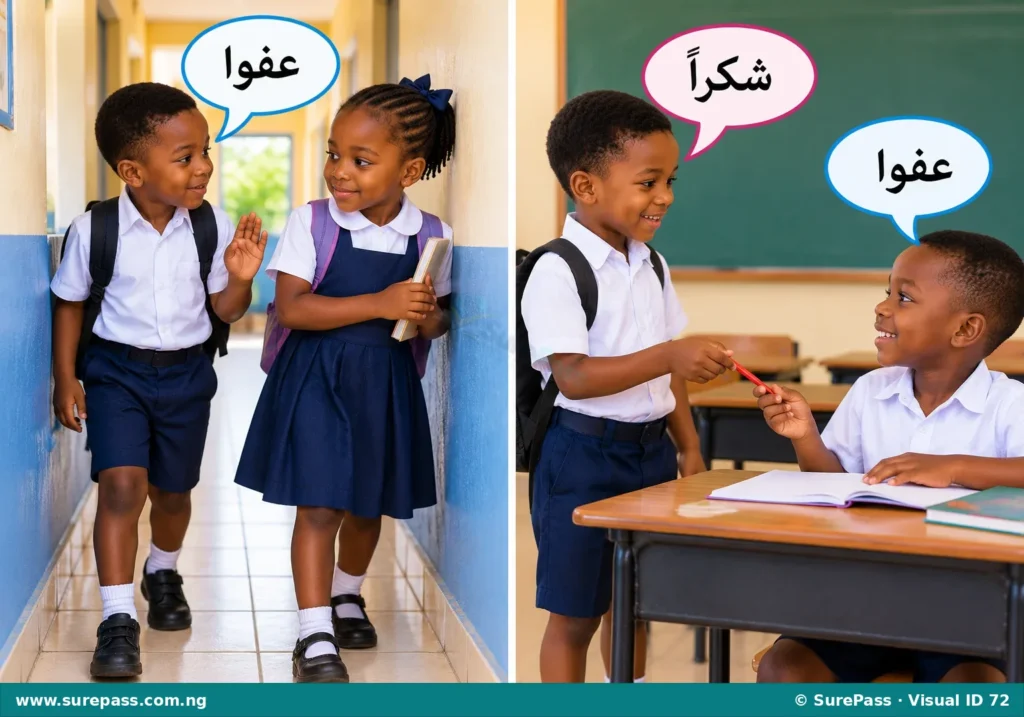
عفوا: Excuse me / You’re welcome
“عفوا” can be used in two main ways. It can mean “Excuse me” when a person needs to pass or get attention. It can also mean “You’re welcome” after someone says “Thank you”.
The phrase is:
- عفوا (Afwan)
This means “Excuse me” or “You’re welcome”.
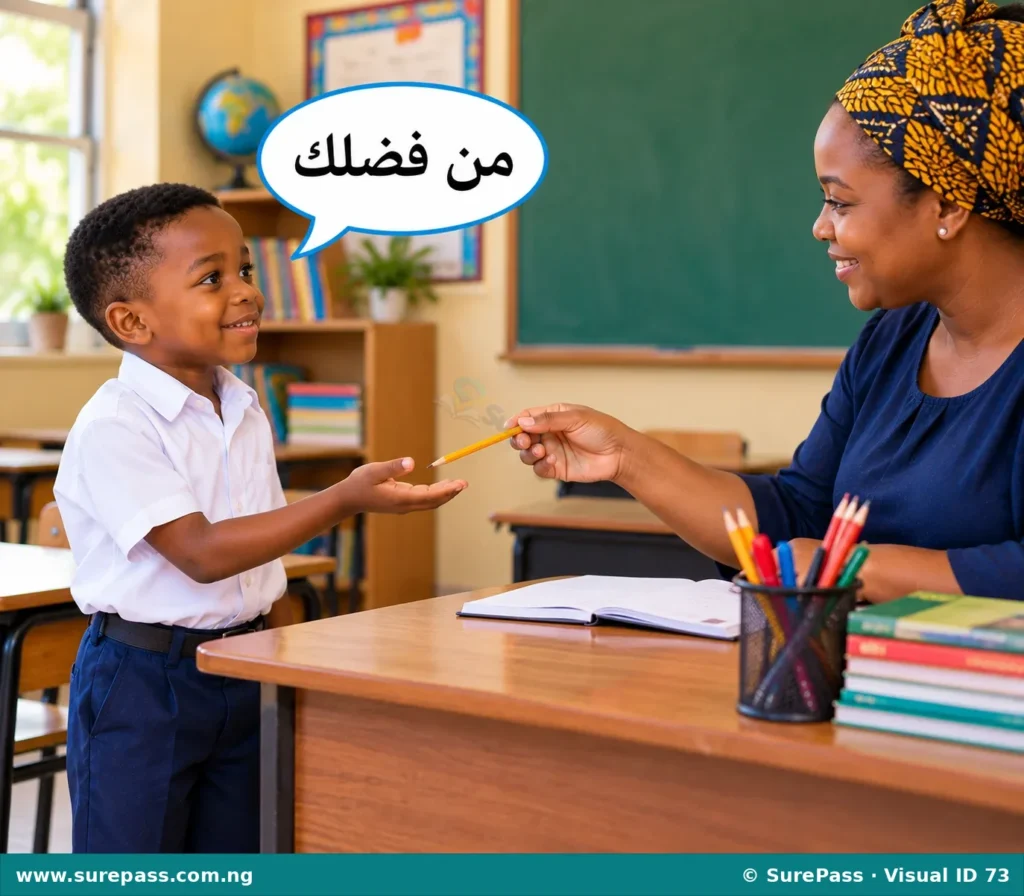
من فضلك: Please
When a person asks for something, adding “please” makes the request polite. It shows good manners.
The phrase for “please” is:
- من فضلك (Min fadlik)
This means “Please”.
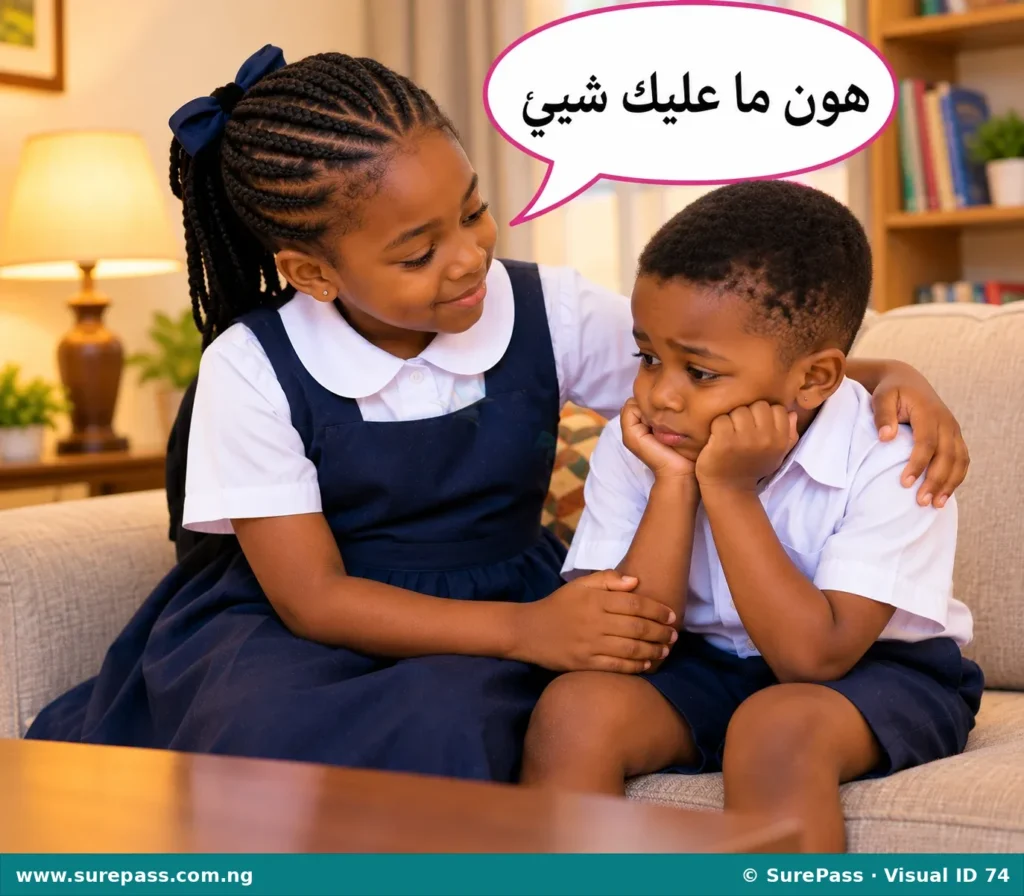
هون ما عليك شيئ: Don’t worry / It’s okay
When someone is upset or worried, saying “هون ما عليك شيئ” can help them feel better. It means “Don’t worry” or “It’s nothing to worry about”. It shows care and understanding.
The phrase is:
- هون ما عليك شيئ (Hawwin ma ‘alayka shay’)
This means “Don’t worry” or “It’s okay”.
Practice: Using Polite Phrases
Practicing these polite phrases helps to use them naturally in daily conversations.
The practice steps are:
- Listen to the teacher say each polite phrase.
- Repeat “متأسف” several times, imagining a small mistake.
- Repeat “عفوا” in both “excuse me” and “you’re welcome” contexts.
- Repeat “من فضلك” several times, imagining asking for different things.
- Repeat “هون ما عليك شيئ” several times, imagining comforting a friend.
- Practice with a partner, using these phrases in short, simple conversations.


0 comments
Open the discussion when you need it. Comments stay collapsed until requested so the initial article remains light.