


ARTICLE CONTENTSOn this page 7 sections
Introduction of self and others
Performance Objectives
By the end of the lesson, students should be able to:
- introduce themselves confidently and clearly;
- introduce others properly;
- share basic information about self;
- use appropriate body language and nonverbal cues;
- show respect and consideration for others;
Why We Introduce Ourselves and Others
When people meet for the first time, they need to know each other’s names. This is called an introduction. Introductions help people to become friends and to talk to each other easily. It is a polite way to start a conversation.
Introducing Yourself
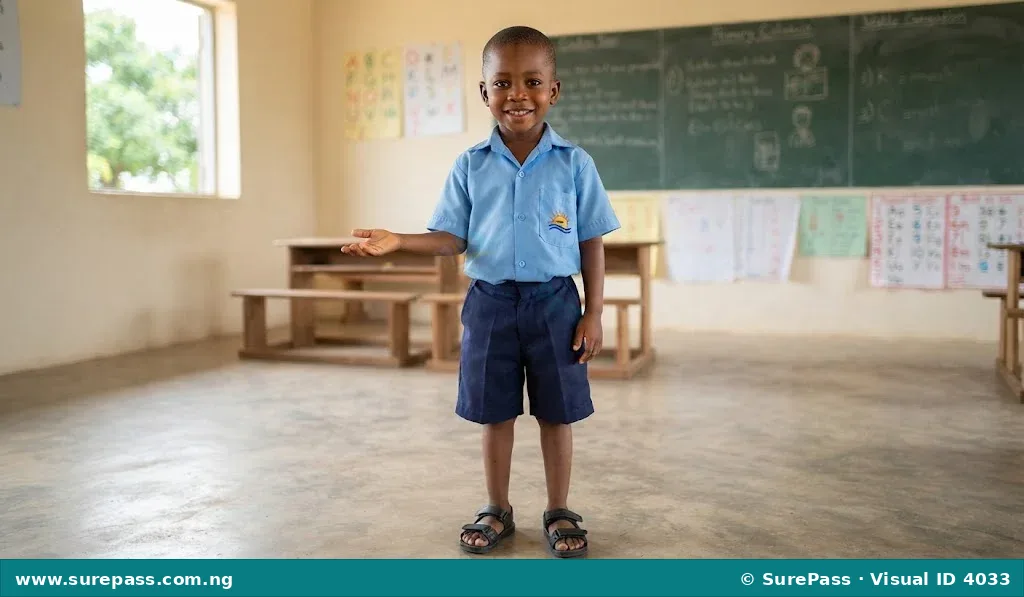
When meeting someone new, it is good to introduce yourself. This means telling the other person your name. It helps them to know who you are.
A simple way to introduce yourself is to say:
- “Hello, my name is Ugo.”
- “Hi, I am Bola.”
- “Good morning, my name is Chike.”
After saying your name, you can also share a little more about yourself. This helps the new person learn more about you.
Examples of sharing basic information about yourself include:
- “I am six years old.”
- “I like to play football.”
- “My favourite colour is blue.”
Here is an example of a full self-introduction:
“Hello, my name is Ugo. I am six years old and I like to draw.”
Introducing Others
Sometimes, you might be with a friend or family member and meet someone new. It is polite to introduce your friend or family member to the new person. This helps everyone know each other’s names.
A simple way to introduce someone else is to say:
- “This is my friend. Her name is Ozioma.”
- “This is my brother, Emeka.”
- “Meet my teacher, Mrs. Ade.”
You can also share a little information about the person you are introducing. This helps the new person learn more about them.
Examples of sharing basic information about others include:
- “She likes to read storybooks.”
- “He is good at playing chess.”
Here is an example of introducing a friend:
“Hello, Mr. Obi. This is my friend, Ozioma. She likes to play with dolls.”

Good Communication Skills for Introductions
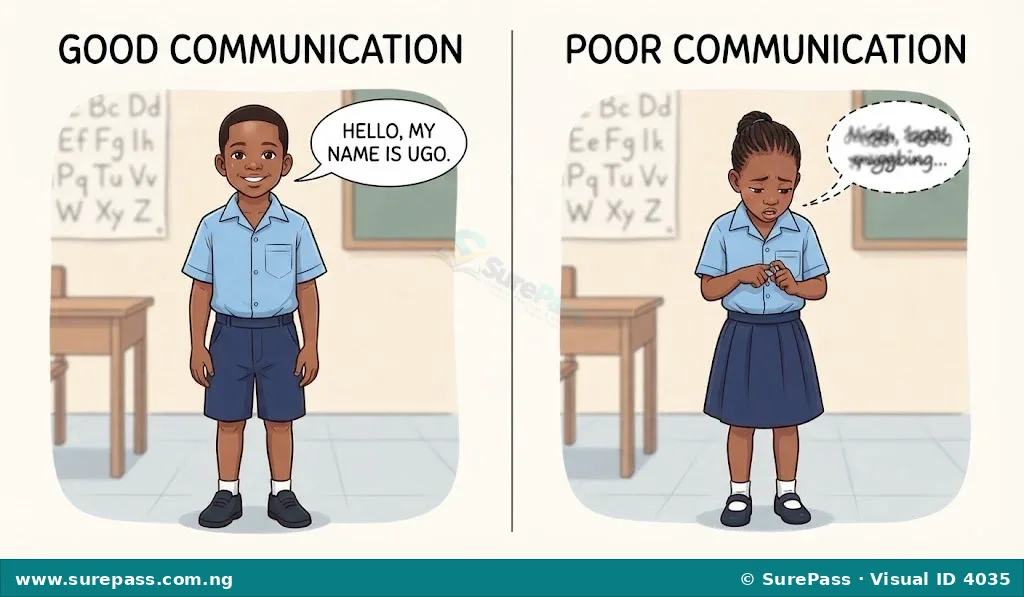
When you introduce yourself or others, it is important to use good communication skills. These skills help you to be clear, confident, and respectful.
Making Eye Contact
Eye contact means looking at the person’s eyes when you are talking to them. It shows that you are paying attention and that you are confident. When someone introduces themselves to you, it is also good to look at their eyes to show you are listening.
Using a Clear Voice (Tone and Volume)
Your voice should be clear and loud enough for the other person to hear you easily. Do not shout, but do not whisper either. A friendly tone of voice makes people feel comfortable and happy to talk to you.
Using Appropriate Body Language
Body language is how you use your body to communicate. When introducing yourself or others, it is good to:
- Stand or sit up straight.
- Have a friendly smile on your face.
- Avoid fidgeting or looking away too much.
These actions show that you are polite and happy to meet new people.
Showing Respect and Consideration
When you introduce people, or when you are being introduced, it is important to show respect. This means:
- Listening carefully when others are speaking.
- Waiting for your turn to speak.
- Using polite words like “please” and “thank you” if needed.
- Smiling and being friendly.
Practising Introductions
Practising introductions helps you become better at them. You can practise with your friends, family, or even your teacher.
The procedure for practising introductions involves the following steps:
- Choose a partner to practise with.
- Decide who will introduce themselves first.
- The first person says “Hello, my name is [Your Name].”
- The second person replies, “Hello [First Person’s Name], my name is [Your Name].”
- Then, you can add more information, like “I am [Age] years old,” or “I like to [Interest].”
- Practise introducing a third person, saying “This is my friend, [Friend’s Name].”
- Remember to use good eye contact, a clear voice, and a friendly smile.




0 comments
Open the discussion when you need it. Comments stay collapsed until requested so the initial article remains light.