



ARTICLE CONTENTSOn this page 6 sections
Guided Reading
Performance Objectives
By the end of the lesson, students should be able to:
- read class- appropriate texts clearly;
- demonstrate an increase in reading fluency
- Answer simple questions on texts read.
Understanding Words
Reading helps people to understand messages and stories. To read well, it is important to know many words. Words are made up of letters that make sounds.
Word Reading and Decoding
When reading, people look at words and say them out loud or in their minds. Sometimes, a new word is seen. To read a new word, people can sound out the letters in the word. This is called decoding.
For example, to read the word “cat”, a person can sound out the letters:
- ‘c’ makes the /k/ sound.
- ‘a’ makes the /a/ sound.
- ‘t’ makes the /t/ sound.
Putting the sounds together makes the word “cat”. Practising sounding out words helps people to read many new words.
Reading High-Frequency Words (Sight Words)
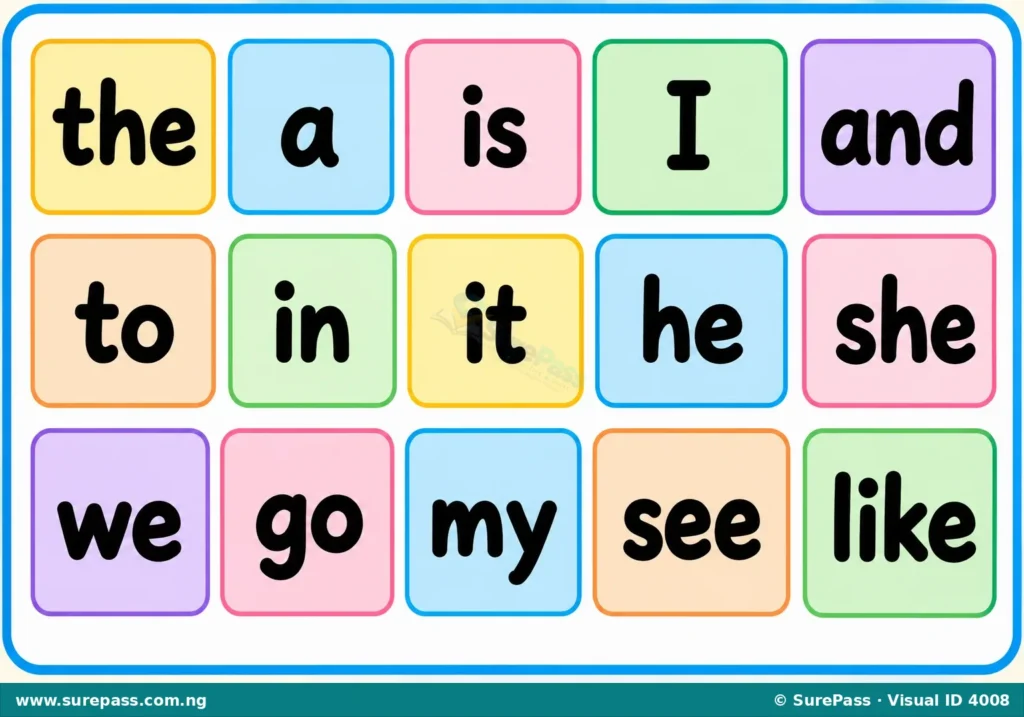
Some words are seen very often in books and stories. These words are called high-frequency words or sight words. It is helpful to learn these words by heart, so they can be read quickly without sounding them out.
Learning sight words helps people to read faster and more smoothly. When a sight word is seen, it can be recognised immediately.
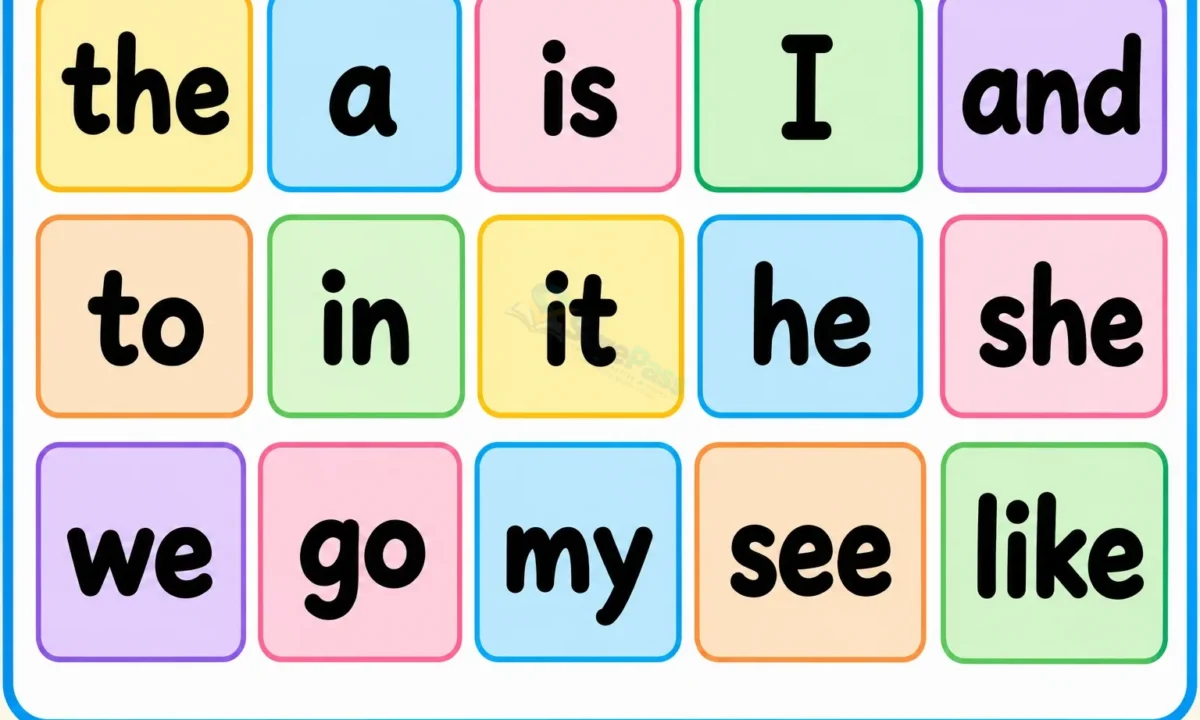
Common sight words for Primary 1 include:
- the
- a
- is
- I
- and
- to
- in
- it
- he
- she
- we
- go
- my
- see
- like
Reading Simple Texts
A text is a short story or passage that people read. Reading simple texts helps people to practise all the words they know and learn new ones. When reading, it is important to read clearly and smoothly.
Reading Clearly and Fluently
Reading clearly means saying each word correctly so that others can understand. Reading fluently means reading smoothly, without stopping too much, and making the words sound like talking. This helps the story make sense.
Here is a simple text to practise reading:

My dog is Tim. Tim likes to run. Tim can play. I like Tim.
Understanding What You Read
After reading a text, it is important to understand what the story was about. This is called comprehension. One way to check understanding is by answering simple questions about the text.
Answering Simple Questions
To answer questions about a text, read the questions carefully. Then, look back at the text to find the answers. The answers are usually found directly in the words of the story.
Here are some questions about the story of Tim:
- What is the name of the dog?
- What does Tim like to do?
- What can Tim do?
How to Practise Reading
Practising reading every day helps people to become better readers. Here are some steps to help improve reading skills:
- Listen Carefully: Listen to an adult read a story first. Pay attention to how they say the words and how smoothly they read.
- Sound Out Words: When you see a new word, try to sound it out using the letter sounds you know.
- Practise Sight Words: Look at the list of sight words often. Try to read them quickly without sounding them out.
- Read Clearly: When you read, try to say each word clearly and correctly.
- Read Smoothly: Try to read without stopping too much. Make your reading sound like you are talking. This is reading fluently.
- Read for Understanding: After reading a story, think about what happened. Try to answer questions about the story.
- Read Often: Read many different simple stories and books. The more you read, the better you will become.




0 comments
Open the discussion when you need it. Comments stay collapsed until requested so the initial article remains light.