



ARTICLE CONTENTSOn this page 7 sections
Grammar: Singular and Plural Nouns
Performance Objectives
By the end of the lesson, students should be able to:
- identify singular forms of objects;
- identify plural forms of object.
What Are Nouns?
Nouns are naming words. They are words that name people, animals, places, or things.
For example, ‘boy’ names a person, ‘dog’ names an animal, ‘school’ names a place, and ‘book’ names a thing.
Singular Nouns
A singular noun names one person, one animal, one place, or one thing.
When there is only one of something, it is called singular.
Examples of singular nouns include:
- ball (one ball)
- boy (one boy)
- girl (one girl)
- book (one book)
- chair (one chair)
- tree (one tree)

Plural Nouns
A plural noun names more than one person, more than one animal, more than one place, or more than one thing.
When there is more than one of something, it is called plural.
Most plural nouns are formed by adding ‘s’ to the end of the singular noun.
Examples of plural nouns include:
- balls (more than one ball)
- boys (more than one boy)
- girls (more than one girl)
- books (more than one book)
- chairs (more than one chair)
- trees (more than one tree)

Changing Singular Nouns to Plural Nouns
To change many singular nouns into their plural form, simply add the letter ‘s’ to the end of the word.
Here are some examples:
- One pen becomes many pens.
- One cup becomes many cups.
- One car becomes many cars.
- One flower becomes many flowers.
- One table becomes many tables.
Identifying Singular and Plural Forms
It is important to look carefully at words and objects to know if they are singular or plural.
When you see a word that ends with ‘s’, it usually means there is more than one of that item.
When you see a word without an ‘s’ at the end, it usually means there is only one of that item.
Activity: Showing Singular and Plural with Objects
This activity helps to understand singular and plural forms using real objects.
The required materials are:
- A few small, safe objects (e.g., pencils, erasers, stones, leaves, bottle caps)
- A flat surface (e.g., a table or desk)
The procedure involves the following steps:
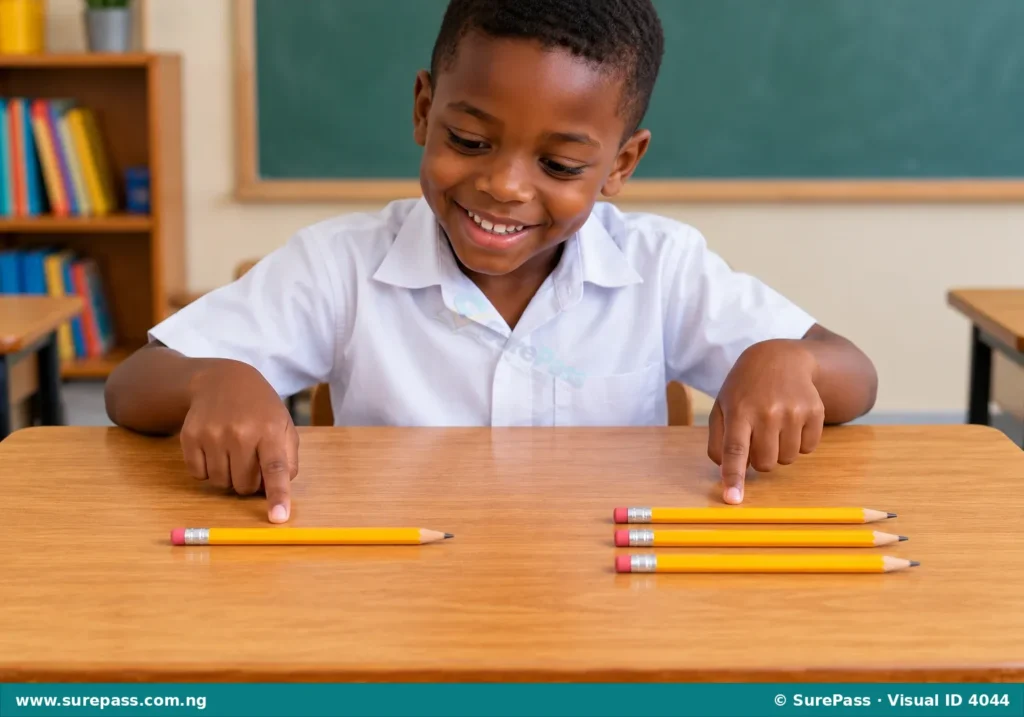
- Place one object on the table. For example, place one pencil.
- Say the name of the object and state that it is singular. For example, “This is one pencil. It is singular.”
- Now, add more of the same object to the table. For example, add two more pencils, making a total of three pencils.
- Say the name of the objects and state that they are plural. For example, “These are three pencils. They are plural.”
- Repeat this process with different objects.
- Practise identifying if a group of objects is singular or plural.



0 comments
Open the discussion when you need it. Comments stay collapsed until requested so the initial article remains light.