



ARTICLE CONTENTSOn this page 8 sections
Concept of Print
Performance Objectives
By the end of the lesson, students should be able to:
- identify and explain the features of a book e.g. front cover, back cover, title and author of a book;
- demonstrate good care for books
- identify upper and lower case letters in texts; sentences.
- demonstrate understanding of left to right and top to bottom reading.
What is a Book?
A book is a collection of pages joined together. Books have stories, pictures, and information. They help people learn new things and enjoy reading.
Features of a Book
Every book has different parts that help people use it. These parts are called features. Knowing the features of a book helps a person understand how to use it.
The main features of a book include:
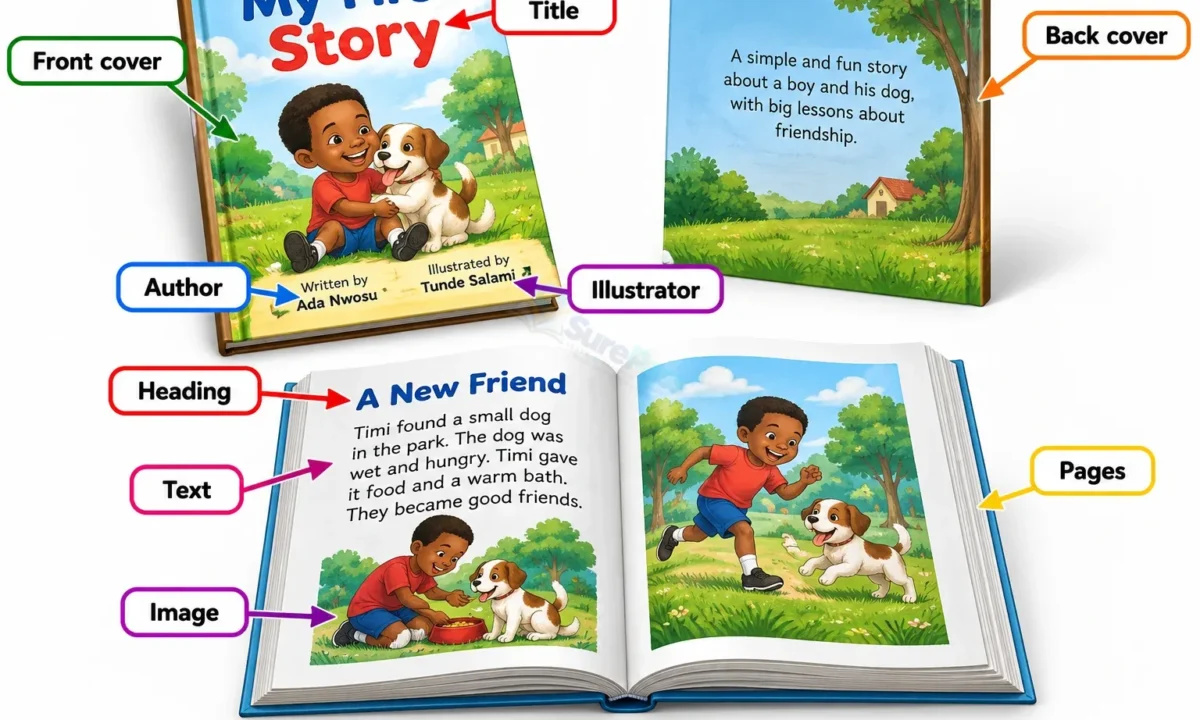
- Cover: This is the outside part of the book. It protects the pages inside. A book has a front cover and a back cover. The front cover is what people see first.
- Title: The title is the name of the book. It tells what the book is about. The title is usually found on the front cover and sometimes on the spine.
- Author: The author is the person who writes the words in the book. The author’s name is usually found on the front cover, below the title.
- Illustrator: The illustrator is the person who draws the pictures in the book. The illustrator’s name is also found on the front cover, sometimes near the author’s name.
- Pages: These are the sheets of paper inside the book. Pages have numbers to help people find specific parts of the book.
- Text: The text is the writing or words in the book. It tells the story or gives information.
- Images: Images are the pictures or drawings in the book. They help people understand the story or information better.
- Headings: Headings are short titles for different sections of the book. They tell what each part is about.
Understanding Book Structure
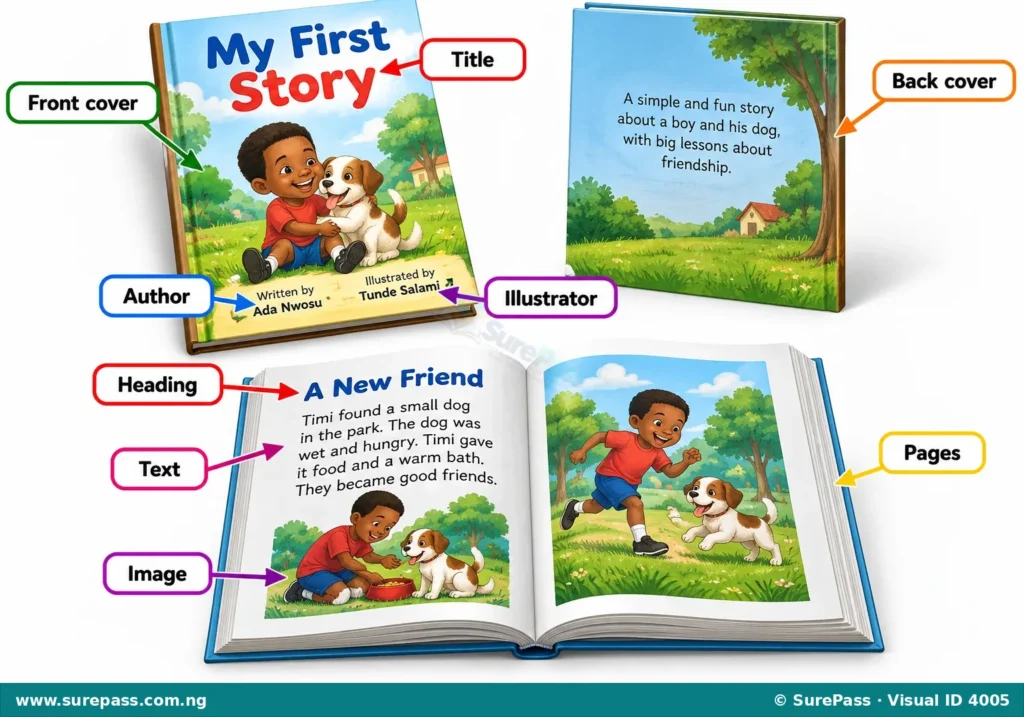
A book is organised in a special way. It has a beginning, a middle, and an end. The story or information flows from one page to the next.
The pages are numbered in order, usually starting from the first page of the story. This helps people keep track of where they are in the book. The words (text) are arranged in blocks called passages or paragraphs, and pictures (images) are placed near the text they explain.
Reading Direction
When reading a book, people follow a special direction. This helps them understand the words in the correct order.
Reading from Left to Right
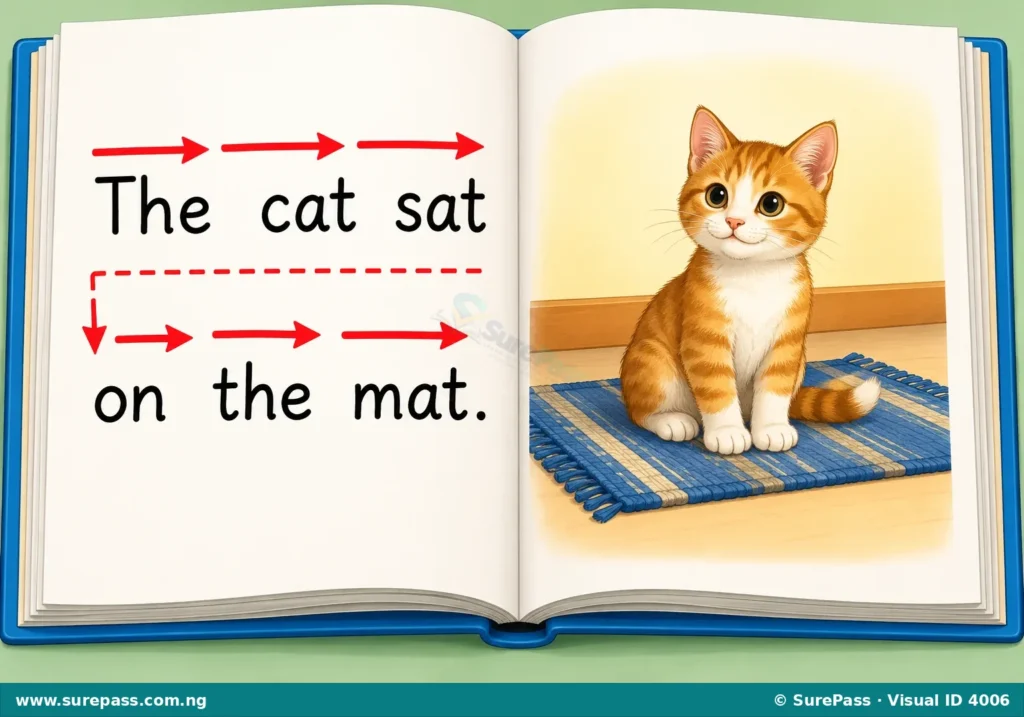
In English, people read words from the left side of the page to the right side. After reading all the words on one line, the eyes move to the beginning of the next line, on the left side.
Reading from Top to Bottom
After reading all the lines on one page, people move their eyes down to the next line. When they finish reading all the lines on a page, they turn the page to continue reading from the top of the next page. This means reading goes from the top of the page to the bottom.
Identifying Upper and Lower Case Letters
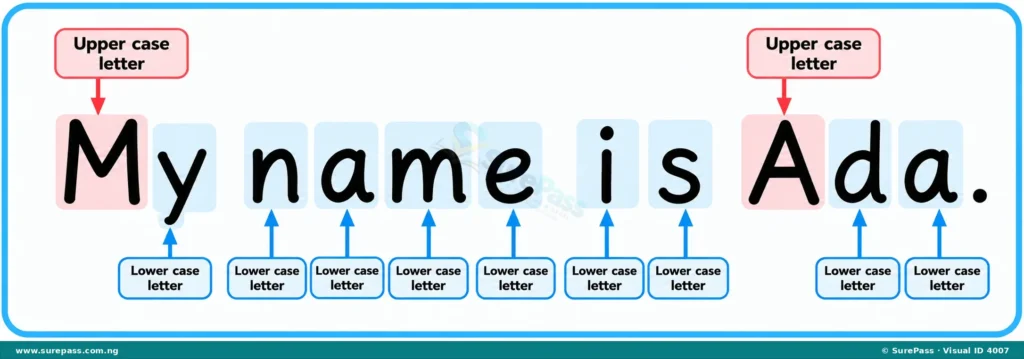
Letters of the alphabet can be written in two main ways: upper case and lower case.
Upper case letters are also called capital letters. They are often used at the beginning of a sentence or for names of people and places.
Lower case letters are the smaller versions of letters. Most words in a sentence are written using lower case letters.
Examples of upper and lower case letters include:
- A a
- B b
- C c
- D d
- E e
In a sentence like “The dog ran fast.”, ‘T’ is an upper case letter, and ‘h’, ‘e’, ‘d’, ‘o’, ‘g’, ‘r’, ‘a’, ‘n’, ‘f’, ‘a’, ‘s’, ‘t’ are lower case letters.
Care for Books
Books are important and should be treated with care so they last a long time. Good care for books helps keep them clean and strong for many people to read.
Important ways to care for books include:
- Keep books clean: Always wash hands before touching books. Do not eat or drink near books to avoid spills and stains.
- Handle books gently: Do not tear pages or bend the covers. Turn pages carefully from the top or bottom corner.
- Store books properly: Keep books on a shelf or in a bag where they will not get damaged. Do not leave books on the floor where they can be stepped on.
- Do not write or draw in books: Books are for reading, not for drawing or writing unless it is a special workbook.
- Use a bookmark: When taking a break from reading, use a bookmark to mark the page. Do not fold the corner of a page to mark a spot.



0 comments
Open the discussion when you need it. Comments stay collapsed until requested so the initial article remains light.