



ARTICLE CONTENTSOn this page 5 sections
Culture
Performance Objectives
By the end of the lesson, students should be able to:
- state the meaning of culture;
- identify the elements of culture;
- mention types of culture.
What is Culture?
Culture is the way of life of a group of people.
It includes everything people do, think, and believe. Culture is how people live, dress, eat, greet each other, sing, dance, and tell stories. It is what makes one group of people different from another.
For example, the way people in Nigeria greet their elders, the food they eat, and the clothes they wear are all part of their culture.
Parts of Culture
Culture has different parts that work together to make up a group’s way of life. These parts help people understand each other and live together peacefully.
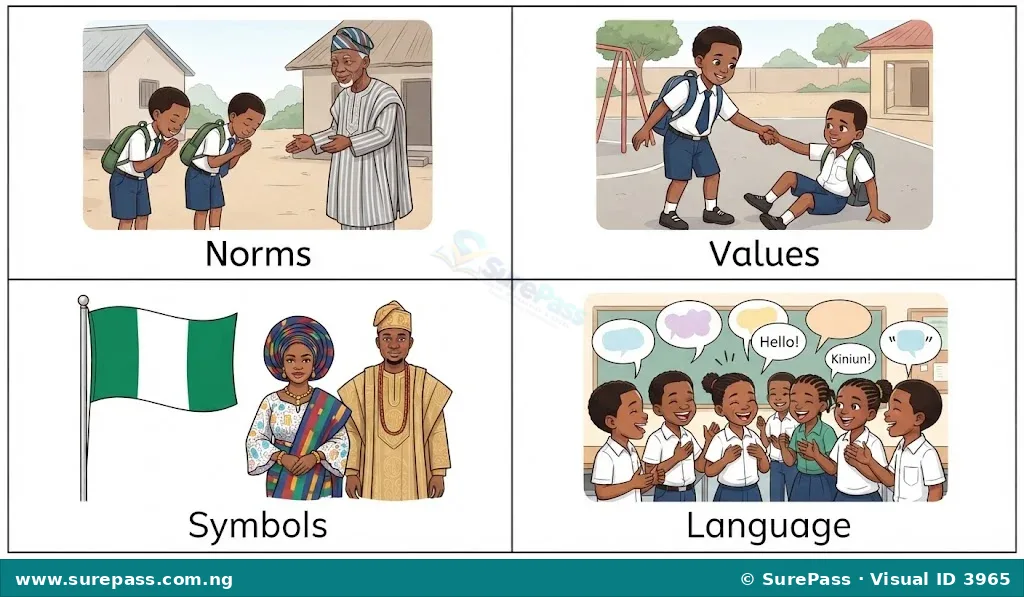
Ways of Behaving (Norms)
Norms are the rules or ways people in a group are expected to behave.
These are like unwritten rules that guide how people act in different situations. For example, it is a norm in many Nigerian cultures to greet elders by kneeling or prostrating. It is also a norm not to talk with food in the mouth.
What People Believe is Important (Values)
Values are the things that a group of people believe are good, right, and important.
These beliefs guide how people live and make choices. For example, many Nigerian cultures value respect for elders, honesty, and hard work.
Things That Stand for Ideas (Symbols)
Symbols are things that represent something else to a group of people.
They can be objects, colours, or actions that have a special meaning. For example, the Nigerian flag is a symbol of our country. Traditional clothes can also be symbols that show which group of people someone belongs to.
How People Talk (Language)
Language is the way people communicate with each other using words, sounds, and signs.
It is a very important part of culture because it helps people share their thoughts, feelings, and stories. In Nigeria, there are many languages like Yoruba, Igbo, Hausa, and many others. English is also a common language used for communication.
Kinds of Culture
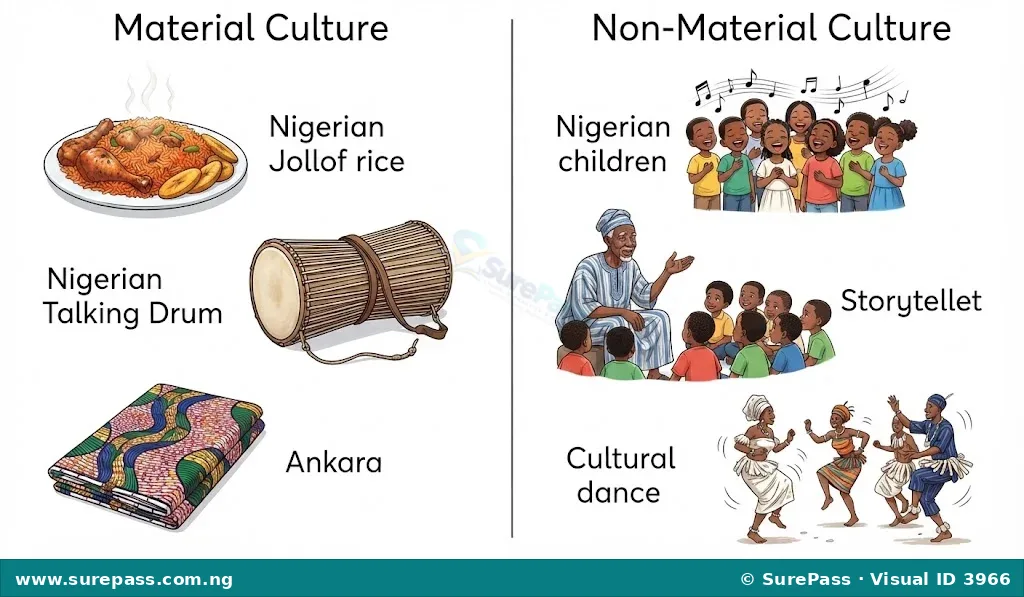
Culture can be divided into two main kinds: material culture and non-material culture.
Things We Can Touch (Material Culture)
Material culture includes all the physical things that people make and use.
These are objects that can be seen and touched. Examples of material culture include:
- Traditional clothes like Ankara and Adire
- Local foods like pounded yam, jollof rice, and fufu
- Houses and buildings
- Tools used for farming or cooking
- Musical instruments like drums and gongs
- Artworks and sculptures
Things We Cannot Touch (Non-Material Culture)
Non-material culture includes the ideas, beliefs, customs, and ways of doing things that cannot be touched.
These are the invisible parts of culture that shape how people think and behave. Examples of non-material culture include:
- Traditional songs and music
- Folktales and stories
- Greetings and manners
- Dances and festivals
- Beliefs about right and wrong
- Ways of cooking and preparing food



0 comments
Open the discussion when you need it. Comments stay collapsed until requested so the initial article remains light.