


ARTICLE CONTENTSOn this page 4 sections
Ceremonies in Nigeria
Performance Objectives
By the end of the lesson, students should be able to:
- define ceremonies;
- name some types of ceremonies with examples;
What is a Ceremony?
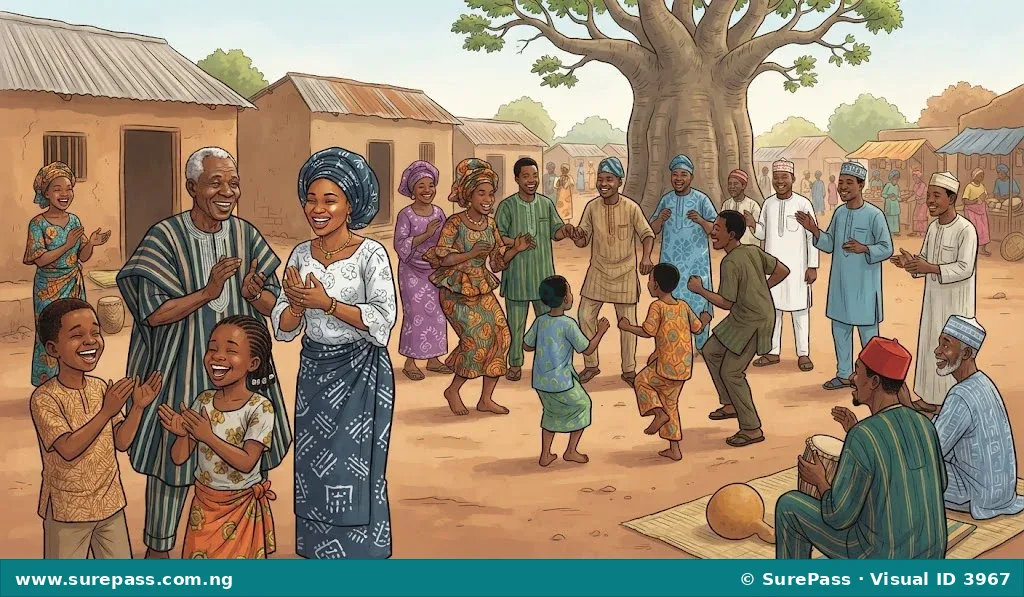
A ceremony is a special event or gathering where people come together to celebrate something important or to mark a special occasion.
Ceremonies often have special ways of doing things, like wearing certain clothes, singing songs, or saying prayers. They help people remember important events and share joy or sadness together.
Types of Ceremonies
In Nigeria, people have many different types of ceremonies. These ceremonies help to keep our culture alive and also allow people to practise their faith. We can group them into traditional ceremonies and religious ceremonies.
Traditional Ceremonies
Traditional ceremonies are special events that follow the old ways and customs of a community or ethnic group. They are passed down from grandparents to parents and to children. These ceremonies celebrate important parts of life and culture.
Examples of traditional ceremonies include:
- Naming Ceremonies: When a new baby is born, a special ceremony is held to give the baby a name.
- Traditional Weddings: When a man and a woman get married according to the customs of their people.
- Chieftaincy Installations: When a new chief is chosen and given a special title in the community.
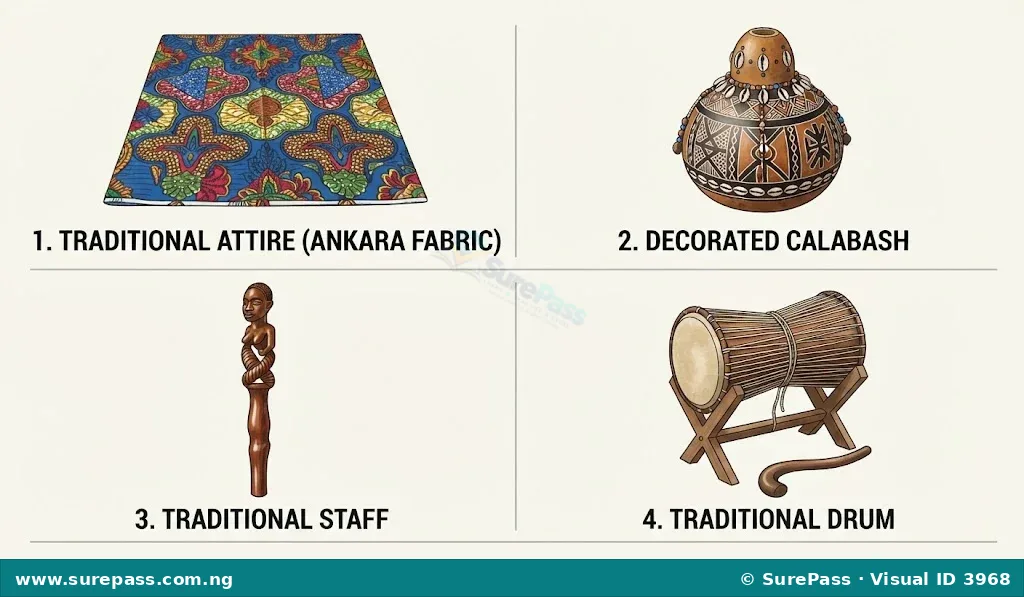
During traditional ceremonies, people often use special items and perform certain actions. Some items used in traditional ceremonies are:
- Traditional Attires: Special clothes worn by people to show their culture.
- Calabash: A bowl made from a dried gourd, used for serving drinks or food.
- Traditional Staff: A special stick carried by chiefs or elders as a symbol of authority.
- Traditional Songs: Songs that have been sung for many years in the community.
- Traditional Prayers: Special words said to the ancestors or gods for blessings.
- Traditional Musical Instruments: Drums, gongs, and other instruments used to make music for dancing and celebration.
Religious Ceremonies
Religious ceremonies are special events held by people who follow a particular religion. These ceremonies are a way for people to worship, pray, and show their faith.
Examples of religious ceremonies include:
- Church Services: Christians gather in a church to worship God, sing songs, and listen to teachings from the Bible.
- Mosque Prayers: Muslims gather in a mosque to pray to Allah and listen to teachings from the Quran.
- Religious Naming Ceremonies: Some naming ceremonies are also done according to religious beliefs, like Christian baptisms or Islamic naming rites.
- Religious Weddings: Weddings held in a church or mosque, following religious rules and prayers.
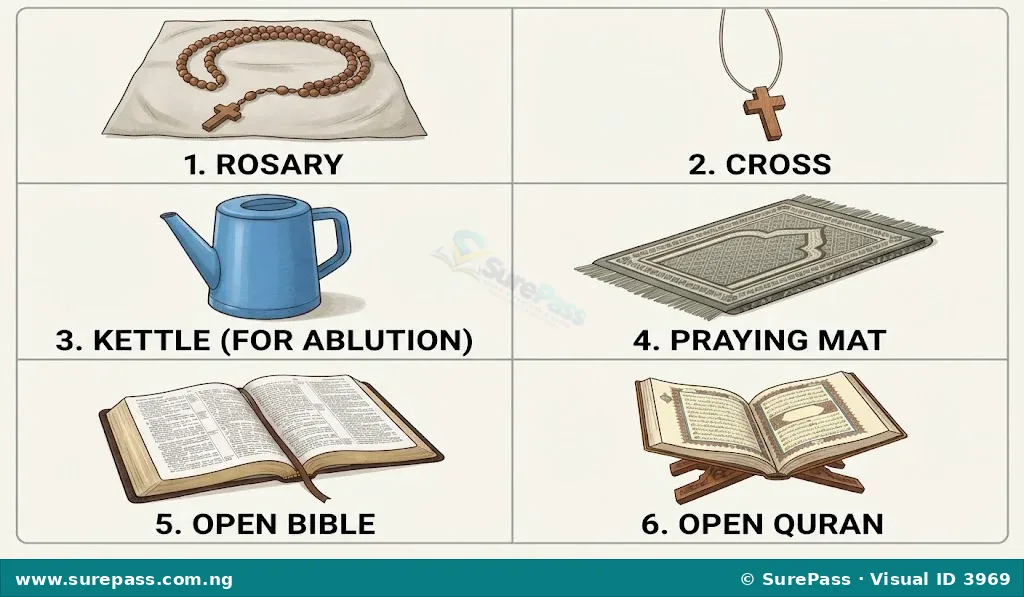
People use different items during religious ceremonies to help them pray and worship. Some items used in religious ceremonies are:
- Rosary: A string of beads used by Christians, especially Catholics, for counting prayers.
- Cross: A symbol of Christianity, often seen in churches or worn by Christians.
- Plastic Kettle: Used by Muslims for washing before prayers.
- Praying Mat: A special mat used by Muslims for kneeling and bowing during prayers.
- Bible: The holy book for Christians.
- Quran: The holy book for Muslims.
- Religious Songs: Songs sung in churches or mosques to praise God or Allah.
- Prayers: Special words said to God or Allah.
- Praying Beads: Beads used by Muslims for counting prayers and remembering God.

0 comments
Open the discussion when you need it. Comments stay collapsed until requested so the initial article remains light.