



ARTICLE CONTENTSOn this page 6 sections
Arts
Performance Objectives
By the end of the lesson, students should be able to:
- state the meaning of Arts;
- mention the elements of arts;
- mention types of Arts;
- identify different forms of art;
- produce art forms
Meaning of Arts
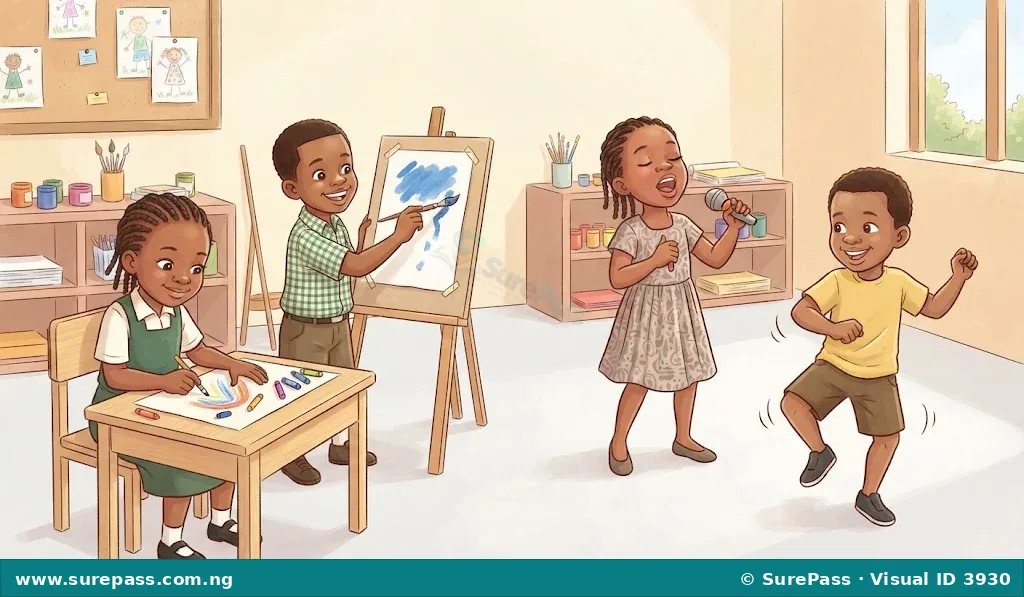
Art is a way people express their ideas, feelings, and imagination using different materials and methods.
It is about creating beautiful things that can be seen, heard, or performed. Art helps people share what they think and feel with others.
Elements of Arts
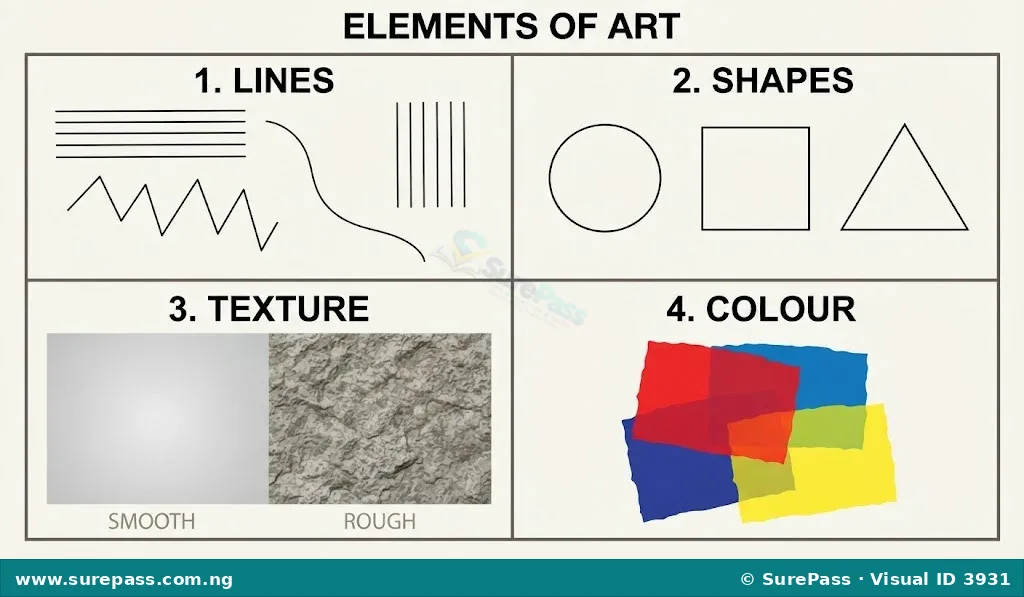
When people create art, they use different building blocks called elements of art. These elements help to make the art look or sound interesting.
Lines
Lines are marks that connect two points. They can be straight, curved, thick, or thin. Lines help to draw shapes and show movement in art.
Shapes
Shapes are formed when lines meet. They can be geometric shapes like circles, squares, and triangles, or free-form shapes that are not regular. Shapes give objects their form in art.
Texture
Texture is how something feels or looks like it would feel if you touched it. It can be smooth like glass, rough like a stone, or soft like cotton. Artists use texture to add interest to their work.
Colour
Colour is what the eyes see when light reflects from an object. Colours can be bright and cheerful, or dark and calm. Artists use colours to show feelings and make their art lively.
Types of Art
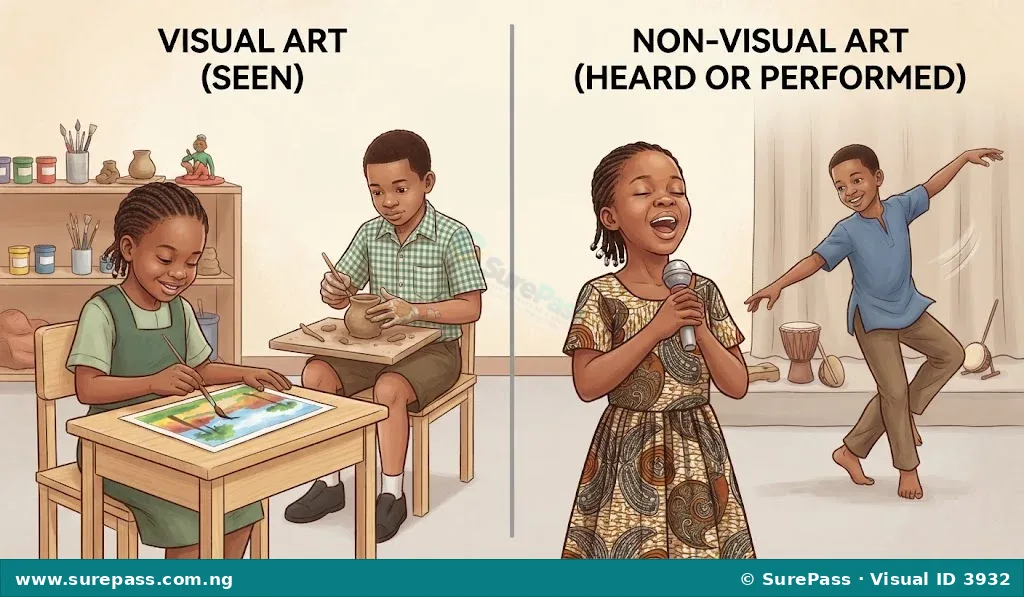
Art can be grouped into different types based on how it is experienced. The two main types of art are visual art and non-visual art.
Visual Art
Visual art is art that can be seen with the eyes. It includes things like drawings, paintings, sculptures, and crafts. Visual art uses colours, shapes, and lines to create images and objects.
Examples of visual art forms include:
- Drawing
- Painting
- Modelling with clay
- Making collages
Non-Visual Art
Non-visual art is art that is not seen but is experienced through other senses, mainly hearing or performance. It includes music, dance, and drama.
Examples of non-visual art forms include:
- Singing songs
- Dancing to music
- Telling stories (drama)
- Playing musical instruments
Producing Art Forms
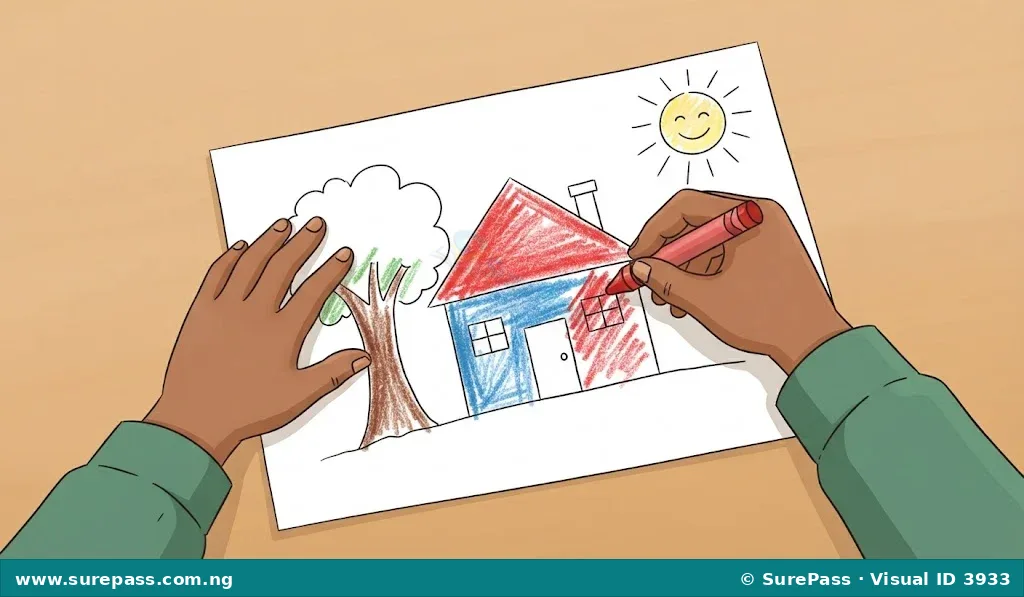
Creating art is a fun way to use your imagination and express yourself. One simple way to produce art is by drawing and colouring.
How to Draw and Colour a Simple Picture
This activity helps to create a visual art form using drawing materials.
The required materials are:
- A sheet of paper
- Pencils
- Crayons or coloured pencils
The procedure involves the following steps:
- Find a comfortable space to sit at a table.
- Place the sheet of paper in front of you.
- Hold a pencil gently but firmly.
- Think of something simple to draw, like a house, a tree, or a flower.
- Start by drawing light lines to make the basic shapes of your chosen object. For example, draw a square for the house, a triangle for the roof, and a circle for the sun.
- Once the basic shapes are drawn, add more details like windows, doors, or leaves on the tree.
- When the drawing is complete, choose your crayons or coloured pencils.
- Carefully colour inside the lines of your drawing. Use different colours for different parts, like green for leaves and brown for tree trunks.
- Try to colour smoothly and evenly to make your picture look neat.
- Show your finished artwork to a friend or family member.


0 comments
Open the discussion when you need it. Comments stay collapsed until requested so the initial article remains light.