



ARTICLE CONTENTSOn this page 6 sections
Decorative Artwork
Performance Objectives
By the end of the lesson, students should be able to:
- explain the meaning of decoration;
- identify decorative artworks;
- state the benefit of decorating artworks.
- Create decorative effects.
What is Decoration?
Decoration means making something look beautiful or attractive. When something is decorated, it has patterns, colours, or extra things added to it to make it special and pleasing to the eye.
People decorate many things around them, such as clothes, homes, and objects they use every day. The aim is to make these items more interesting and lovely to look at.
Decorative Artworks
Decorative artworks are objects that have been made or changed to look beautiful. They are not just useful; they also add beauty to a place or to a person.
Many items found in homes, schools, and communities are decorative artworks. They are often colourful and have interesting designs.
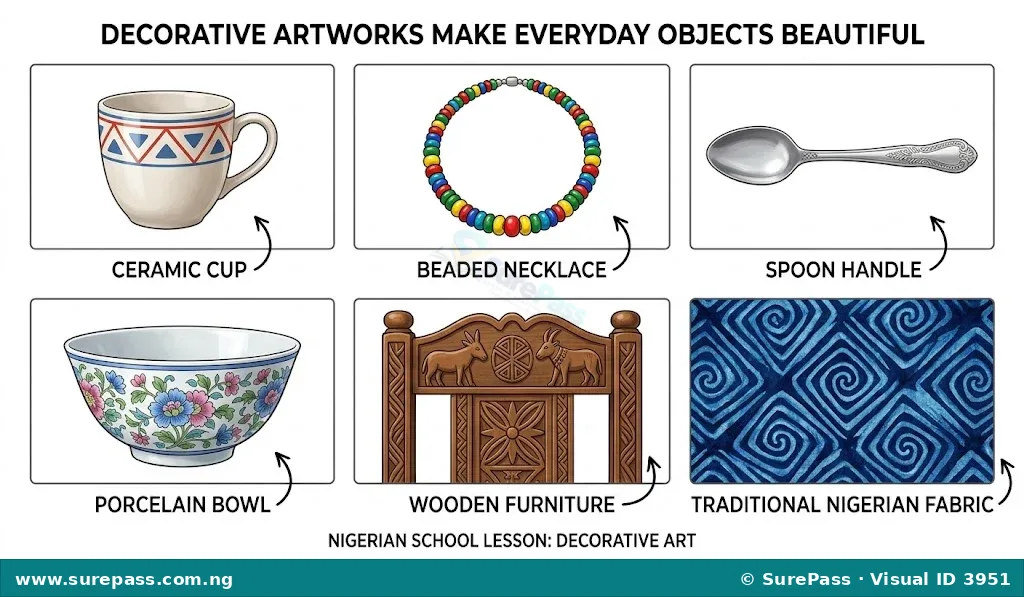
Examples of decorative artworks include:
- Ceramic cups: These are cups made from clay that often have painted patterns or designs on them.
- Jewellery: Items like necklaces, bracelets, and earrings are worn to make a person look more beautiful. They can be made from beads, metals, or other shiny materials.
- Spoons with designs: Some spoons have special carvings or patterns on their handles to make them look fancy.
- Porcelain bowls: These are smooth, shiny bowls that often have delicate pictures or patterns painted on them.
- Furniture with carvings: Tables, chairs, or cupboards can have beautiful carvings or painted designs to make them decorative.
- Traditionally made fabrics or dresses: Many Nigerian fabrics like Ankara or Adire have colourful patterns. Dresses made from these fabrics are also decorative.
Benefits of Decorating Artworks
Decorating artworks has many good reasons. When objects are decorated, they become more special and enjoyable.
The benefits of decorating artworks include:
- Making things beautiful: Decoration adds beauty and makes objects more pleasing to look at. A plain wall can become lovely with a painted pattern.
- Making things attractive: Decorated items catch people’s attention and make them want to look closer.
- Making things unique: Decoration can make an object different from others. A decorated cup might be your favourite because it looks special.
- Showing culture and tradition: Many decorations tell stories about a people’s culture or traditions. For example, patterns on traditional fabrics can represent important meanings.
- Making gifts special: When a gift is decorated, it shows that thought and care were put into it, making the person receiving it feel happy.
Creating Decorative Effects
Creating decorative effects means adding patterns, colours, or designs to make something look beautiful. Even simple additions can make a big difference.
For Primary 1, creating decorative effects can be a fun and simple activity. It helps to make things look more interesting and colourful.
How to Create Simple Decorative Effects
This activity shows how to decorate a plain piece of paper or a simple object using colours and patterns.
The required materials are:
- A plain sheet of paper or a small, plain cardboard cut-out (like a simple shape of a cup or a bowl).
- Crayons, coloured pencils, or markers.
- Optional: Stickers or small paper cut-out shapes.
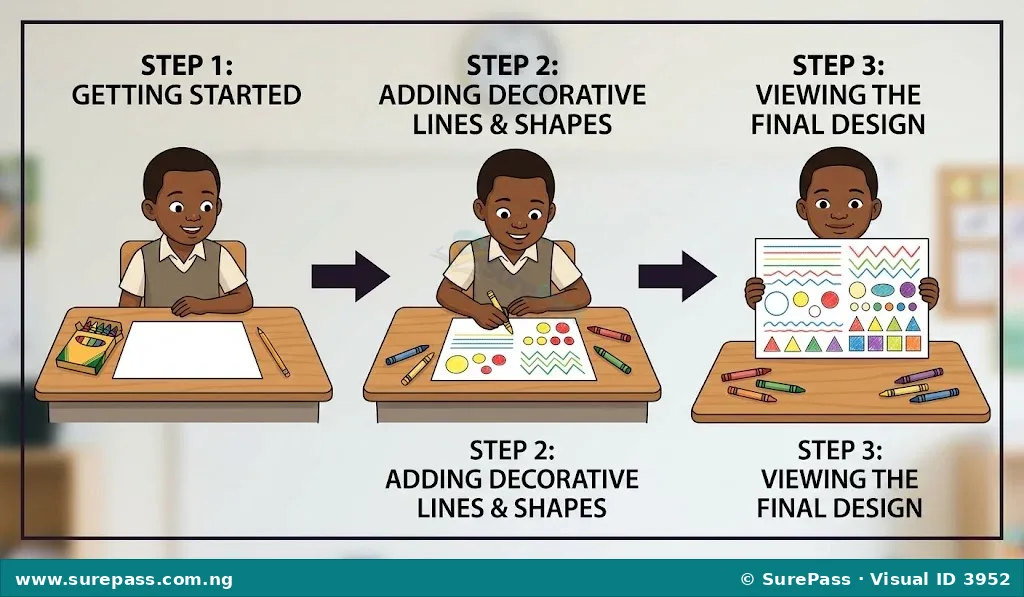
The procedure involves the following steps:
- Place the plain paper or cardboard shape on a clean table.
- Think about what kind of patterns or colours you want to add. You can draw lines, circles, squares, or zig-zags.
- Use your crayons, coloured pencils, or markers to draw these patterns on the paper or cardboard.
- You can colour in the shapes you draw or use different colours for different patterns.
- If you have stickers or small paper cut-out shapes, you can carefully stick them onto your artwork to add more decoration.
- Make sure your patterns and colours fill the space nicely.
- When you are finished, you will have a beautifully decorated piece of artwork.




0 comments
Open the discussion when you need it. Comments stay collapsed until requested so the initial article remains light.