


ARTICLE CONTENTSOn this page 5 sections
Art Materials and Tools
Performance Objectives
By the end of the lesson, students should be able to:
- identify the different art materials and tools;
- explain the uses of basic art materials and tools;
- use basic art materials and tools to create artwork.
What Are Art Materials?
Art materials are the things artists use up when they are making artwork. They are the things that become part of the finished art.
When a person draws or colours, they use different materials to make their pictures. These materials help to bring ideas to life on paper or other surfaces.
Common Art Materials and Their Uses
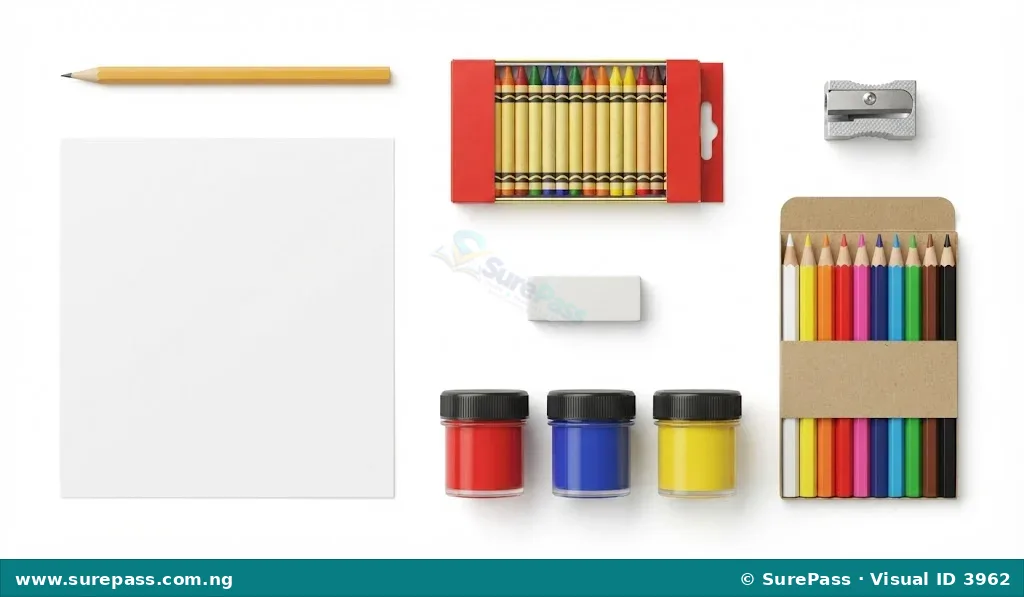
Some common art materials include:
- Pencil: A pencil is used for drawing lines, sketching pictures and writing. It helps to create the outline of an artwork.
- Paper: Paper is a flat surface where drawings, paintings and other artworks are made. It holds the colours and lines.
- Crayon: Crayons are used for adding colour to drawings. They come in many bright colours and are easy to use for filling in shapes.
- Eraser: An eraser is used to remove pencil marks or mistakes from paper. It helps to correct drawings and make them neat.
- Colour Pencils: Colour pencils are like regular pencils but they draw in different colours. They are used for colouring pictures and adding details.
- Poster Colours: Poster colours are bright paints used for painting pictures. They are good for covering large areas with strong colours.
- Sharpener: A sharpener is used to make the tip of a pencil or colour pencil sharp. A sharp pencil draws clearer lines.
What Are Art Tools?
Art tools are the things artists use to help them work with art materials. Tools are usually not used up and can be used many times.
Tools help to control materials, measure, cut or mix colours to make artwork better.
Common Art Tools and Their Uses
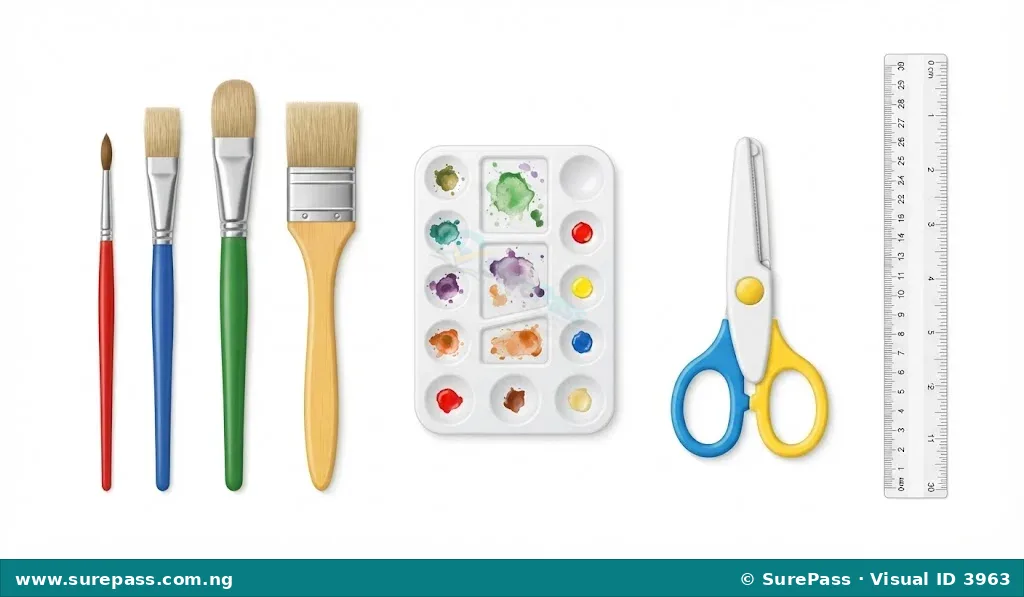
Some common art tools include:
- Brushes: Brushes are used to apply poster colours or other paints onto paper. They help to spread the paint smoothly and create different strokes.
- Pallets / Containers to Mix Colours: Pallets or small containers are used to hold and mix different poster colours. This helps artists create new colours for their paintings.
- Scissors: Scissors are used for cutting paper or other art materials into different shapes and sizes. They help to create collages or cut out designs.
- Ruler: A ruler is used for drawing straight lines and for measuring lengths on paper. It helps to make neat and accurate drawings.
Creating Simple Artwork
Using art materials and tools helps to make many kinds of artwork. A simple artwork can be a drawing, a painting or a paper craft.
To create artwork, it is important to know how to use each material and tool correctly and safely.
How to Draw and Colour a Simple Object
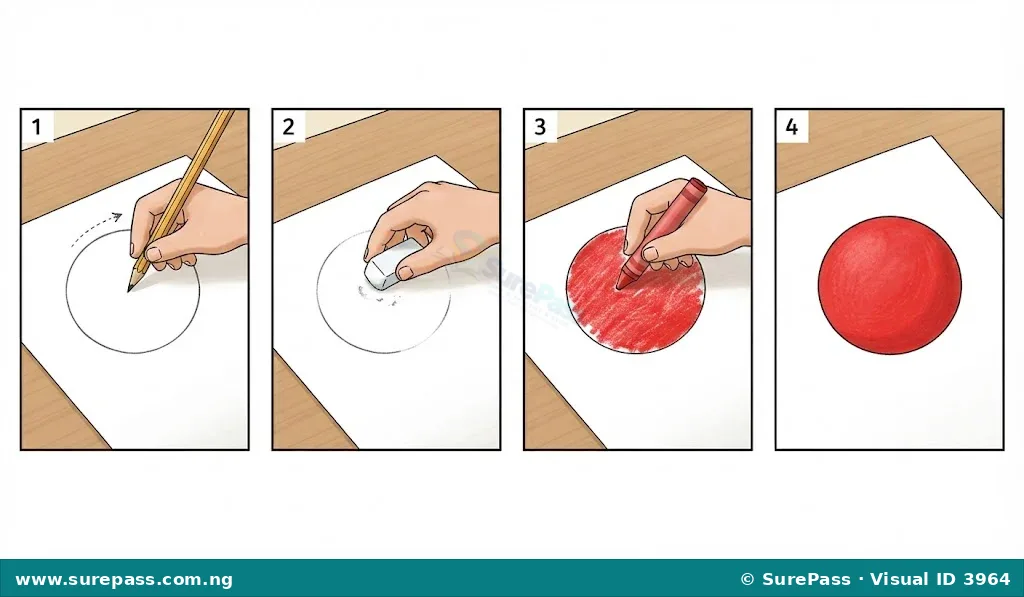
This activity shows how to use a pencil, paper, eraser, and colour pencils or crayons to draw and colour a simple object like a ball or a fruit.
The required materials and tools are:
- A sheet of paper
- A pencil
- An eraser
- Colour pencils or crayons
The procedure involves the following steps:
- Place the paper flat on a table or a smooth surface.
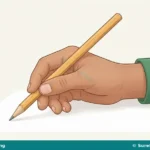
- Hold the pencil gently but firmly.
- Use the pencil to draw a simple shape, like a circle for a ball or an oval for a mango, on the paper. Do not press too hard.
- If a mistake is made, use the eraser to gently rub out the pencil mark.
- Once the outline is ready, choose a colour pencil or crayon.
- Hold the colour pencil or crayon and carefully fill in the shape with colour. Try to colour neatly within the lines.
- Continue colouring until the object is fully coloured.
Using Scissors and Rulers in Art
Scissors and rulers are also important tools for art activities:
- Using a Ruler: A ruler helps to draw straight lines for things like houses, boxes or borders on a picture. It can also be used to measure how long a piece of paper should be before cutting.
- Using Scissors: Scissors are used to cut paper into different shapes. For example, a person can cut out a circle or a square from a coloured paper to stick onto another drawing.
Safety Tips for Art Activities
When using art materials and tools, it is important to be safe. Important safety tips include:
- Always use scissors carefully. They are sharp and can cut fingers if not handled properly.
- Ask an adult for help when using scissors or if any tool feels difficult to use.
- Do not put art materials like crayons or poster colours in the mouth.
- Keep the art area clean and tidy after finishing an artwork.


0 comments
Open the discussion when you need it. Comments stay collapsed until requested so the initial article remains light.