


ARTICLE CONTENTSOn this page 7 sections
Lines
Performance Objectives
By the end of the lesson, students should be able to:
- describe lines;
- recognize types of lines;
- identify different types of lines used to create objects in their surroundings;
- use lines to create effects
- create simple art works with lines.
What Are Lines?
A line is a mark made on a surface. It can be long or short, thick or thin. Lines are everywhere around us, in nature and in things people make.
When a pencil moves on paper, it leaves a mark. This mark is a line. Lines help to draw shapes, pictures, and patterns.
Types of Lines
Lines can look different. Each type of line has its own special look. Knowing different types of lines helps in drawing and understanding art.
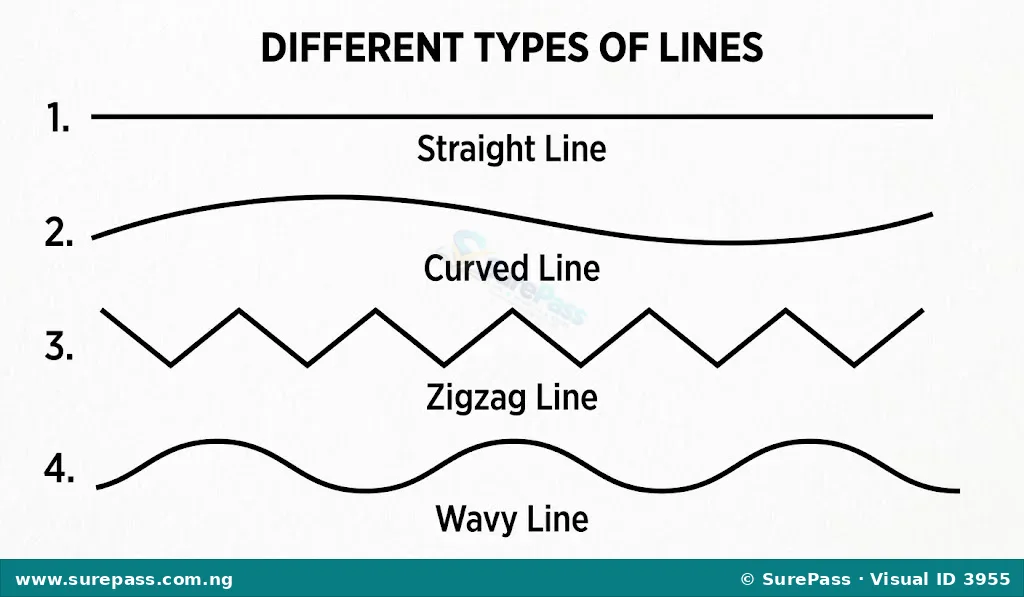
Straight Lines
A straight line goes directly from one point to another without bending. It can go up and down (vertical), side to side (horizontal), or at a slant (diagonal).
Examples of straight lines can be seen in many objects. The edge of a table, the side of a book, or the lines on a ruled exercise book are all straight lines.
Curved Lines
A curved line is a line that bends smoothly. It does not have sharp corners.
Curved lines can be seen in the shape of a rainbow, the path of a ball thrown in the air, or the edge of a round plate. They often make things look soft or gentle.
Zigzag Lines
A zigzag line is made up of many short straight lines that join together at sharp angles, changing direction quickly. It looks like a series of ‘V’ shapes joined together.
Zigzag lines can be seen in the teeth of a saw, the pattern on some fabrics, or the shape of lightning in the sky. They often make things look sharp, fast, or exciting.
Wavy Lines
A wavy line is a line that curves gently up and down, like waves in the ocean. It is a smooth, flowing line.
Wavy lines can be seen in the movement of water, the shape of some leaves, or the pattern of hair. They often make things look calm, flowing, or playful.
Identifying Lines in the Surroundings
Lines are used to create almost everything around us. By looking closely, different types of lines can be identified in everyday objects.
Examples of lines in the environment include:
- In the classroom: The edges of the blackboard are straight lines. The top of a round clock is a curved line. The pattern on some textbooks might have zigzag or wavy lines.
- In the school compound: The fence posts are straight lines. The path of a winding road or a playground slide can be a curved line. The pattern on a security gate might have zigzag lines.
- At home: The walls of a house are made with straight lines. The handle of a cup is a curved line. The pattern on a curtain or a mat might have wavy lines.
Using Lines to Create Effects
Artists use different types of lines to make their drawings look interesting and to show different feelings or ideas. The way a line is drawn can create an effect.
For example:
- Straight lines can make things look strong, firm, or stable, like a tall building or a strong tree trunk.
- Curved lines can make things look soft, gentle, or calm, like clouds or a sleeping cat.
- Zigzag lines can make things look sharp, exciting, or dangerous, like fire or a mountain peak.
- Wavy lines can make things look flowing, playful, or soft, like water or long hair.
Creating Simple Artworks with Lines
Lines are the basic building blocks for drawing. Simple artworks can be created by combining different types of lines.
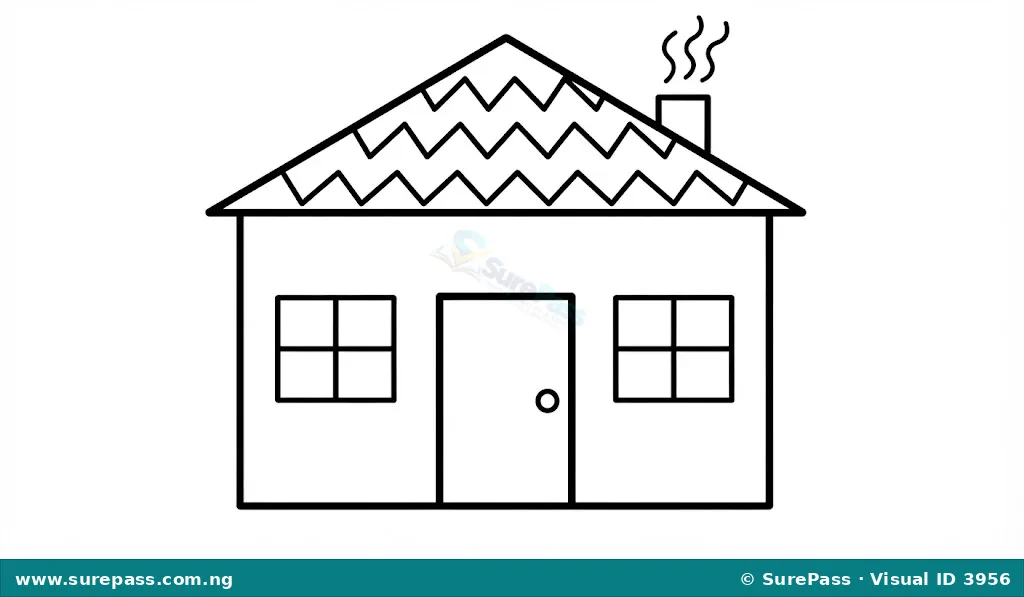
How to Draw a Simple House Using Lines
This activity helps to practise using straight and zigzag lines to create a simple artwork.
The required materials are:
- A pencil
- A sheet of white paper
- A sharpener
- A ruler (optional, for very straight lines)
The procedure involves the following steps:
- Hold the pencil gently but firmly.
- Place the paper on a flat surface.
- Draw a large square or rectangle in the middle of the paper. These are the walls of the house. Use straight lines for the sides and top/bottom.
- Above the square, draw a triangle for the roof. The two slanted sides of the triangle are straight lines.
- Draw a small square or rectangle inside the larger square for a window. Use straight lines.
- Draw a small rectangle for the door, also using straight lines.
- For a chimney, draw two straight lines going up from the roof, and connect them with a short straight line at the top.
- To add a simple effect, draw some zigzag lines on the roof to make it look like tiles, or draw wavy lines for smoke coming out of the chimney.
- Always be careful when using a sharpener. Ask an adult for help if needed.


0 comments
Open the discussion when you need it. Comments stay collapsed until requested so the initial article remains light.