



ARTICLE CONTENTSOn this page 7 sections
Songs
Performance Objectives
By the end of the lesson, students should be able to:
- define a song;
- identify types of songs
- Listen to simple songs
- sing different types of songs;
- Perform simple actions to songs.
What is a Song?
A song is a piece of music with words that people sing.
Songs often have a tune and a rhythm that make them enjoyable to listen to and sing. People sing songs for many reasons, such as to tell stories, express feelings, or celebrate events.
Types of Songs
There are many different kinds of songs. Some songs are very old, while others are new. Some songs are about nature, and some are for special parties.
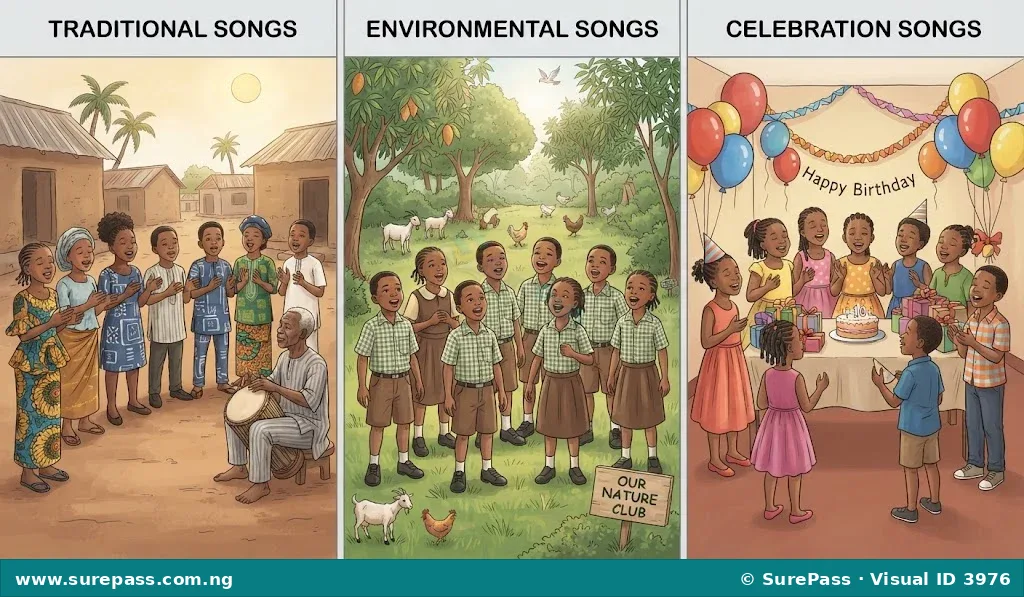
Traditional Folk Songs
Traditional folk songs are old songs that have been passed down from parents and grandparents to children over many years. These songs often tell stories about the community, daily life, or important events from the past.
Examples of traditional folk songs include:
- “Bàbá ńlá mi” (My Grandfather)
- “Sere fun mi” (Play for me)
- “Ise agbe” (Farming work)
Songs About the Environment
Songs about the environment talk about nature, animals, plants, and how to keep our surroundings clean and healthy. These songs help people learn to care for the world around them.
Examples of songs about the environment include:
- “Clean up, clean up, everybody clean up”
- “The animals in the zoo”
- “Plant a tree”
Songs in Festivals and Celebrations
Songs in festivals and celebrations are sung during happy and special times. These can be birthdays, weddings, religious festivals like Christmas or Eid, or cultural festivals in a community. These songs help people express joy and togetherness.
Examples of songs for festivals and celebrations include:
- “Happy Birthday to You”
- “Jingle Bells” (for Christmas)
- Songs sung during local community festivals
Listening to Simple Songs
Listening to songs is an important part of enjoying music. When people listen carefully, they can hear the words, the tune, and the rhythm of the song. Listening helps people learn new songs and understand their messages.
To listen to a song, people can:
- Sit quietly and pay attention to the music.
- Try to understand the words being sung.
- Notice the speed and feeling of the song.
Singing Different Songs
Singing is a fun way to express oneself and share music with others. When people sing, they use their voices to make the sounds and words of a song.
To sing a song well, people can:
- Listen to the song many times to learn the words and tune.
- Try to sing along with the music.
- Practise singing the song until they know it well.
Body Movement to Music
Body movement to music means moving the body in different ways while a song is playing. This can make singing and listening to songs even more enjoyable. Simple actions can match the rhythm or the meaning of the song.
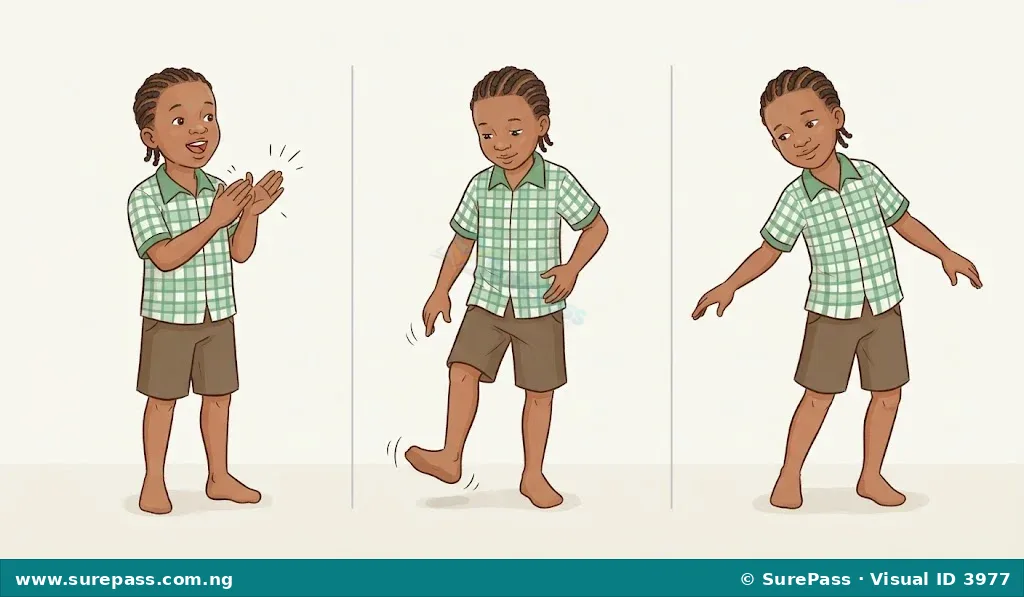
Performing Simple Actions to Songs
Performing simple actions to songs helps people feel the rhythm and express the mood of the music. These actions should be easy and safe for everyone to do.
The procedure for performing simple actions to songs involves the following steps:
- Listen to the song and feel its rhythm.
- Clap the hands to the beat of the music.
- Tap the feet gently on the ground to the rhythm.
- Sway the body from side to side or forward and backward.
- Move the arms up and down or in circles.
- If the song tells a story, make simple movements that show what the song is about. For example, if the song is about animals, pretend to be an animal.




0 comments
Open the discussion when you need it. Comments stay collapsed until requested so the initial article remains light.