



ARTICLE CONTENTSOn this page 6 sections
Folktales
Performance Objectives
By the end of the lesson, students should be able to:
- explain the meaning of folktales;
- identify the morals in folktales;
- sing songs by listening to the lyrics and tune and interpret the songs.
What Are Folktales?
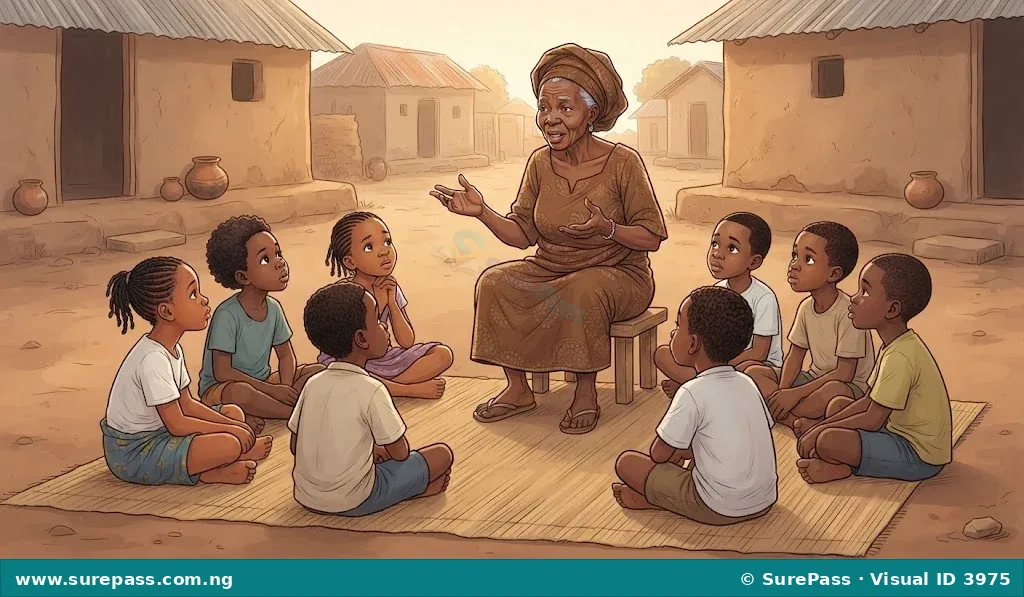
A folktale is an old story that people have told to each other for a very long time. These stories are passed down from grandparents to parents, and from parents to children. They are often about animals, people, or sometimes even magical things.
Folktales are told for two main reasons:
- To entertain people and make them happy.
- To teach important lessons about life.
Many folktales from Nigeria and other parts of the world help children learn about good behaviour and how to live well in their communities.
Understanding Morals in Folktales
Every folktale has a special message or lesson that it wants to teach. This lesson is called the moral of the story.
The moral helps people understand what is right and what is wrong. It guides them on how to be good, kind, and helpful.
To find the moral of a folktale, think about what happened in the story and what the characters learned. Ask yourself: “What lesson did this story teach me?”
Common morals found in folktales include:
- Always tell the truth.
- Be kind to others.
- Work hard to achieve your goals.
- Do not be greedy.
- Help people in need.
For example, imagine a story about a tortoise who was very lazy and did not plant any crops, while a rabbit worked hard in his farm. When harvest time came, the rabbit had plenty of food, but the tortoise had nothing. The moral of this story is that hard work brings good rewards, and laziness leads to hunger.
Songs in Folktales
Some folktales have songs in them. These songs make the stories more fun and exciting. They also help people remember important parts of the story or the lesson being taught.
When a folktale has a song, it is important to listen carefully to two things:
- The lyrics: These are the words of the song. The lyrics often tell you more about the story or the feelings of the characters.
- The tune: This is the melody or sound of the song. The tune can make the song happy, sad, or exciting.
By listening to both the lyrics and the tune, you can understand what the song means and how it fits into the story. For example, a song about a brave hunter might have strong, fast lyrics and a lively tune, showing courage and action.
Listening to Folktales and Songs
Listening to folktales and their songs is a special skill. It helps you enjoy the stories more and learn from them.
The following steps can help when listening to a folktale:
- Listen carefully: Pay attention to every word the storyteller says.
- Imagine the story: Close your eyes and picture the characters and what they are doing.
- Think about the characters: What are they like? Are they good or bad? What do they do?
- Find the lesson: After the story, think about the main message. What did the story teach you? This is the moral.
When a folktale includes a song, remember to:
- Listen to the words: Understand what the song is talking about.
- Listen to the music: Notice if the tune is fast or slow, happy or sad.
- Interpret the song: Think about why the song is in the story and what it adds to the message.
Practising these steps will help you become a good listener and understand the rich lessons hidden in folktales and their songs.



0 comments
Open the discussion when you need it. Comments stay collapsed until requested so the initial article remains light.