



ARTICLE CONTENTSOn this page 7 sections
Phonemic Awareness (Songs and Rhymes)
Performance Objectives
By the end of the lesson, students should be able to:
- sing songs taught;
- recite rhymes;
- identify letter sounds in songs and rhymes;
- recognize rhyming words from given word sets; and
- build rhyming word families.
Understanding Sounds in Words
Every word we speak is made up of different sounds. When we listen carefully, we can hear these sounds. Learning to hear and play with sounds helps children to read and write better.
Songs and rhymes are fun ways to learn about sounds in words. They help children to listen for sounds and notice how words can sound alike.
Songs and Rhymes
Songs and rhymes are short poems or verses that often have a musical quality. They use words that have similar sounds, especially at the end of lines. This makes them easy to remember and fun to say.
Songs and rhymes can also teach important lessons about how to behave and live with others.
Songs and Rhymes for Safety
It is important to know how to stay safe. Here is a rhyme about staying safe near the road:
Road Safety Rhyme
Stop, look, and listen, before you cross the street,
Hold a grown-up’s hand, with happy, careful feet.
Cars go fast, bikes go by,
Keep your eyes wide open, to the road and sky.
Here is a song about keeping away from unsafe places:
Safe Places Song
(Tune: Twinkle, Twinkle Little Star)
Safe places are the best for me,
Where I play happily.
Home and school, with friends so dear,
No scary places, no need to fear.
Safe places are the best for me,
Happy and safe, as can be.
Songs and Rhymes for Empathy and Teamwork
Empathy means understanding how others feel. Teamwork means working together with others to achieve a goal.
Here is a rhyme about helping a friend:
Helping Hand Rhyme
If a friend is sad or blue,
What can a kind friend do?
Give a hug, a gentle pat,
Say “I’m here for you,” just like that.
Here is a song about working together:
Teamwork Song
(Tune: Row, Row, Row Your Boat)
Work, work, work together,
Happy as can be.
Helping hands make tasks light,
For you and me!
Songs and Rhymes for Work Ethics
Work ethics are good habits for doing work. These include being dependable (people can count on you), punctual (being on time), and dedicated (working hard).
Here is a rhyme about being on time:
Punctual Peter Rhyme
Peter is always on time,
For school and play, he’s in his prime.
Never late, never slow,
Ready to learn, ready to go!
Songs and Rhymes for Leadership
Leadership means guiding others and taking good initiatives. A leader helps the team and motivates everyone.
Here is a song about being a good leader:
Good Leader Song
(Tune: Mary Had a Little Lamb)
A good leader helps the team, helps the team, helps the team,
A good leader helps the team, with a happy, helpful gleam.
They show the way for everyone, everyone, everyone,
They show the way for everyone, until the work is done.
Identifying Letter Sounds in Songs and Rhymes
When you sing songs and recite rhymes, listen carefully to the sounds of the words. Every letter has a sound. We can hear these sounds at the beginning, middle, and end of words.
Let us listen for some sounds in the “Road Safety Rhyme”:
Stop, look, and listen, before you cross the street,
Hold a grown-up’s hand, with happy, careful feet.
Cars go fast, bikes go by,
Keep your eyes wide open, to the road and sky.
In the rhyme, listen for the ‘s’ sound in words like:
- Stop
- Street
- Sky
Listen for the ‘h’ sound in words like:
- Hold
- Hand
- Happy
Listening for these sounds helps children to connect the sounds they hear to the letters they see.
Rhyming Words
Rhyming words are words that have the same ending sound. They do not always have the same spelling, but their sounds at the end are very similar.
For example, ‘cat’ and ‘hat’ are rhyming words because they both end with the ‘/at/’ sound.
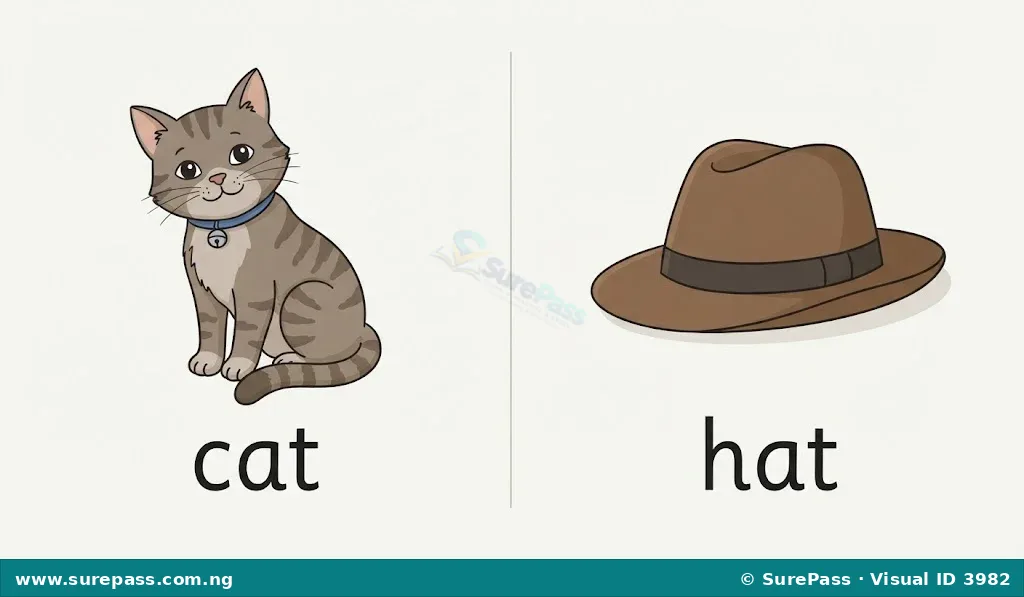
In the “Road Safety Rhyme”, we can find rhyming words:
- Street and Feet
- By and Sky
These pairs of words sound alike at the end.
Recognising Rhyming Words
To recognise rhyming words, listen carefully to the end of each word. If they sound the same, they rhyme.
Here are some more examples of rhyming words:
- Sun and Run
- Ball and Tall
- Pig and Big
- House and Mouse
- Tree and Bee
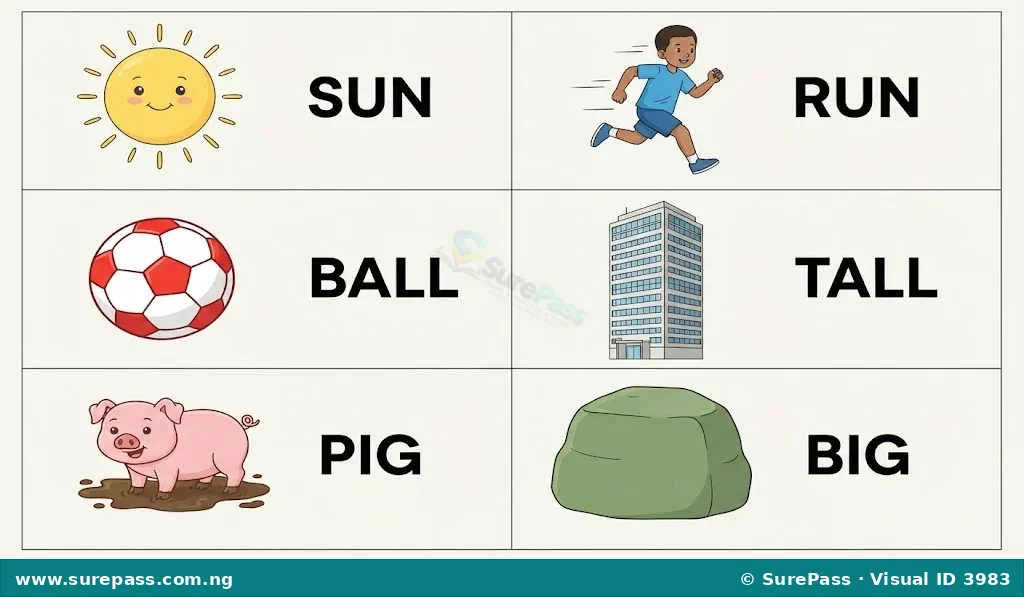
When given a set of words, children can pick out the ones that rhyme.
For example, from the words: ‘dog’, ‘log’, ‘car’, ‘frog’.
The rhyming words are:
- Dog
- Log
- Frog
These three words all end with the ‘/og/’ sound.
Word Families
A word family is a group of words that share the same ending sound and often the same spelling pattern. These words rhyme with each other.
For example, words like ‘cat’, ‘hat’, ‘mat’, and ‘sat’ all belong to the ‘-at’ word family because they all end with the ‘/at/’ sound and the letters ‘at’.
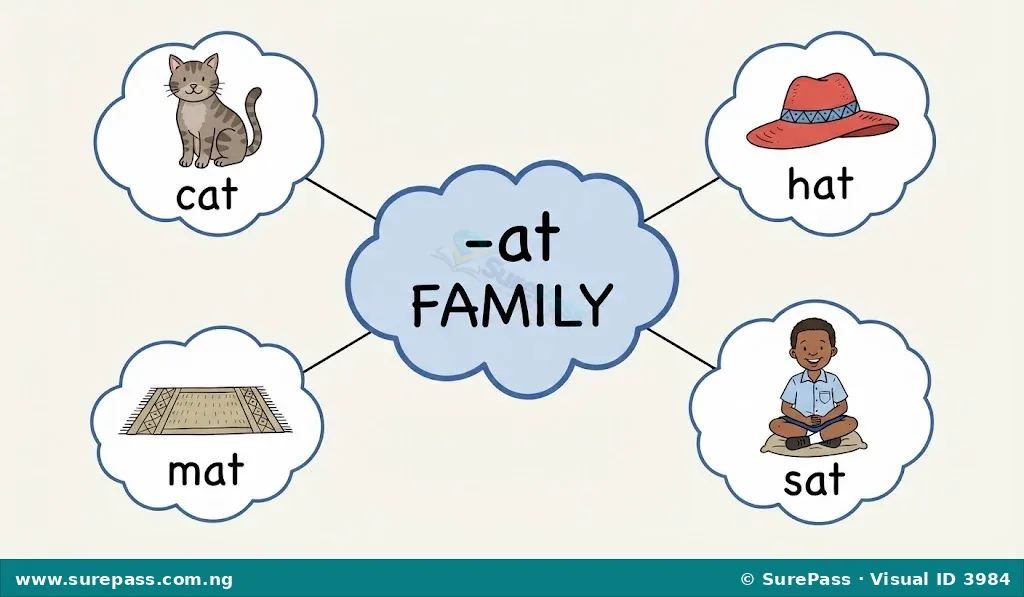
Building Rhyming Word Families
To build a word family, start with a common ending sound (like ‘-an’ or ‘-en’) and add different beginning letters to make new words.
Here are some common word families:
-
The -an family:
Words that end with ‘-an’ include:
- Can
- Fan
- Man
- Pan
- Ran
-
The -en family:
Words that end with ‘-en’ include:
- Den
- Hen
- Men
- Pen
- Ten
-
The -ig family:
Words that end with ‘-ig’ include:
- Big
- Dig
- Fig
- Pig
- Wig
-
The -op family:
Words that end with ‘-op’ include:
- Cop
- Hop
- Mop
- Pop
- Top
Practising with word families helps children to see patterns in words and makes reading and spelling easier.





0 comments
Open the discussion when you need it. Comments stay collapsed until requested so the initial article remains light.