



ARTICLE CONTENTSOn this page 7 sections
Songs and Rhymes
Performance Objectives
By the end of the lesson, students should be able to:
- Sing simple songs;
- recite simple rhymes fluently;
- Sing songs and recite rhymes with appropriate gestures;
- Sing and dance to songs;
- demonstrate actions in the songs and rhymes;
- create songs and rhymes.
Songs and rhymes are fun ways to use words and sounds. They help children learn new words, remember things easily, and express themselves with joy. Many songs and rhymes have a special rhythm and sound that makes them enjoyable to listen to and perform.
What Are Simple Songs?
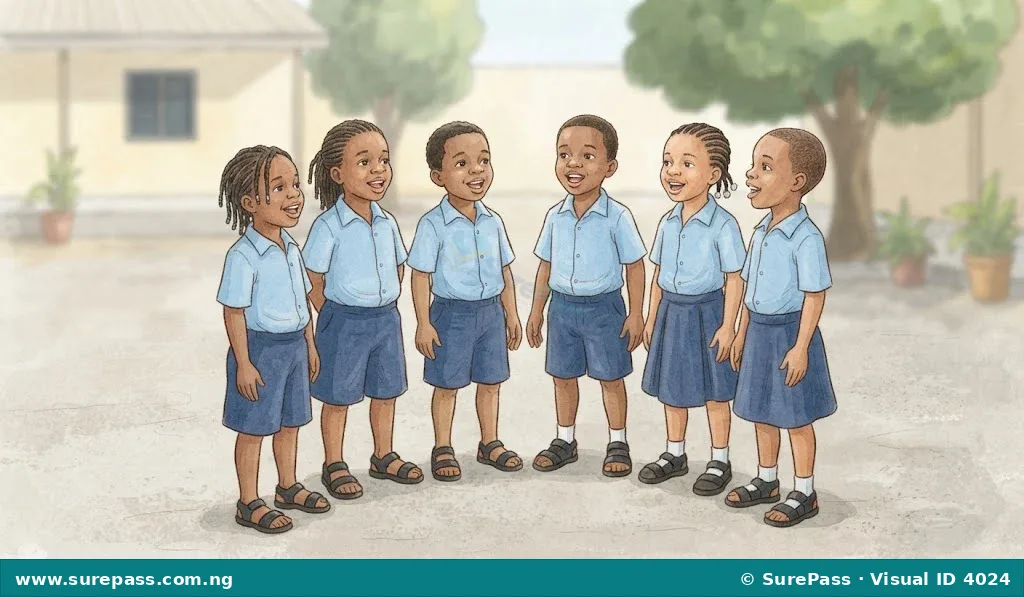
A simple song is a short piece of music with words that are easy to learn and sing. Simple songs often have a clear tune and repeat some words or lines. They are usually about familiar things like animals, numbers, or everyday activities.
Singing simple songs helps children to speak clearly and remember words. It also helps them to understand how sounds and words go together.
Examples of simple songs include:
- “Twinkle, Twinkle Little Star”
- “Baa, Baa, Black Sheep”
- “Alphabet Song”
- “Numbers Song”
What Are Simple Rhymes?
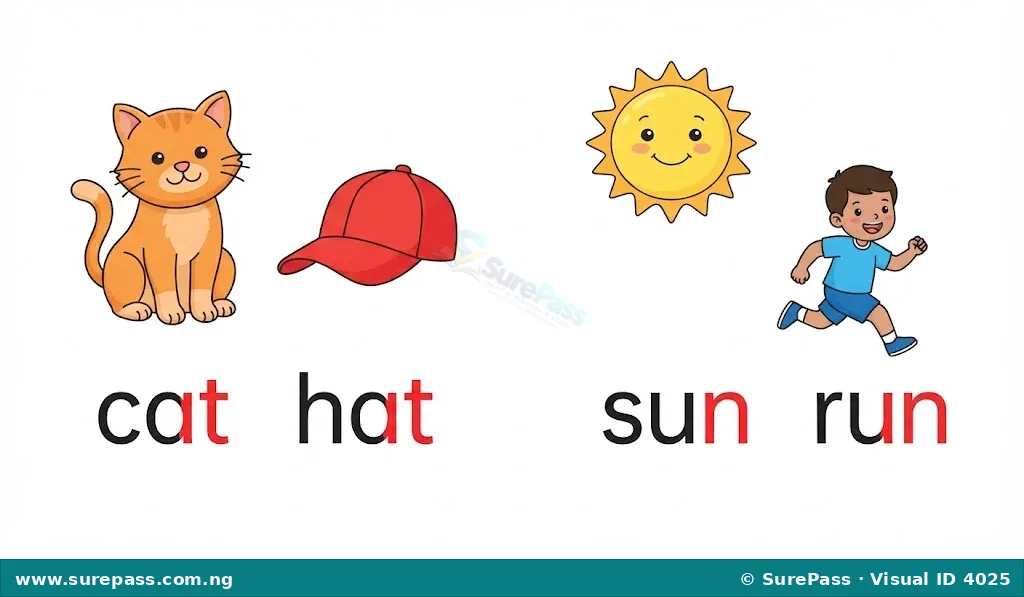
A simple rhyme is a short poem or verse where words at the end of lines have similar sounds. Rhymes are often playful and help children to hear the different sounds in words.
Reciting simple rhymes helps children to develop their speaking skills and to recognise patterns in language. It also makes learning new words fun.
Examples of simple rhymes include:
- “Humpty Dumpty sat on a wall,
- Humpty Dumpty had a great fall.”
- “Jack and Jill went up the hill,
- To fetch a pail of water.”
- “Rain, rain, go away,
- Come again another day.”
In these rhymes, “wall” and “fall” rhyme. “Hill” and “Jill” rhyme. “Away” and “day” rhyme.
Singing Songs and Reciting Rhymes
Singing songs means using the voice to produce musical sounds with words. Reciting rhymes means speaking the words of a rhyme clearly and with expression, often without a musical tune.
When singing or reciting, it is important to:
- Speak or sing the words clearly so everyone can understand.
- Use a pleasant voice.
- Say the words at a good speed, not too fast and not too slow.
Using Gestures and Actions with Songs and Rhymes
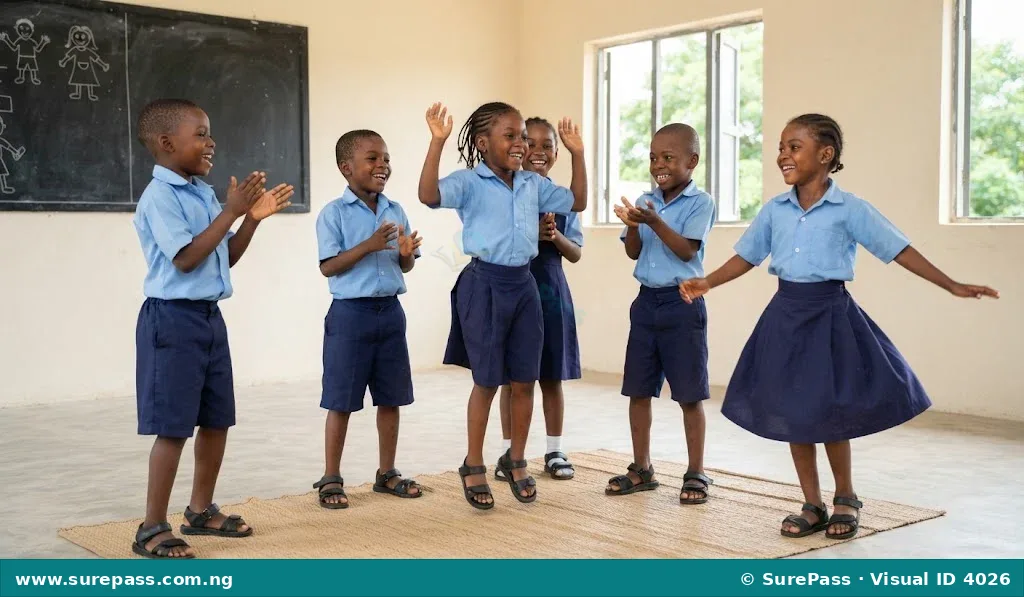
Gestures are movements of the hands, arms, or body that help to show what the words mean. Actions are movements that demonstrate what is happening in the song or rhyme.
Adding gestures and actions makes songs and rhymes more exciting and helps children remember them better. It also allows children to express themselves physically.
Common actions and gestures used with songs and rhymes include:
- Clapping: Bringing the hands together to make a sound.
- Dancing: Moving the body to the rhythm of the music.
- Jumping: Pushing off the ground with both feet.
- Spinning: Turning around in a circle.
- Running: Moving quickly on foot.
How to Demonstrate Actions in Songs and Rhymes
Demonstrating actions helps to bring songs and rhymes to life. It makes the performance more engaging for both the performer and the audience.
The procedure involves the following steps:
- Listen carefully: Pay attention to the words of the song or rhyme.
- Understand the meaning: Think about what the words are describing.
- Choose appropriate actions: Select movements that match the words. For example, if the song says “clap your hands,” then clap. If it says “jump up high,” then jump.
- Practise the actions: Try out the movements with the song or rhyme until they feel natural.
- Perform with enthusiasm: Show excitement and energy when singing, reciting, and doing the actions.
Creating Simple Songs and Rhymes
Creating songs and rhymes means making up new ones. This is a fun way to use imagination and play with words. Even very simple songs and rhymes can be created.
To create a simple song or rhyme, children can:
- Choose a topic: Think about something interesting, like an animal, a toy, or a friend.
- Think of words: List words related to the topic.
- Find rhyming words: Look for words that sound similar at the end. For example, if the topic is “cat,” think of words like “mat,” “hat,” “sat.”
- Put words together: Arrange the words to make short lines that tell a simple story or describe something.
- Add a simple tune (for songs): If creating a song, try to sing the words with a simple, easy tune.
For example, if the topic is “dog,” a child might think of “dog,” “log,” “frog.” Then they could create a simple rhyme like:
My little dog,
Sat on a log.
He saw a frog,
And gave a jog.




0 comments
Open the discussion when you need it. Comments stay collapsed until requested so the initial article remains light.