



ARTICLE CONTENTSOn this page 10 sections
Common Greetings
Performance Objectives
By the end of the lesson, students should be able to:
- greet and respond to simple greetings with appropriate tones;
- use appropriate greetings in different situations;
- distinguish the cultural differences in greetings;
- use nonverbal cues to accompany greetings.
Greetings are polite words or actions used when people meet each other. They help to show respect, friendliness, and care. Learning how to greet properly is an important part of speaking English and getting along with others.
Greetings at Home
At home, people greet family members like parents, siblings, and other relatives. The type of greeting often depends on the time of day.
Common greetings used at home include:
- Good morning: Used when you wake up or meet someone in the early part of the day.
- Good afternoon: Used when you meet someone in the middle of the day.
- Good evening: Used when you meet someone in the later part of the day.
- Good night: Used when you are going to bed or leaving someone late in the evening.
Here is an example of how Ade greets his father:
Ade: “Good morning, Dad, how do you do?”
Dad: “Good morning, Ade, how do you do?”
When you greet your parents or older family members, it is important to use a polite tone of voice.
Greetings at School
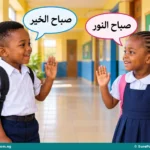
At school, pupils greet their teachers, headteachers, and classmates. These greetings also depend on the time of day.
Here is an example of how a pupil greets a teacher:
Pupil: “Good morning, Madam/Sir/Mr. Obi.”
Teacher: “Good morning, Olu, how are you?”
Pupil: “I am very well, thank you, Sir.”
When greeting a teacher, it is polite to use “Madam” for female teachers and “Sir” for male teachers, or their surname like “Mr. Obi” or “Mrs. Okafor.”
When greeting classmates, you can say “Good morning” or “Hello” followed by their name.
Greetings in the Community
In the community, people greet neighbours, elders, clan heads, doctors, nurses, and other people they meet. These greetings also follow the time of day.
Examples of greetings in the community include:
- “Good morning, neighbour.”
- “Good afternoon, Sir/Madam.”
- “Good evening, Doctor.”
- “Good afternoon, Nurse.”
It is important to greet elders and community leaders with respect. You can add “Sir” or “Madam” to show respect.
Appropriate Time for Greetings
Using the correct greeting for the time of day shows that you are polite and observant. Here are the general times for each greeting:
- Good morning: From when the sun rises until about 12:00 noon.
- Good afternoon: From 12:00 noon until about 5:00 PM.
- Good evening: From 5:00 PM until it is time to sleep.
- Good night: Used when someone is going to bed or when you are leaving someone late at night. It is not usually used as a greeting when you first meet someone.
Responding to Greetings
When someone greets you, it is important to respond politely. Here are some common ways to respond:
- If someone says, “Good morning,” you can reply, “Good morning.”
- If someone asks, “How do you do?” you can reply, “How do you do?” or “I am fine, thank you.”
- If someone asks, “How are you?” you can reply, “I am very well, thank you,” or “I am fine, thank you.”
Cultural Differences in Greetings
People from different cultures have different ways of greeting each other. It is important to know and respect these differences.
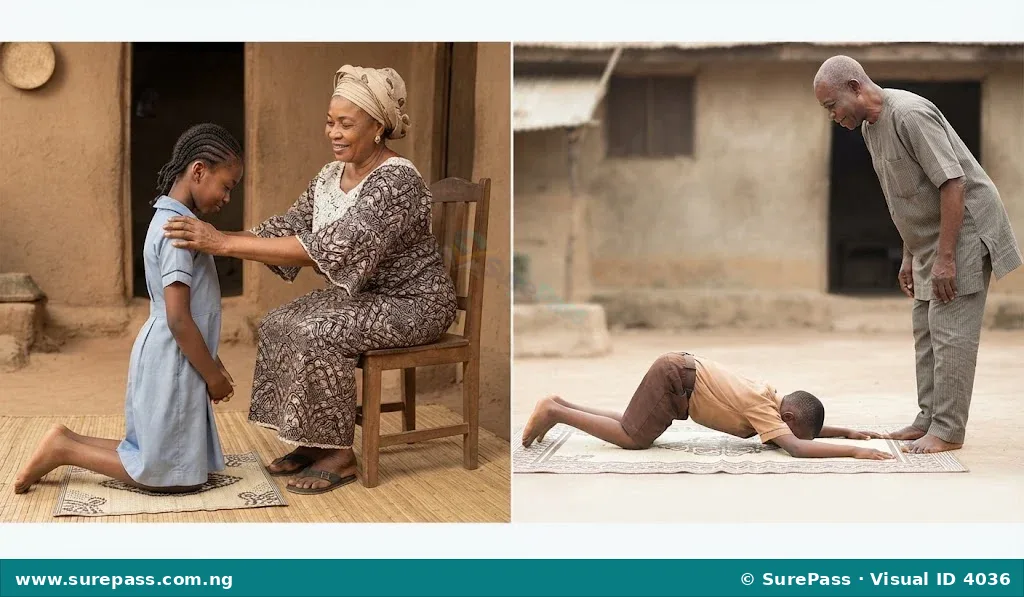
In some Nigerian cultures, children show respect to elders by:
- Kneeling down when greeting a female elder.
- Prostrating (lying flat on the ground) when greeting a male elder.
In other cultures, people might:
- Shake hands firmly with adults.
- Bow their heads slightly.
These actions are often combined with spoken greetings like “Good morning” or “Good afternoon.”
Nonverbal Cues with Greetings
Nonverbal cues are actions or gestures that go along with your spoken words. They help to show your feelings and respect.
Common nonverbal cues to use with greetings include:
- Smiling: A friendly smile shows that you are happy to see the person.
- Eye contact: Looking at the person’s eyes shows that you are paying attention and being respectful.
- Waving: A small wave can be used to greet someone from a distance.
- Shaking hands: A polite handshake is common among adults and can be taught to children with adult supervision.
Using these cues makes your greetings more meaningful and polite.
How to Practise Greetings
Practising greetings helps you to become confident in using them correctly. You can practise with your family, friends, and teachers.
The procedure involves the following steps:
- Choose a situation: Decide if you are practising greetings for home, school, or the community.
- Choose a time: Decide if it is morning, afternoon, or evening.
- Think of the person: Imagine who you are greeting (e.g., Dad, Madam, a neighbour).
- Say the greeting: Use the correct words for the time and person.
- Add a nonverbal cue: Smile, make eye contact, or wave.
- Practise the response: Imagine the person responding and practise your reply.
Role-playing with a friend or family member is a good way to practise different greeting situations.



0 comments
Open the discussion when you need it. Comments stay collapsed until requested so the initial article remains light.