


ARTICLE CONTENTSOn this page 8 sections
Phonemic awareness (Identifying sounds)
Performance Objectives
By the end of the lesson, students should be able to:
- produce the individual sounds of the letters of the alphabet;
- distinguish the sounds of the different letters of the alphabet correctly;
- segment words into individual sounds;
- manipulate sounds in words (e.g. changing /cat/ to /bat/ by substituting /c/ with /b/);
- blend sounds into words;
- describe given word families.
What Are Speech Sounds?
Words are made up of small sounds. Knowing these small sounds helps people to read and write. This understanding of sounds in words is called phonemic awareness.
For example, the word “cat” has three small sounds: /c/, /a/, /t/. Each sound is important for making the word.
Individual Letter Sounds
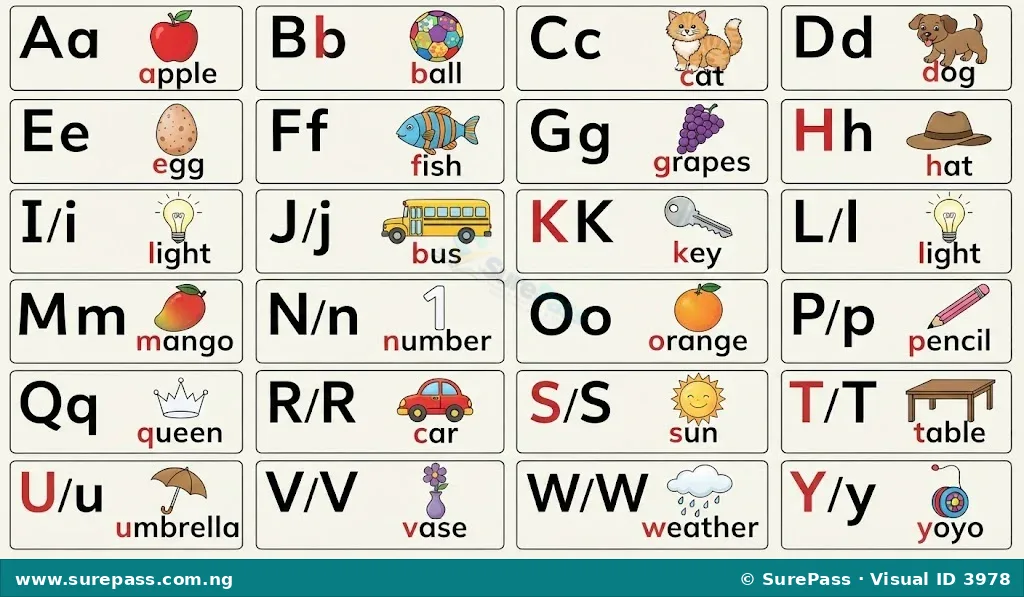
Each letter of the alphabet has its own special sound. When people speak, they use these sounds to form words. Learning the sound of each letter helps in reading.
The sound a letter makes is called its letter sound. For example, the letter ‘c’ makes the /k/ sound, like in “cat”. The letter ‘a’ makes the /a/ sound, like in “apple”. The letter ‘t’ makes the /t/ sound, like in “table”.
It is important to listen carefully and practise making these sounds correctly. This helps in telling the difference between the sounds of different letters.
Putting Sounds Together: Blending
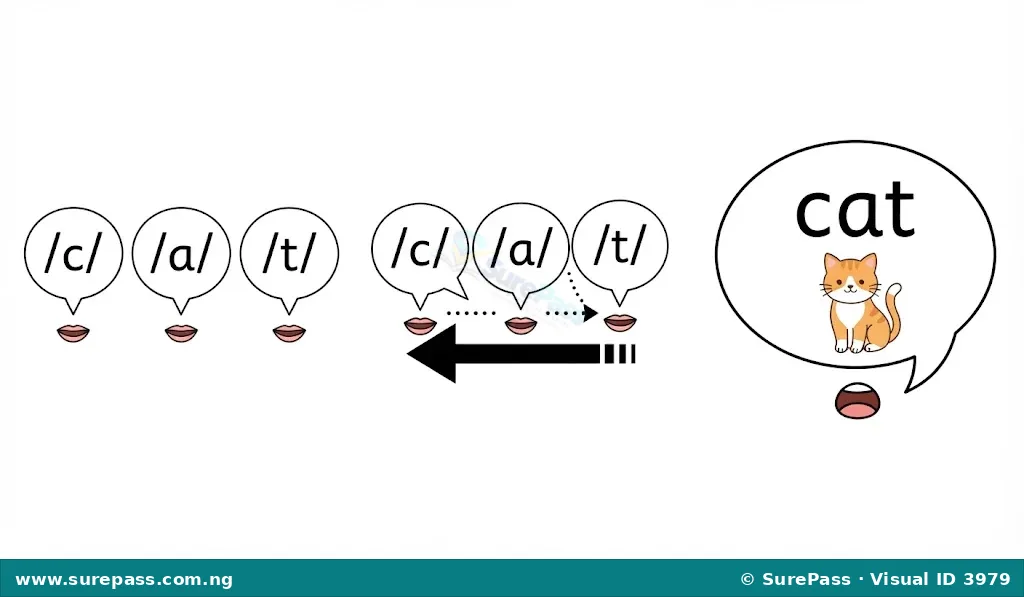
Blending sounds means putting individual sounds together to form a complete word. This skill helps people to read words by sounding them out.
For example, if someone says the sounds /c/, /a/, /t/ separately, blending them means putting them together to hear the word “cat”.
How to Blend Sounds
To blend sounds into a word, follow these steps:
- Listen carefully to each sound.
- Say the first sound.
- Say the second sound and quickly join it to the first sound.
- Say the third sound and quickly join it to the first two sounds.
- Say the whole word.
Let us try with some words:
- For the sounds /m/, /a/, /p/: Say /m/, then /ma/, then /map/. The word is “map”.
- For the sounds /s/, /u/, /n/: Say /s/, then /su/, then /sun/. The word is “sun”.
- For the sounds /p/, /e/, /n/: Say /p/, then /pe/, then /pen/. The word is “pen”.
Breaking Words Apart: Segmenting
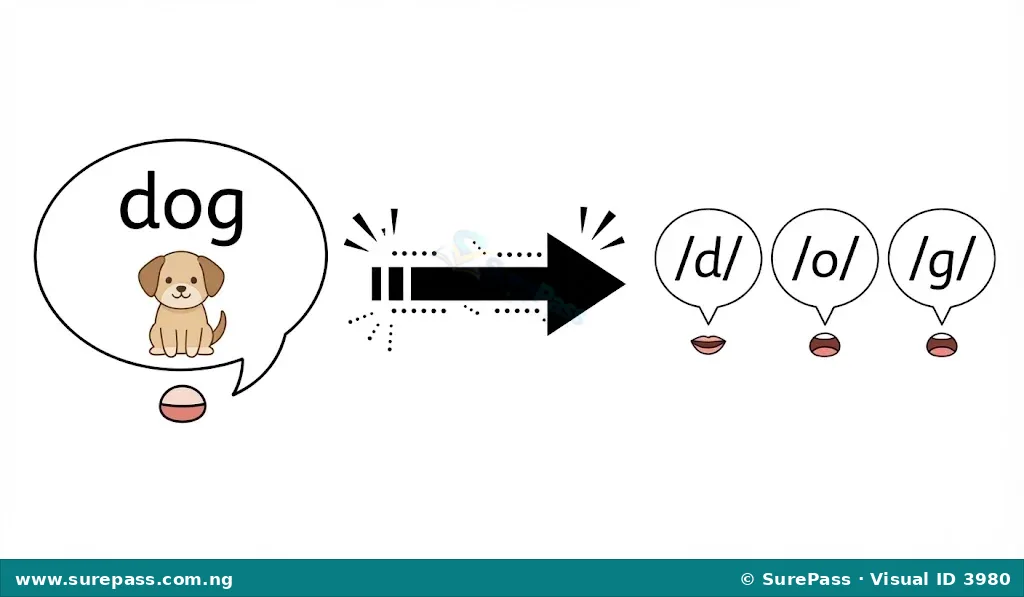
Segmenting sounds means breaking a word into its individual sounds. This skill helps people to spell words by listening for each sound.
For example, if someone hears the word “dog”, segmenting it means breaking it into its individual sounds: /d/, /o/, /g/.
How to Segment Sounds
To segment a word into its individual sounds, follow these steps:
- Say the whole word clearly.
- Say the first sound you hear in the word.
- Say the second sound you hear in the word.
- Say the third sound you hear in the word.
- Say all the sounds separately.
Let us try with some words:
- For the word “fan”: Say “fan”. Then say /f/, /a/, /n/.
- For the word “bed”: Say “bed”. Then say /b/, /e/, /d/.
- For the word “sit”: Say “sit”. Then say /s/, /i/, /t/.
Changing Sounds in Words: Manipulation
Manipulating sounds means changing one sound in a word to make a new word. This shows how sounds can be moved around to create different meanings.
For example, if you have the word “cat” and you change the first sound /c/ to /b/, you get the new word “bat”.
Other examples of manipulating sounds include:
- Changing the /p/ in “pot” to /h/ makes “hot”.
- Changing the /s/ in “sit” to /f/ makes “fit”.
- Changing the /m/ in “man” to /f/ makes “fan”.
Word Families
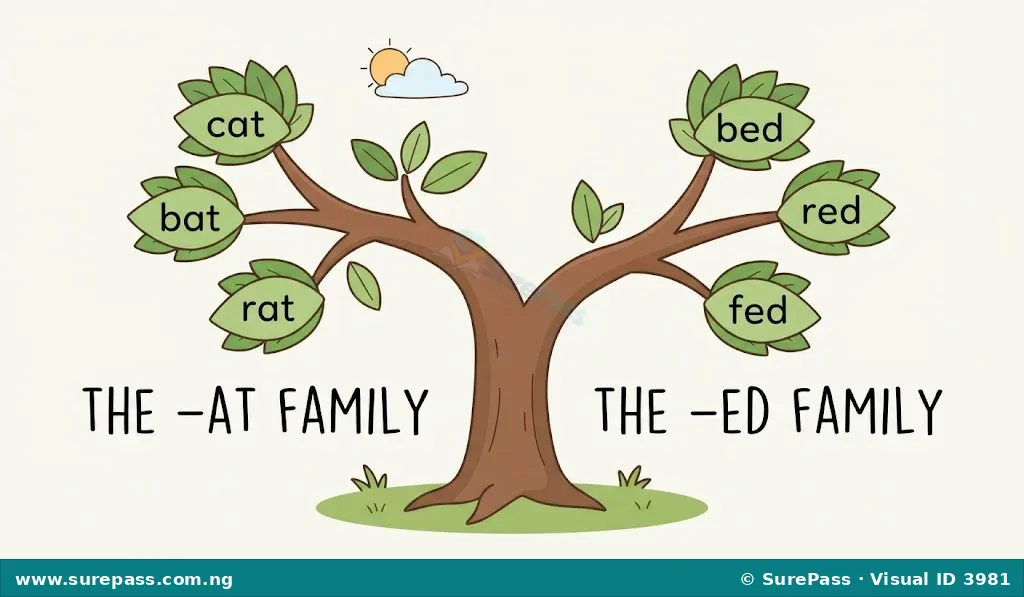
Word families are groups of words that share the same ending sound and spelling pattern. These words often rhyme with each other.
Learning word families helps people to read and spell many words easily because they can recognise the common pattern.
Examples of word families include:
- The “-at” family: These words end with the /at/ sound. Examples are “sat”, “cat”, “rat”, “bat”.
- The “-ag” family: These words end with the /ag/ sound. An example is “bag”.
- The “-ed” family: These words end with the /ed/ sound. An example is “bed”.
- The “-et” family: These words end with the /et/ sound. An example is “pet”.
- The “-ot” family: These words end with the /ot/ sound. An example is “pot”.
- The “-ob” family: These words end with the /ob/ sound. An example is “rob”.


0 comments
Open the discussion when you need it. Comments stay collapsed until requested so the initial article remains light.