


ARTICLE CONTENTSOn this page 8 sections
Cultural Rhymes
Performance Objectives
By the end of the lesson, students should be able to:
- recite popular rhymes;
- demonstrate rhymes using bodily movement;
- replicate what they observe;
- identify morals or lessons from rhymes.
What Are Rhymes?
A rhyme is a short poem or song that has words with similar sounds at the end of lines. Rhymes are fun to say and listen to.
Many rhymes tell a short story or describe something. They often have a rhythm, which is a steady beat that makes them easy to remember and perform.
Reciting Rhymes
Reciting a rhyme means saying it out loud clearly. When reciting, it is important to speak slowly enough for everyone to understand the words.
Practising rhymes helps children to speak clearly and remember words. It also helps them to enjoy stories and songs.
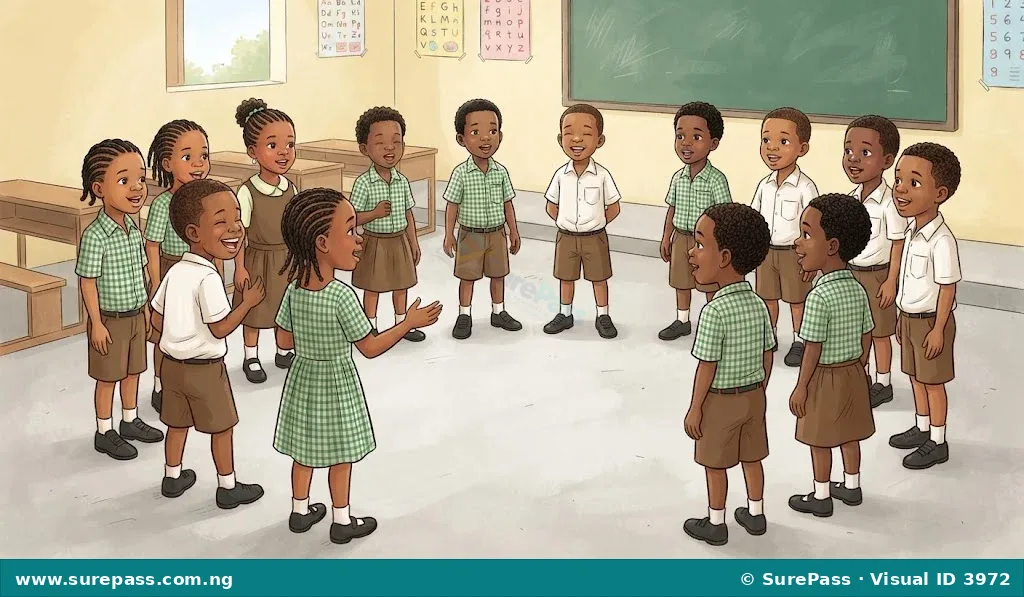
Adding Body Movements to Rhymes
Body movements help to show what a rhyme is about. When children use their hands, arms, and bodies, they can act out the words and make the rhyme more interesting.
These movements help everyone understand the story or message of the rhyme, even if they do not know all the words. It also makes performing rhymes more fun and lively.
Examples of Rhymes with Movements
Here are some popular rhymes and ideas for how to use body movements with them:
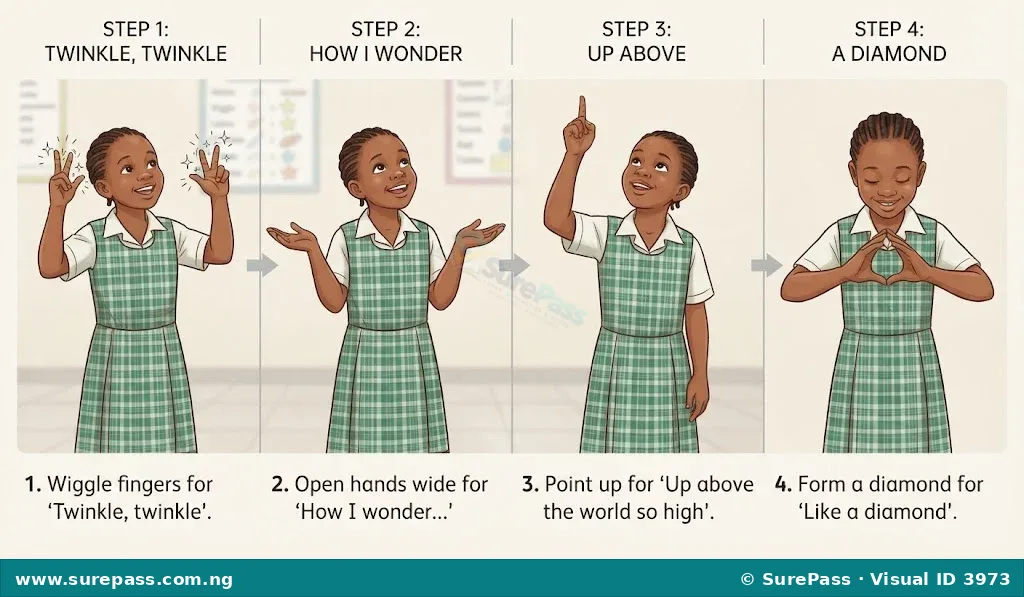
Twinkle, Twinkle, Little Star
This rhyme is about a star in the sky. The movements can show the star and how it shines.
The procedure for performing this rhyme with movements involves the following steps:
- “Twinkle, twinkle, little star,” – Wiggle fingers of both hands in the air, as if making a star twinkle.
- “How I wonder what you are!” – Open hands wide and look up with a wondering expression.
- “Up above the world so high,” – Point one hand upwards.
- “Like a diamond in the sky.” – Bring hands together to form a diamond shape, then point up again.
- “Twinkle, twinkle, little star,” – Wiggle fingers again.
- “How I wonder what you are!” – Open hands wide and look up again.
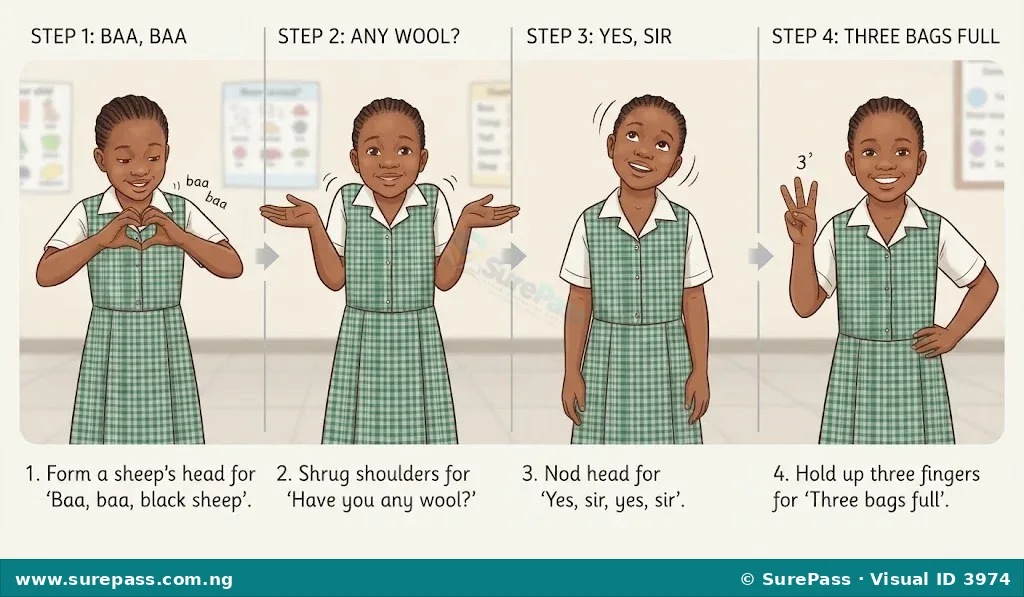
Baa, Baa, Black Sheep
This rhyme is about a sheep with wool. The movements can show the sheep and the wool it gives.
The procedure for performing this rhyme with movements involves the following steps:
- “Baa, baa, black sheep,” – Bring hands together to form a sheep’s head, or make a “baa” sound.
- “Have you any wool?” – Shrug shoulders and open hands as if asking a question.
- “Yes, sir, yes, sir,” – Nod head up and down.
- “Three bags full.” – Hold up three fingers.
- “One for the master,” – Point to the front.
- “And one for the dame,” – Point to the side.
- “And one for the little boy who lives down the lane.” – Point to the other side, or make a small walking motion with fingers.
Finding Lessons in Rhymes
Many rhymes teach us something important. These are called morals or lessons. They help children learn about good behaviour or how the world works.
For example:
- From “Baa, Baa, Black Sheep,” we can learn about sharing. The sheep gives its wool to different people.
- From rhymes about being careful, like “Humpty Dumpty,” we learn about safety and being careful not to fall.
- From rhymes about helping others, we learn about kindness and being a good friend.
Practising and Replicating
When children watch someone perform a rhyme with movements, they can try to do the same thing. This is called replicating or copying what they observe.
Practising rhymes and their movements helps children to become good performers. It also helps them to remember the rhymes and their lessons better.

0 comments
Open the discussion when you need it. Comments stay collapsed until requested so the initial article remains light.