



ARTICLE CONTENTSOn this page 9 sections
Explore Other Parts of the Surroundings: Roads
Performance Objectives
By the end of the lesson, students should be able to:
- identify types of roads around the school and roads outside the school;
- list different colours of traffic light;
- walk along and cross the road safely.
What Are Roads?
A road is a path or way that vehicles and people use to move from one place to another.
Roads help people travel to school, market, church, mosque, and other places. They also help vehicles like cars, buses, and motorcycles carry goods and people.
Roads Around Us
Roads are found everywhere around us. Some roads are inside places like our school, while others are outside in the community.
Roads Inside the School
Inside the school compound, there are paths or driveways. These are small roads where people walk and sometimes vehicles drive slowly. They help pupils and teachers move between classrooms, the playground, and the school gate.
Roads Outside the School
Outside the school, there are bigger roads. These can be streets in our neighbourhood or main roads that connect different parts of a town or city. Many vehicles use these roads, and people also walk along them.
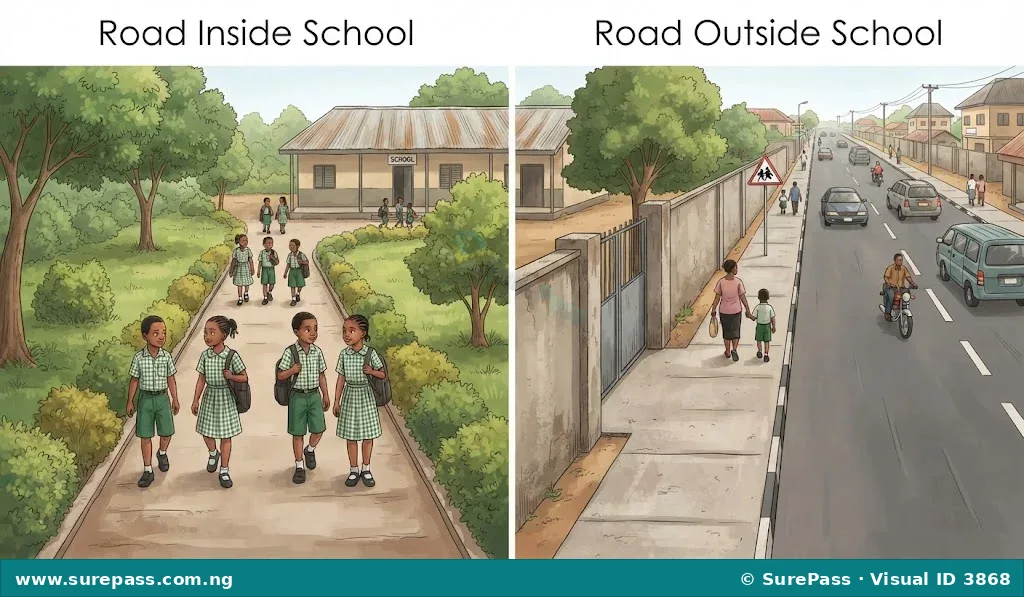
Walking Safely Along the Road
When walking along a road, it is important to be careful to avoid accidents. Safety rules help keep everyone safe.
Important safety tips for walking along the road include:
- Always walk on the pavement or walkway if there is one. This part of the road is for people walking, not for vehicles.
- If there is no pavement, walk on the side of the road facing the oncoming traffic. This way, a person can see vehicles coming towards them.
- Do not play on the road. Roads are for moving, not for games.
- Always pay attention to vehicles and other people around.
Crossing the Road Safely
Crossing the road can be dangerous if not done carefully. It is important to follow steps to cross safely.
The steps for crossing the road safely are:
- Stop: Stand at the edge of the road, not too close to the moving vehicles.
- Look: Look to the left, then to the right, and then to the left again. This helps to see if any vehicles are coming from either direction.
- Listen: Listen for the sound of approaching vehicles.
- Think: Decide if the road is clear and safe to cross. If a vehicle is coming, wait for it to pass.
- Cross: Walk straight across the road quickly but carefully. Do not run. Keep looking and listening while crossing.
Zebra Crossing
A zebra crossing is a special place on the road marked with black and white stripes. It is a safe place for people to cross the road.
When using a zebra crossing, pedestrians have the right of way. This means vehicles should stop to allow people to cross. However, it is still important to look left, right, and left again before stepping onto the zebra crossing.
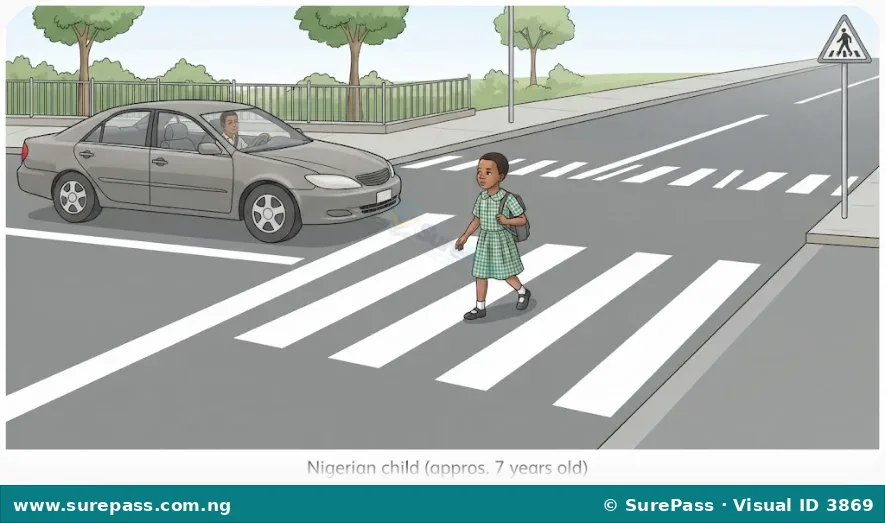
Traffic Lights
Traffic lights are signals placed at road junctions or busy crossings to control the flow of vehicles and pedestrians. They use different colours to tell drivers and pedestrians when to stop, wait, or go.
The different colours of traffic lights are:
- Red Light: This light means STOP. Vehicles must stop behind the white line. Pedestrians should not cross the road when the red light is showing for vehicles.
- Yellow Light: This light means WAIT or GET READY. It shows after the green light and before the red light. Drivers should prepare to stop. Pedestrians should wait for the green light to cross.
- Green Light: This light means GO. Vehicles can move forward. Pedestrians can cross the road if the pedestrian signal also shows green.
Traffic light colours change to manage the movement of vehicles and people, helping to prevent accidents and keep traffic flowing smoothly.
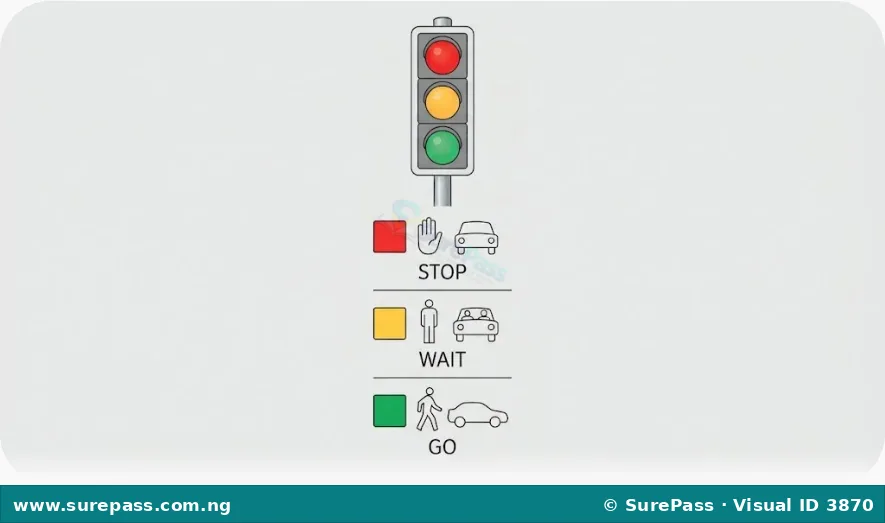
Road Signs
Road signs are pictures or symbols placed at the side of roads to give information, warnings, or instructions to drivers and pedestrians. They help everyone understand what to do on the road.
Some simple road signs include:
- STOP Sign: This sign is usually red and octagonal (eight-sided). It tells drivers to stop completely before proceeding.
- GO Sign (often implied by green traffic light): While there isn’t a specific “Go” sign for drivers, the green traffic light serves this purpose. For pedestrians, a green walking person symbol means “Go”.
- SCHOOL AHEAD Sign: This sign warns drivers that they are approaching a school area. Drivers should slow down and be extra careful because children may be crossing.
- PEDESTRIAN CROSSING Sign: This sign shows a person walking across a road. It indicates a place where pedestrians can cross, often near a zebra crossing.
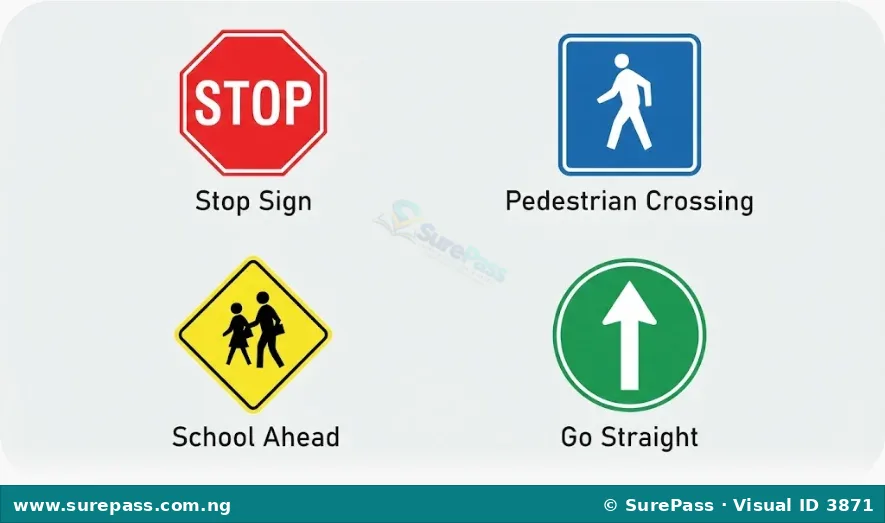
How to Cross the Road Safely
This activity helps pupils practise the steps for crossing a road safely in a controlled environment.
The required materials are:
- An open space (e.g., school playground or classroom).
- Chalk or tape to mark a pretend road and zebra crossing.
- An adult supervisor.
The procedure involves the following steps:
- An adult supervisor will draw a pretend road with a zebra crossing in the open space using chalk or tape.
- Pupils will stand at the edge of the pretend road, near the zebra crossing.
- The supervisor will act as a “traffic controller” or use pretend traffic light signals (e.g., holding up coloured cards).
- When the supervisor indicates it is safe (e.g., “no cars coming” or “green light for pedestrians”), pupils will demonstrate the safe crossing steps:
- Stop at the edge of the road.
- Look left, then right, then left again.
- Listen for any pretend vehicles.
- Think if it is safe to cross.
- Walk straight across the zebra crossing, not running.
- Pupils should practise this several times, taking turns, always under the guidance of the adult supervisor.
- The supervisor will correct any mistakes and reinforce the importance of each step.


0 comments
Open the discussion when you need it. Comments stay collapsed until requested so the initial article remains light.