



ARTICLE CONTENTSOn this page 7 sections
Exploring Our Environment
Performance Objectives
By the end of the lesson, students should be able to:
- observe and identify things in and around the classroom;
- describe things in and around the school;
- observe and identify things in and around the home.
What is the Environment?
The environment is everything around us. It includes all the living and non-living things that surround us every day.
The environment is where people live, learn and play. It is made up of many different things that can be seen, heard, touched or even smelled.
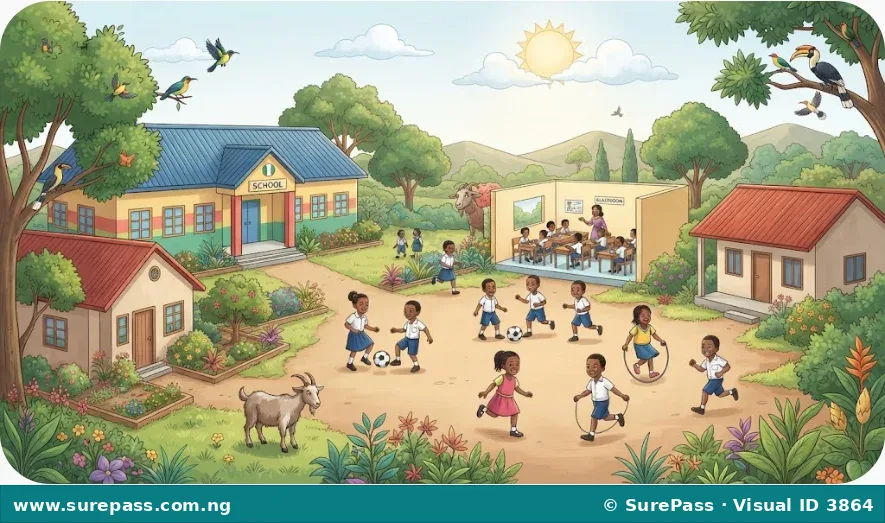
Things in the Classroom
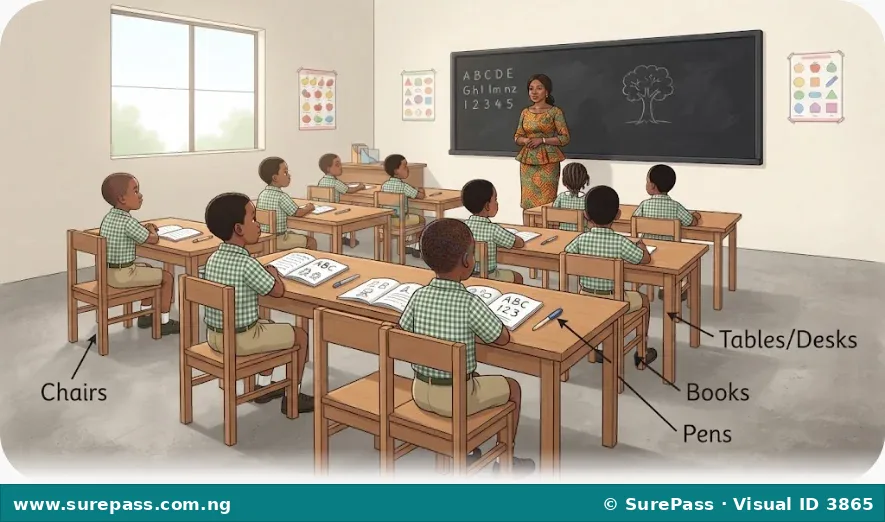
The classroom is a part of the school environment where pupils learn. Many things are found inside the classroom.
These things help pupils to learn and make the classroom a comfortable place. Observing these items helps pupils to understand their learning space better.
Things found in and around the classroom include:
- Chairs: These are used for sitting.
- Tables: These are used for placing books and writing.
- Desks: These are often combined with chairs for pupils to sit and work.
- Books: These contain stories, lessons and pictures for learning.
- Pens: These are used for writing and drawing.
Things in the School
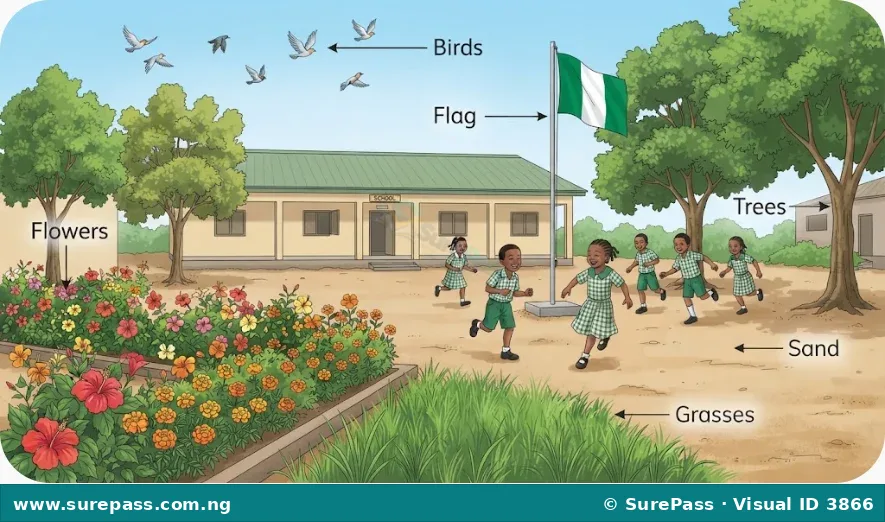
The school environment is a larger area that includes the classroom and many other places. It is where pupils come to learn and play with friends.
Observing things in and around the school helps pupils to know their school better. These things can be living or non-living.
Things found in and around the school include:
- Flowers: These are colourful plants that make the school look beautiful.
- Flag: The Nigerian flag is usually found in the school compound.
- Birds: These are living animals that fly and sing in the school compound.
- Grasses: These are green plants that cover the ground in the school.
- Trees: These are tall plants that provide shade and fresh air.
- Sand: This is a non-living material found on the ground, especially in play areas.
Things in the Home
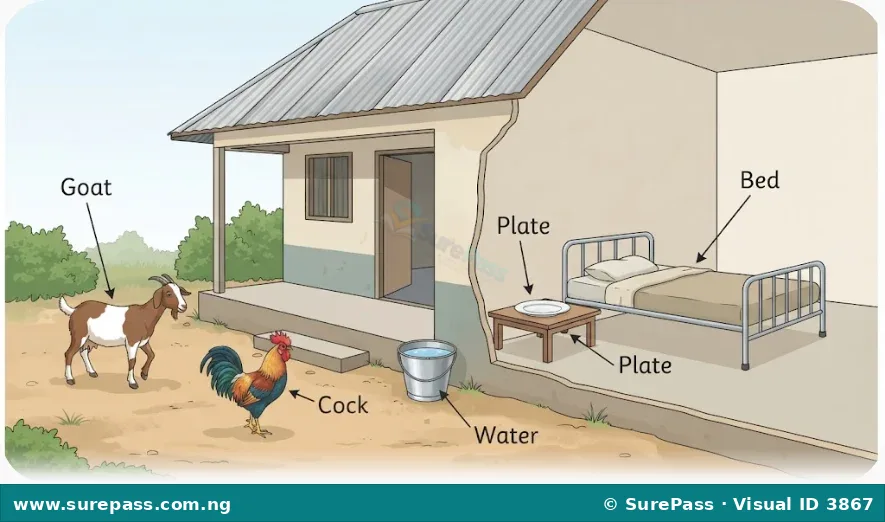
The home environment is where pupils live with their families. It is a place of comfort and safety.
Observing things in and around the home helps pupils to understand their immediate surroundings and the items they use daily.
Things found in and around the home include:
- Goat: This is a living animal that some families keep around their homes.
- Bed: This is a piece of furniture used for sleeping.
- Cock: This is a male chicken, a living animal often found around homes.
- Plate: This is an item used for eating food.
- Water: This is a non-living liquid used for drinking, cooking and washing.
Observing and Identifying Things
Observing means looking carefully at things to notice their details. When pupils observe, they use their eyes to see shapes, colours and how things are used.
Identifying means knowing what something is and being able to name it. After observing something, pupils can identify it by saying its name.
For example, when pupils look at a chair, they observe its legs, backrest and seat. Then, they identify it as a chair because they know its name and purpose.
Practising observation and identification helps pupils to learn about the world around them.




0 comments
Open the discussion when you need it. Comments stay collapsed until requested so the initial article remains light.