



ARTICLE CONTENTSOn this page 9 sections
Simple Machines
Performance Objectives
By the end of the lesson, students should be able to:
- identify simple machines in the school, home and community;
- explain the uses of the machines;
- Use simple machine to perform task in the environment.
What Are Simple Machines?
A simple machine is a tool that helps people to do work more easily.
Imagine trying to move a heavy object with bare hands. A suitable tool can make the task easier. Simple machines are found all around and are used for many daily tasks.
Identifying Simple Machines
Simple machines can be identified by their appearance and how they are used. They are tools that help to push, pull, lift, or cut things. Many simple machines are familiar objects used in homes, schools, and communities.
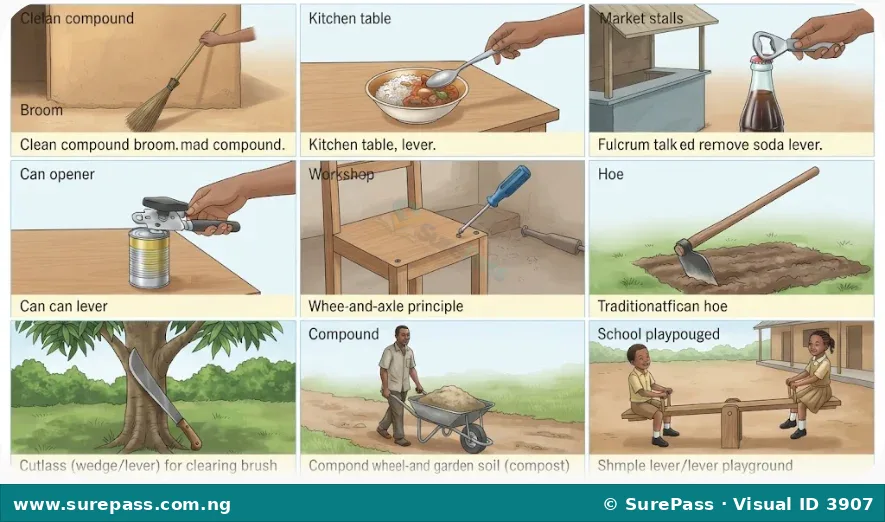
Simple Machines in the Home
Many simple machines are used in the home to help with daily chores and activities. These tools make tasks like eating, cleaning, and opening containers easier.
Simple machines found in the home include:
- Spoon: A spoon is used for eating food and stirring liquids.
- Bottle opener: A bottle opener is used to remove caps from bottles.
- Can opener: A can opener is used to open food cans.
- Screwdriver: A screwdriver is used to turn screws, which helps to fasten or unfasten objects.
- Broom: A broom is used for sweeping dirt and dust from floors.
Simple Machines in the School
Schools also have simple machines that help with learning, play, and maintenance. These tools assist in keeping the school clean and provide fun activities.
Simple machines found in the school include:
- Broom: Brooms are used by cleaners to sweep classrooms, corridors, and school compounds.
- See-saw: A see-saw is a piece of playground equipment used for play. Children sit on opposite ends and move up and down.
Simple Machines in the Community
In the community, simple machines are used for farming, construction, and moving heavy items. They help people perform important work that benefits everyone.
Examples found in the community include:
- Hoe: A hoe is a farming tool used for digging soil, weeding, and preparing land for planting.
- Cutlass: A cutlass is a sharp tool used for clearing bushes, cutting grass, and harvesting crops.
- Wheelbarrow: A wheelbarrow is used for moving heavy loads like sand, soil, or building materials from one place to another.
Using Simple Machines
Simple machines help people perform tasks that would be difficult or impossible with bare hands. Knowing how to use them correctly makes work easier and safer.
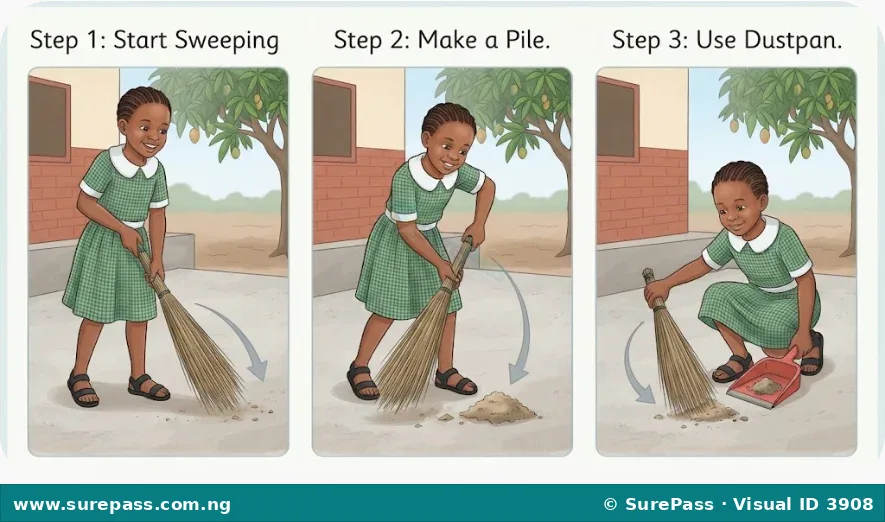
How to Use a Broom for Sweeping
Sweeping with a broom helps to keep floors and surfaces clean. It is a common task performed in homes and schools.
The procedure involves the following steps:
- Hold the broom firmly with both hands. One hand should be near the top of the handle and the other lower down.
- Stand facing the area to be swept.
- Push the broom forward in short strokes to gather dirt and dust into a pile.
- Sweep the dirt into a dustpan.
- Empty the dustpan into a waste bin.
How to Use a Wheelbarrow for Moving Light Loads
A wheelbarrow is useful for moving things that are too heavy or bulky to carry by hand. For Primary 1 learners, this should involve very light loads and adult supervision.
The required materials are:
- A small wheelbarrow
- Light objects such as dry leaves, empty plastic bottles, or paper waste
The procedure involves the following steps:
- Ask an adult to help place the light objects into the wheelbarrow.
- Hold the handles of the wheelbarrow firmly with both hands.
- Lift the handles slightly so the wheelbarrow balances on its wheel.
- Push the wheelbarrow slowly to the required location.
- Ask an adult to help empty the wheelbarrow.
Safety with Simple Machines
Some simple machines can be dangerous if not used correctly. It is important to always be careful and ask an adult for help when using certain tools.
Important safety tips include:
- Sharp tools like cutlasses and can openers should only be handled by adults.
- Screwdrivers should be used carefully and only for their intended purpose, with adult supervision.
- Heavy tools or objects moved with a wheelbarrow require adult supervision to prevent accidents.
- Never play with tools that can cause harm.



0 comments
Open the discussion when you need it. Comments stay collapsed until requested so the initial article remains light.