


ARTICLE CONTENTSOn this page 6 sections
Shapes
Performance Objectives
By the end of the lesson, students should be able to:
- identify the shapes of things in the classroom, home and school compound;
- group things according to their shapes;
- describe characteristic properties of various shapes;
- construct different shapes with sticks, paper and wires.
What Are Shapes?
A shape is the outline or form of an object. It tells us how an object looks.
Everything around us has a shape. Look at a ball, a book, or a window. Each of these things has a special form or outline. These forms are called shapes.
Common Shapes Around Us
There are many different shapes. Some shapes have straight lines, and some are round. Here are some common shapes:
The Circle
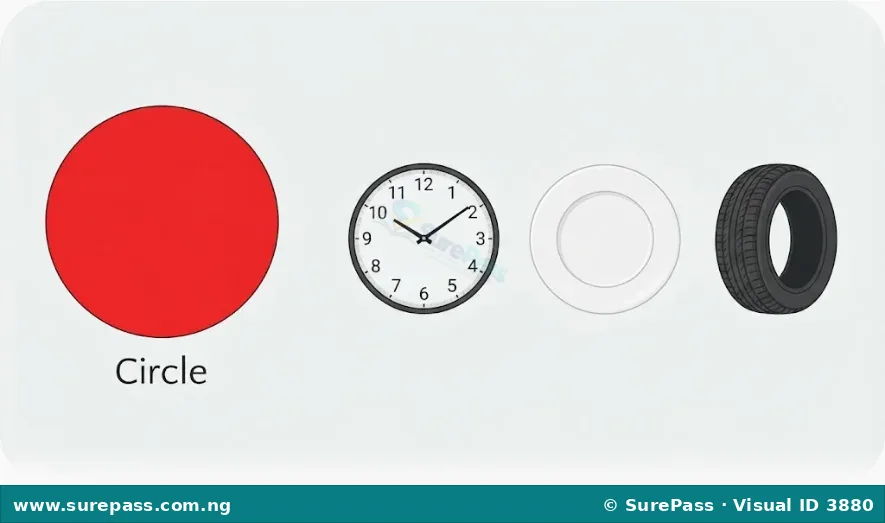
A circle is a round shape. It has no straight sides and no corners.
Objects that are shaped like a circle include:
- A ball
- A clock face
- A plate
- A car tyre
The Square
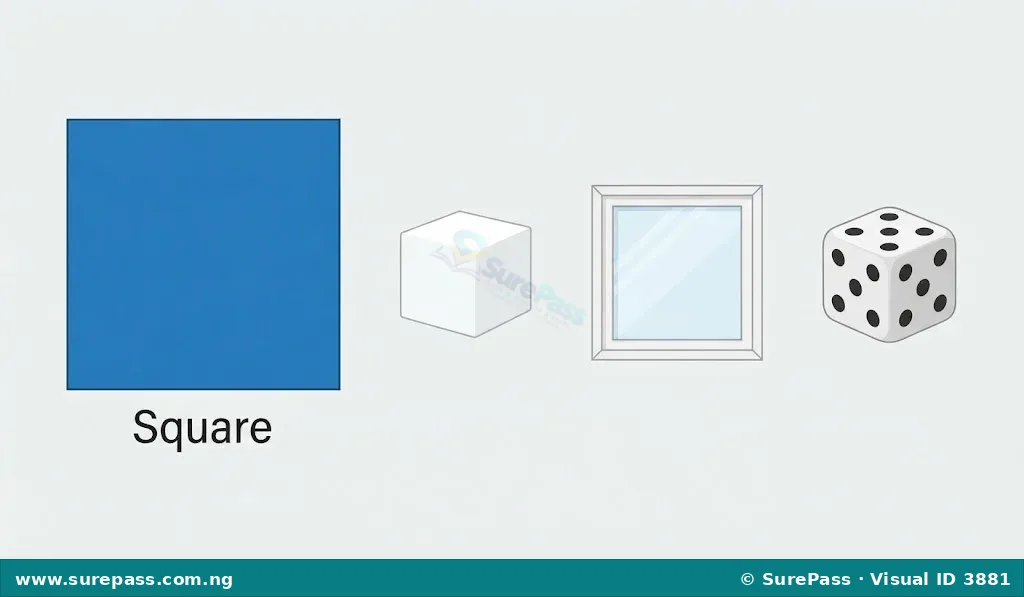
A square is a shape with four straight sides. All four sides of a square are equal in length. It also has four corners.
Objects that are shaped like a square include:
- A cube of sugar
- A small window pane
- A dice
- A square cushion
The Rectangle
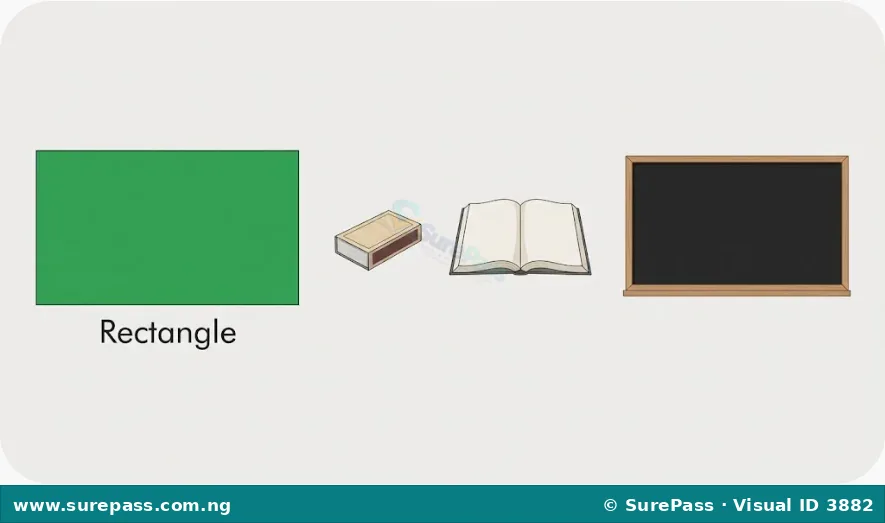
A rectangle is a shape with four straight sides and four corners. Unlike a square, a rectangle has two long sides and two short sides. The opposite sides are equal in length.
Objects that are shaped like a rectangle include:
- A matches box
- A book
- A door
- A blackboard
The Triangle
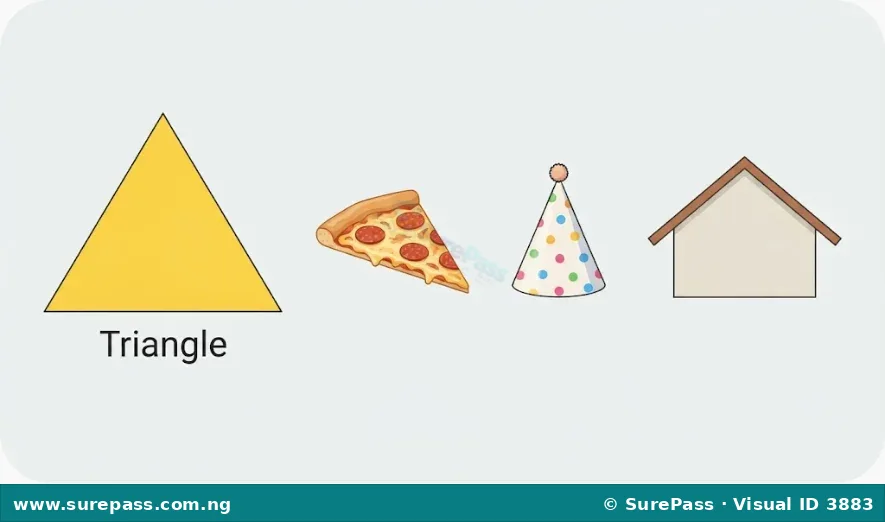
A triangle is a shape with three straight sides and three corners.
Objects that are shaped like a triangle include:
- A slice of pizza
- A funfair funnel (when viewed from the side)
- A party hat
- The roof of some houses
The Oval
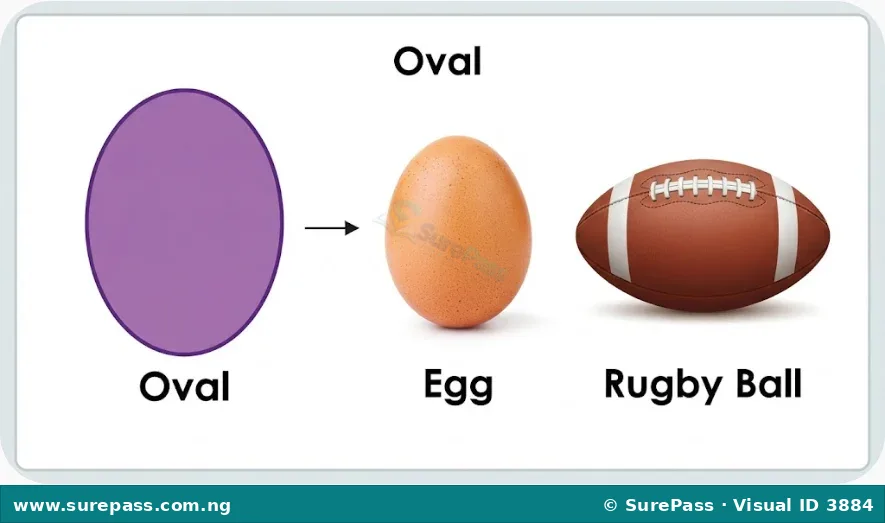
An oval is a shape that looks like a stretched circle. It is also round, but it is longer in one direction.
Objects that are shaped like an oval include:
- An egg
- A rugby ball
- Some mirrors
Identifying Shapes in Our Environment
Shapes are all around us. It is important to look closely at objects to see their shapes. Identifying shapes helps us understand the world better.
In the home, school, and community, many things can be grouped by their shapes. For example, all round objects can be grouped together, and all objects with four straight sides can be grouped together.
Examples of shapes found in different places include:
- In the home: A round plate (circle), a rectangular door (rectangle), a square cushion (square), an egg (oval).
- In the classroom: A circular clock (circle), a rectangular blackboard (rectangle), a square window pane (square), a triangular ruler (triangle).
- In the school compound: A round ball (circle), a rectangular goalpost (rectangle), a triangular roof (triangle).
Constructing Shapes
Shapes can be made using different materials like paper, sticks, or wires. This helps to understand their properties better.
Materials Needed
To construct shapes, the required materials are:
- Paper (plain or coloured)
- Scissors (for adult use or under adult supervision)
- Glue or tape
- Matchsticks or small sticks
- Thin, flexible wires
How to Construct Shapes with Paper
Paper can be folded or cut to make different shapes. Always ask an adult to help with scissors.
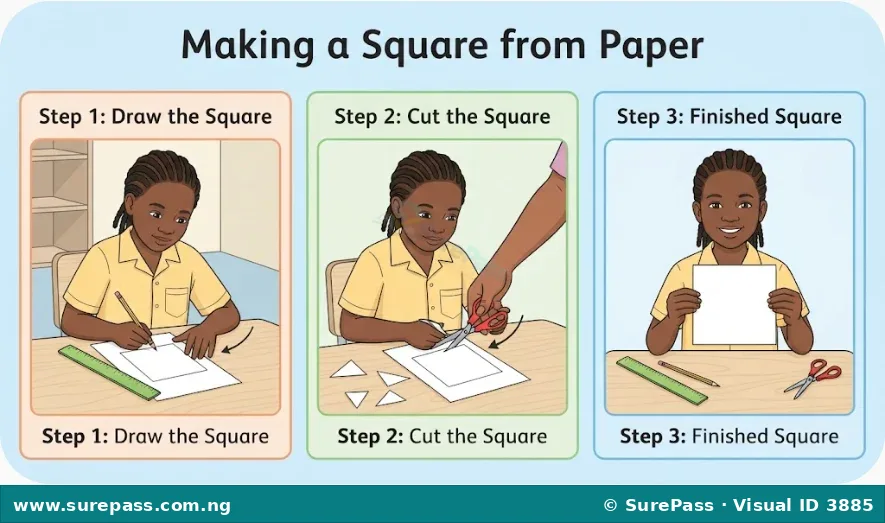
To make a square or rectangle from paper, follow these steps:
- Take a piece of paper.
- Draw the outline of a square or a rectangle on the paper.
- Carefully cut along the lines with scissors.
- You now have a paper square or rectangle.
To make a circle or oval from paper, follow these steps:
- Take a piece of paper.
- Find a round object like a cup or a coin, or an oval object like an egg.
- Place the object on the paper and trace around it with a pencil.
- Carefully cut along the traced line with scissors.
- You now have a paper circle or oval.
How to Construct Shapes with Sticks or Wires
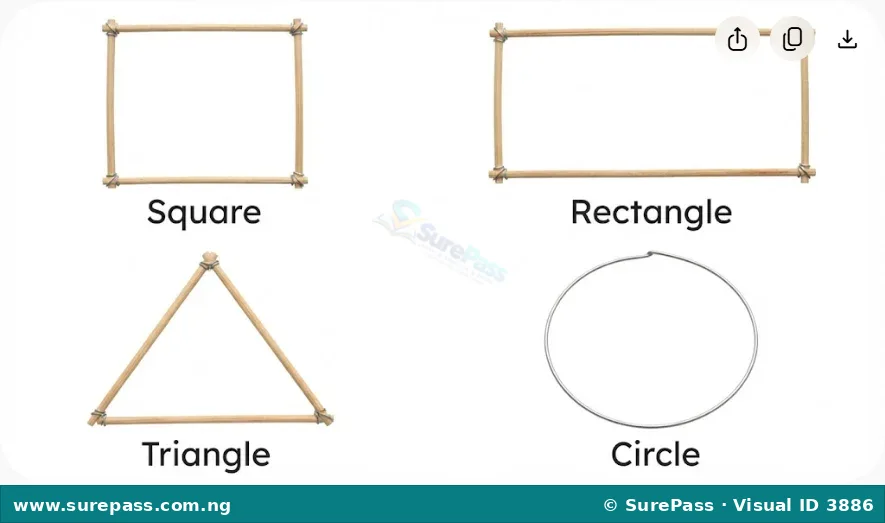
Sticks or wires can be used to show the sides of shapes. This is good for shapes with straight sides like squares, rectangles, and triangles.
To make a square with sticks or wires, follow these steps:
- Take four sticks of the same length.
- Arrange them to form a square.
- Join the ends of the sticks together using glue, tape, or by twisting wires around the joints.
To make a rectangle with sticks or wires, follow these steps:
- Take two long sticks and two short sticks.
- Arrange them to form a rectangle, with the long sticks opposite each other and the short sticks opposite each other.
- Join the ends of the sticks together.
To make a triangle with sticks or wires, follow these steps:
- Take three sticks. They can be of the same length or different lengths.
- Arrange them to form a triangle.
- Join the ends of the sticks together.
Wires can be bent to form circles or ovals. Simply bend a piece of wire until the ends meet and join them together.


0 comments
Open the discussion when you need it. Comments stay collapsed until requested so the initial article remains light.