



ARTICLE CONTENTSOn this page 6 sections
Exploring other parts of the surroundings: Air, soil and water
Performance Objectives
By the end of the lesson, students should be able to:
- identify other things in the surroundings;
- demonstrate that air exists;
- create air current;
- identify the common properties of air;
- identify common sources of water.
Things in the Surroundings
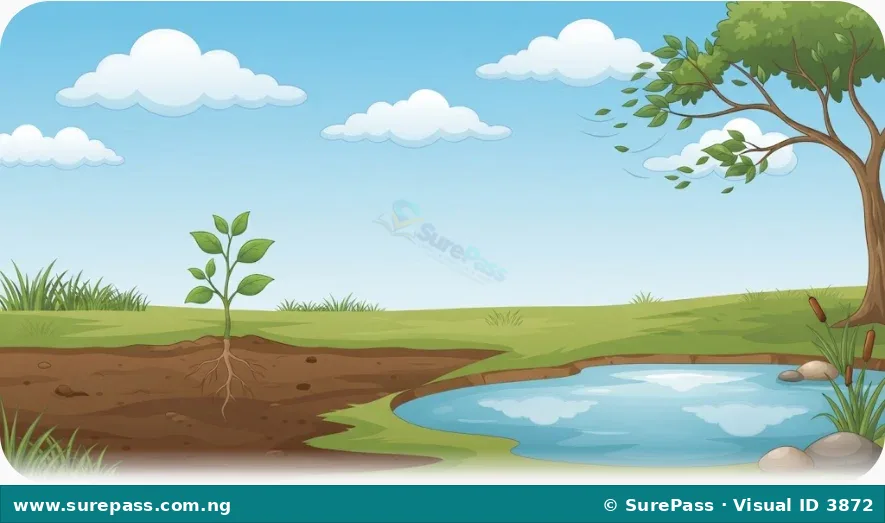
The surroundings contain many things. Some are living, like plants, animals and people. Other things are not living. Air, soil and water are important non-living things found all around us.
What is Air?
Air is all around us, but it cannot be seen. It has no colour, no smell and no taste. Even though it cannot be seen, air is very important for all living things to breathe.
How to Show That Air Exists
Air is invisible, but its presence can be felt and shown. This activity helps to demonstrate that air is real and present.
The required materials are:
- A light polythene bag
The procedure involves the following steps:
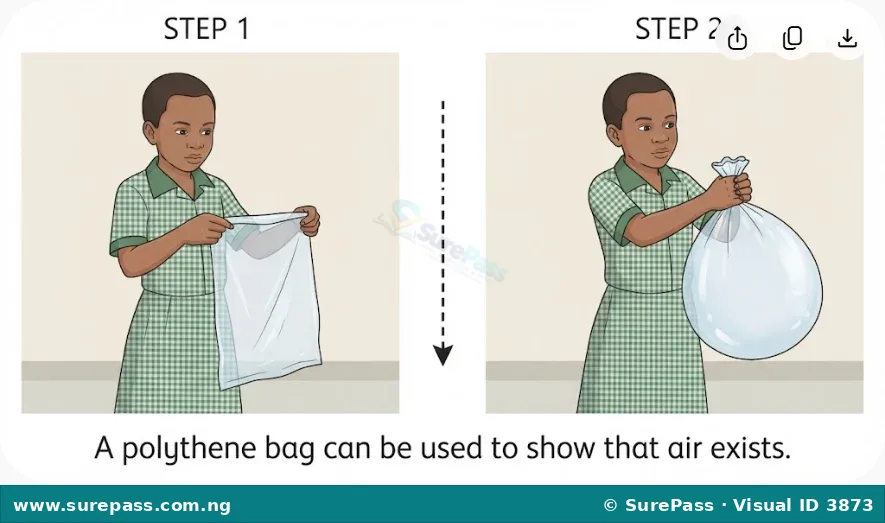
- Hold the polythene bag open with both hands.
- Swing the bag through the air quickly.
- Close the bag tightly.
- Observe that the bag now looks full and feels like it contains something. This “something” is air.
Creating an Air Current
An air current is simply moving air. When air moves, it can be felt and can make things move.
The required materials are:
- A piece of paper or a paper fan
The procedure involves the following steps:
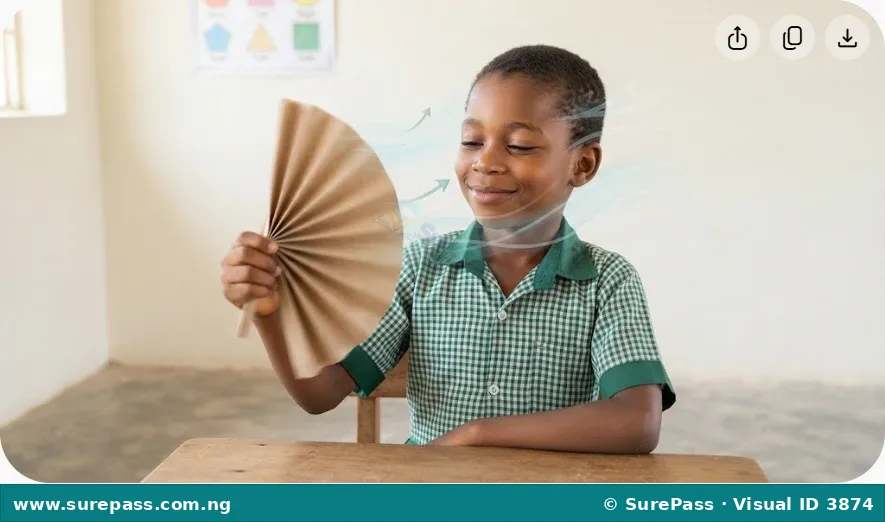
- Hold the paper or paper fan in one hand.
- Wave the paper or fan back and forth in front of your face.
- Feel the moving air on your skin. This moving air is an air current.
- Another way to create an air current is to blow air out of your mouth.
Air Occupies Space
One important property of air is that it takes up space. This means that air needs room to be in, just like a book or a chair needs space.
The required materials are:
- A balloon
- A bicycle pump (optional, for adult use)
The procedure involves the following steps:
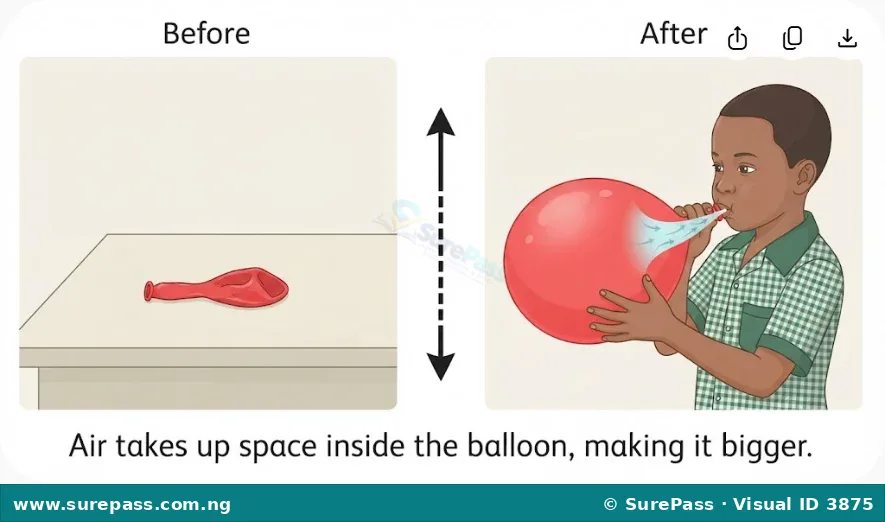
- Take an empty balloon. It looks flat and small.
- Blow air into the balloon using your mouth. (An adult can use a bicycle pump to help).
- Observe that the balloon gets bigger and bigger as more air goes inside.
- The balloon gets bigger because the air is taking up space inside it.
What is Water?
Water is a clear liquid that living things need to live. It is very important for drinking, washing, cooking and bathing.
Common Sources of Water
Water comes from different places. These places are called sources of water.
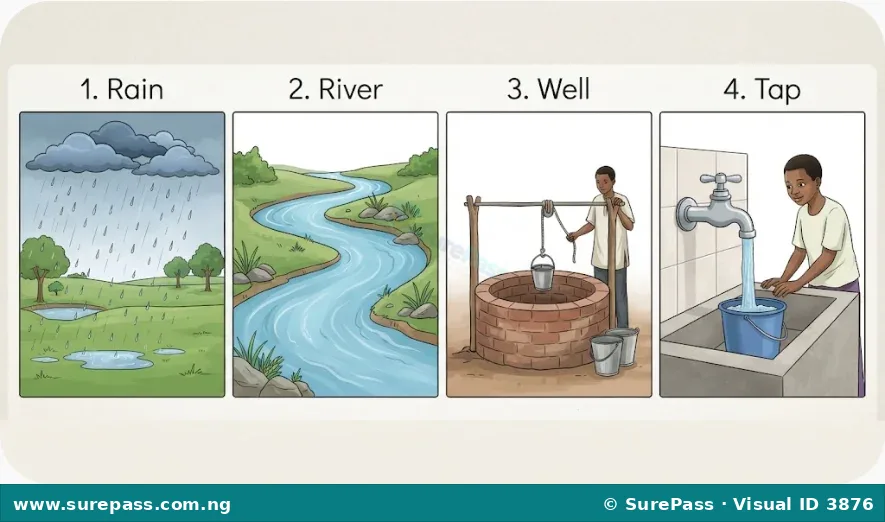
Common sources of water include:
- Rain: This is water that falls from the sky.
- Rivers: These are large natural streams of water flowing across the land.
- Streams: These are smaller natural flows of water.
- Wells: These are holes dug in the ground to get water.
- Boreholes: These are deeper holes drilled into the ground to get water.
- Taps: These bring water from pipes into homes and schools.
What is Soil?
Soil is the loose earth found on the ground. It is usually brown or black. Plants grow in soil, and many small animals live in it.
Soil can be found in playgrounds, gardens, and all over the land.



0 comments
Open the discussion when you need it. Comments stay collapsed until requested so the initial article remains light.