



ARTICLE CONTENTSOn this page 5 sections
Vocabulary Development: Registers
Performance Objectives
By the end of the lesson, students should be able to:
- explain the meaning of register;
- discuss types of registers and the examples;
- identify registers of various fields such as the social media.
Meaning of Register
A register is a variety of language used for a particular purpose or in a particular social setting.
It refers to the style of language, vocabulary, and grammar used by a speaker or writer. The choice of register depends on the audience (who you are talking to), the purpose (why you are talking), and the context (where and when you are talking).
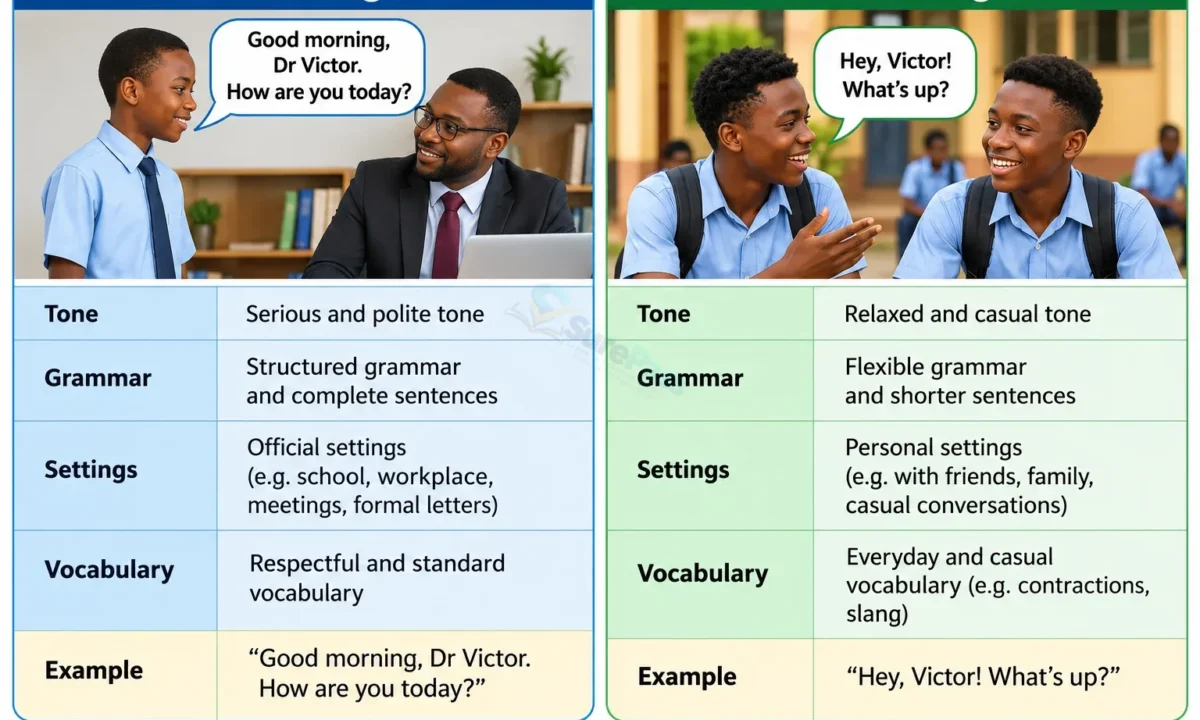
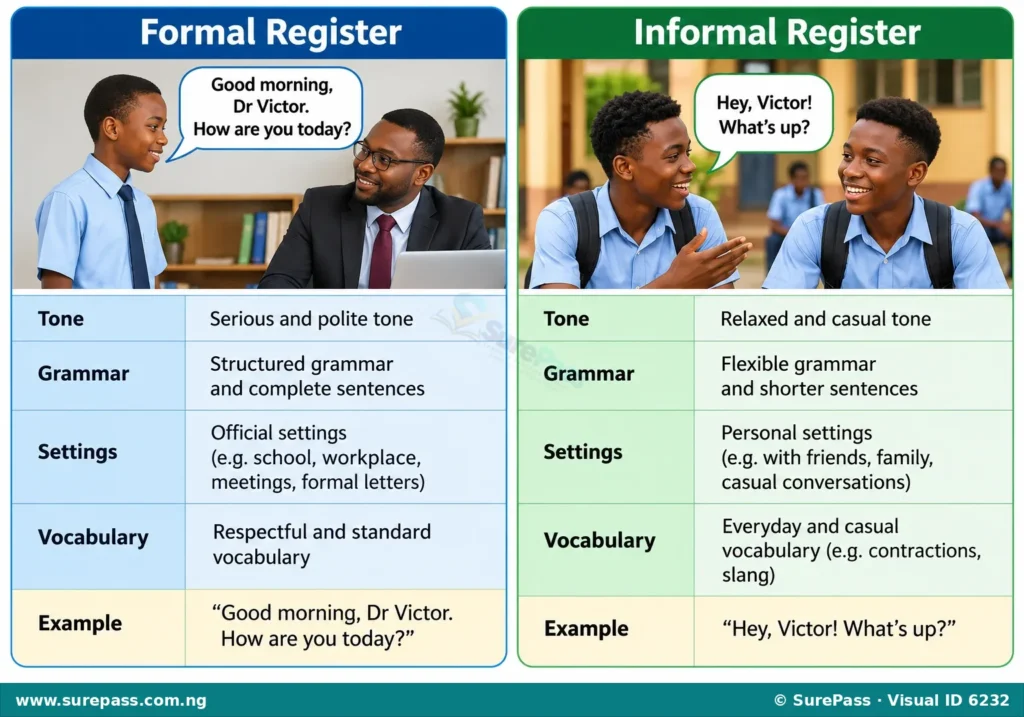
For example, the way a student speaks to a teacher is different from how they speak to a close friend. This difference in language style is what is known as register.
Types of Registers
Language registers can be broadly categorised into two main types: Formal and Informal. These types reflect the level of formality required by different communication situations.
Formal Register
Formal register is used in serious, official, and respectful situations. It is characterised by precise vocabulary, complete sentences, and adherence to grammatical rules.
This register is often used when communicating with people in positions of authority, in professional settings, or when discussing serious topics. It avoids slang, contractions, and overly personal expressions.
An example of formal register is:
- Good morning, Dr Victor. How are you today?
Other situations where formal register is appropriate include:
- Writing official letters or reports.
- Giving a presentation or speech.
- During a job interview.
- In academic essays or research papers.
- When addressing elders or superiors.
Informal Register
Informal register is used in relaxed, casual, and personal situations. It is characterised by a more relaxed vocabulary, simpler sentence structures, and may include slang, contractions, and colloquialisms.
This register is typically used when communicating with friends, family members, or people with whom one has a close relationship. It allows for more personal expression and a less structured approach to language.
An example of informal register is:
- Hey, Victor! What’s up?
Other situations where informal register is appropriate include:
- Casual conversations with friends.
- Sending text messages or chatting online with peers.
- Writing personal emails or diary entries.
- Discussing everyday topics with family members.
Registers in Various Fields: Social Media
Different fields, professions, or activities often develop their own specific vocabulary, known as jargon, which forms their unique register. This specialised language helps people within that field communicate efficiently and precisely.
One prominent example of a field with its own distinct register is social media. The language used on platforms like Facebook, Instagram, X (formerly Twitter), and TikTok includes many terms that are specific to these digital environments. Understanding this register is important for effective communication in the digital age.
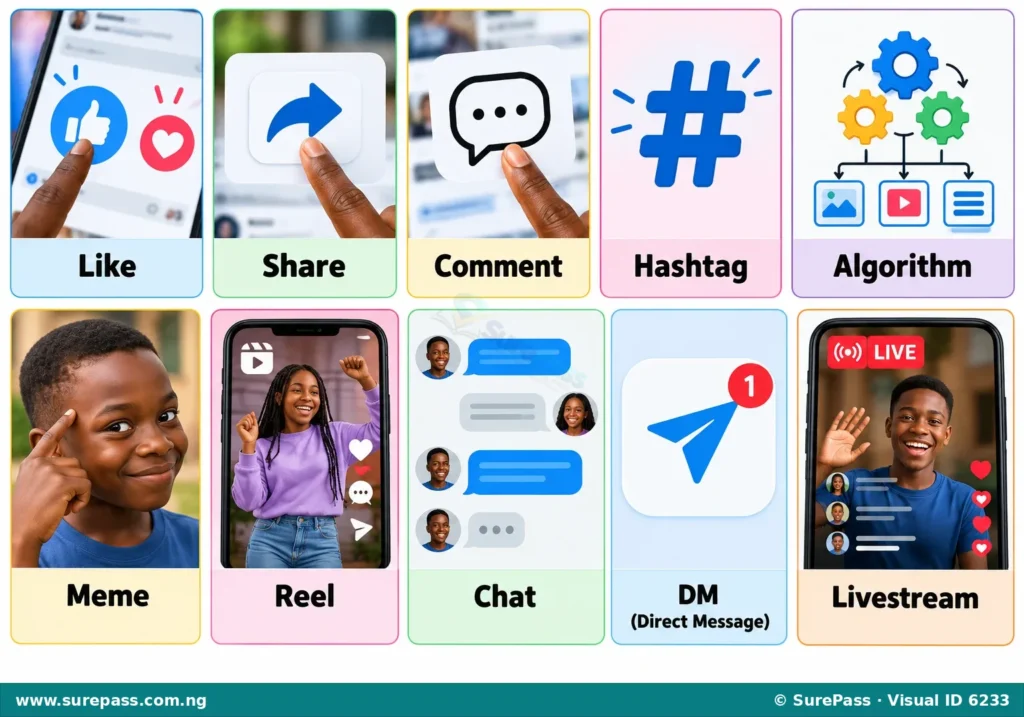
Common terms used in the social media register include:
- Likes: An action taken by users to show approval or appreciation for a post, photo, or video, often represented by a heart or thumbs-up icon.
- Shares: The act of reposting or distributing content from one user to others, allowing it to reach a wider audience.
- Comments: Text responses or feedback left by users on a post, allowing for discussion and interaction.
- Hashtags: Words or phrases preceded by the ‘#’ symbol, used to categorise content and make it discoverable by users interested in specific topics.
- Algorithms: Complex sets of rules or calculations used by social media platforms to determine which content users see in their feeds, based on their past interactions and preferences.
- Memes: Humorous images, videos, or pieces of text that are copied and spread rapidly by internet users, often with slight variations.
- Reels: Short, entertaining video clips, typically set to music, that are popular on platforms like Instagram and Facebook.
- Chats: Real-time text conversations between two or more users within a social media application.
- Direct Message (DM): A private message sent directly from one user to another, not visible to the public.
- Livestream: A live video broadcast over the internet, allowing viewers to watch events or content in real-time as they happen.




0 comments
Open the discussion when you need it. Comments stay collapsed until requested so the initial article remains light.