


ARTICLE CONTENTSOn this page 5 sections
Vocabulary Development: Capital Market
Performance Objectives
By the end of the lesson, students should be able to:
- explain capital market terms.
Understanding the Capital Market
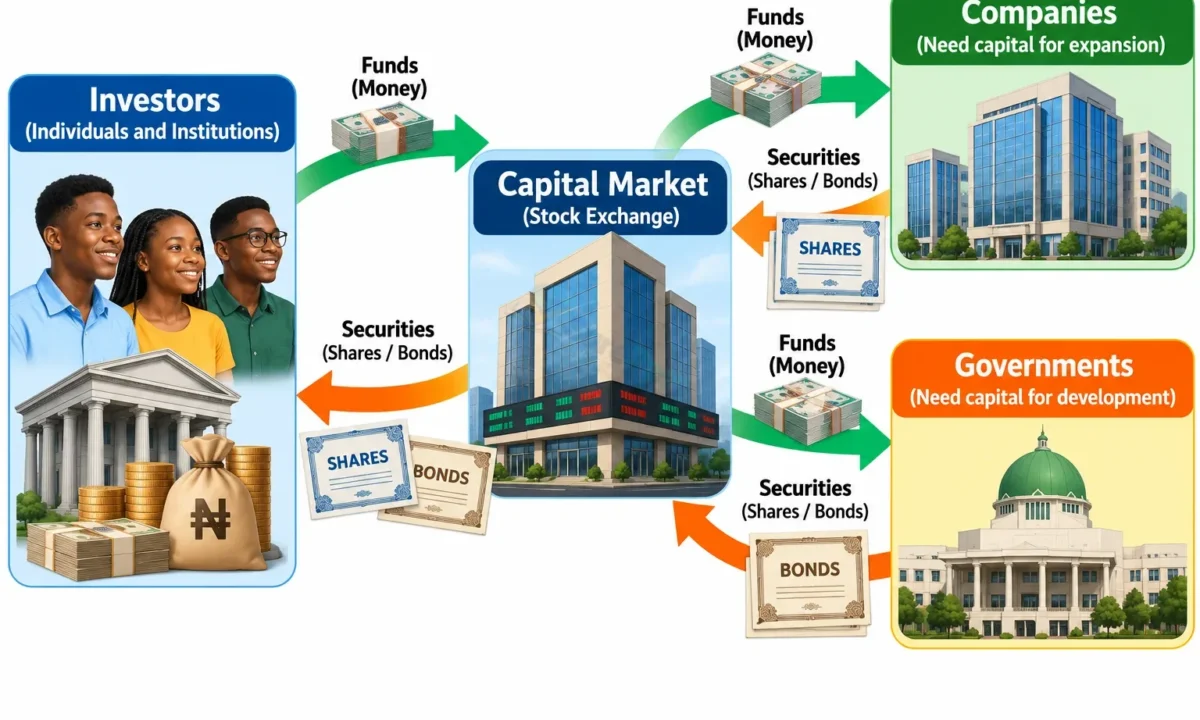
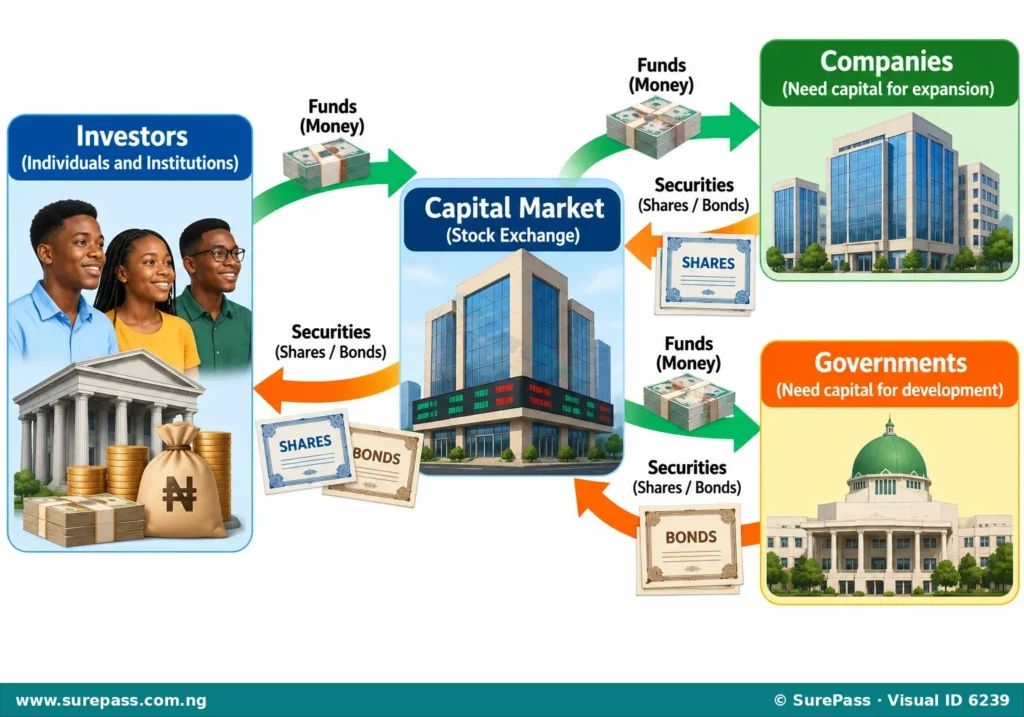
The capital market is a financial market where long-term funds are raised by companies and governments. These funds are used for investment in long-term assets such as buildings, machinery, and infrastructure projects. It is a place where those who have capital (investors) can provide it to those who need it (companies and governments) for extended periods.
The capital market is crucial for economic growth as it helps businesses expand, create jobs, and develop new products and services. It also provides opportunities for individuals and institutions to invest their savings and earn returns.
Key Capital Market Terms
Stock Market
The stock market is a specific part of the capital market where shares of publicly traded companies are bought and sold. It is a platform that allows investors to trade ownership stakes in companies.
Stock Exchange
A stock exchange is an organised market where stocks, bonds, and other securities are traded. It provides a regulated environment for buyers and sellers to meet and conduct transactions. In Nigeria, the main stock exchange is the Nigerian Exchange Group (NGX Group).
Stock / Share
A stock or share represents a unit of ownership in a company. When a person buys a company’s stock, they become a part-owner of that company and are entitled to a portion of its assets and earnings.
Investor
An investor is an individual or institution that commits money to an investment with the expectation of financial return. Investors buy stocks, bonds, or other securities in the capital market.
Stockbroker
A stockbroker is a licensed professional who buys and sells stocks and other securities on behalf of clients. They act as intermediaries between investors and the stock exchange.
Dividends
Dividends are a portion of a company’s profits distributed to its shareholders. Companies usually pay dividends in cash, but they can also be paid in the form of additional shares.
Debenture
A debenture is a type of long-term debt instrument issued by a company, usually without any collateral. It is a loan to the company, and the debenture holder receives regular interest payments.
Bonds
Bonds are debt instruments issued by governments or companies to raise capital. When an investor buys a bond, they are lending money to the issuer, who promises to pay back the principal amount at a specified future date, along with regular interest payments.
Profit Margin
Profit margin refers to the percentage of revenue that a company retains as profit after all expenses have been deducted. In the context of the capital market, investors look at a company’s profit margin to assess its financial health and potential for returns.
Speculator
A speculator is an investor who takes on higher-than-average risks in the hope of making large profits from short-term price movements in the market. Speculators often buy and sell securities quickly, trying to predict market trends.
Bull and Bear
These terms describe market trends. A “bull market” is a period when stock prices are generally rising, indicating investor confidence and economic growth. A “bear market” is a period when stock prices are generally falling, indicating investor pessimism and economic slowdown.
Bankruptcy
Bankruptcy is a legal process for individuals or businesses that cannot repay their outstanding debts. In the capital market, if a company goes bankrupt, its shares may become worthless, and bondholders may lose their investment.
Market Operations and Regulations
Dematerialisation
Dematerialisation, often shortened to “demat,” is the process of converting physical share certificates into an electronic form. This makes trading shares easier, faster, and more secure, as physical certificates can be lost or damaged.
Electronic Operations
Electronic operations refer to the use of digital systems and technology to conduct various activities in the capital market. These operations enhance efficiency, transparency, and accessibility for investors and market participants.
Examples of electronic operations include:
- Automated Trading System (ATS): An electronic system that automatically matches buy and sell orders for securities, speeding up transactions and reducing human error.
- e-dividend: The electronic payment of dividends directly into shareholders’ bank accounts, eliminating the need for physical dividend warrants.
- e-allotment: The electronic process of allocating shares to investors during a public offer, making the distribution faster and more transparent.
- e-bonus: The electronic issuance of bonus shares (additional shares given to existing shareholders for free) directly into their dematerialised accounts.
Customer Due Diligence (CDD)
Customer Due Diligence (CDD) is a process undertaken by financial institutions to verify the identity of their clients and assess their risk profile. This helps prevent illegal activities like money laundering and fraud.
Know-Your-Customer (KYC)
Know-Your-Customer (KYC) is a standard process within CDD where financial institutions gather and verify information about their clients’ identities, addresses, and financial activities. It is a regulatory requirement to ensure that clients are legitimate.
Over the Counter (OTC)
Over the Counter (OTC) refers to a market where securities are traded directly between two parties, rather than through a formal exchange. OTC markets often deal with securities that are not listed on major stock exchanges.
Technical Suspension
Technical suspension is a temporary halt in the trading of a company’s shares on a stock exchange. This can happen due to administrative reasons, such as pending corporate actions or to correct market imbalances, and is usually for a short period.
Full Suspension
Full suspension is a more serious and often longer-term halt in the trading of a company’s shares. It is usually imposed when a company fails to comply with regulatory requirements, faces severe financial difficulties, or is undergoing a major restructuring.
Demutualisation
Demutualisation is the process by which a mutual organisation, such as a stock exchange owned by its members, converts into a company owned by shareholders. This change allows the exchange to raise capital more easily and operate more commercially.
Full Disclosure
Full disclosure is the requirement for companies to reveal all material information that could affect an investor’s decision. This includes financial statements, risks, and other relevant details, ensuring transparency in the market.
Moribund
In the capital market context, a “moribund” company or security is one that is in a state of decline, close to becoming inactive, or has very little trading activity. It suggests a company that is struggling and may eventually cease to operate.
Independent Director
An independent director is a member of a company’s board of directors who has no material relationship with the company, its management, or its major shareholders. Their role is to provide objective oversight and protect the interests of all shareholders.
Audit Committee
An audit committee is a sub-committee of a company’s board of directors responsible for overseeing the company’s financial reporting process, internal controls, and external audits. It ensures the integrity of financial information.
Interlocking Directorship
Interlocking directorship occurs when a person serves as a director on the boards of two or more competing companies. This practice can raise concerns about conflicts of interest and anti-competitive behaviour.




0 comments
Open the discussion when you need it. Comments stay collapsed until requested so the initial article remains light.