


ARTICLE CONTENTSOn this page 6 sections
Stress in Three-Syllable Words
Performance Objectives
By the end of the lesson, students should be able to:
- identify the stressed syllables in three-syllable words;
- Recognise patterns of stress in three- syllable words;
- pronounce three- syllable words correctly using the right stress.
Understanding Word Stress
In English, not all syllables in a word are pronounced with the same force or emphasis. Some syllables are stronger and louder than others. This emphasis is called stress. Stress is an important part of pronunciation because it helps listeners understand words correctly and makes speech sound natural.
When a syllable is stressed, it is usually:
- Louder: The sound is produced with more volume.
- Longer: The vowel sound in the stressed syllable is held for a slightly longer duration.
- Higher in pitch: The voice rises slightly on the stressed syllable.
Unstressed syllables are typically softer, shorter, and lower in pitch.
Stress in Three-Syllable Words
Three-syllable words, also known as trisyllabic words, have three distinct sound units. The stress in these words can fall on the first, second, or third syllable. The position of the stress often follows certain patterns, though there are exceptions.
Correctly identifying and applying stress in three-syllable words is crucial for clear communication. Misplacing the stress can sometimes change the meaning of a word or make it difficult for others to understand what is being said.
Stress on the First Syllable
Many three-syllable words have the stress on their first syllable. This pattern is common, especially in nouns and adjectives.
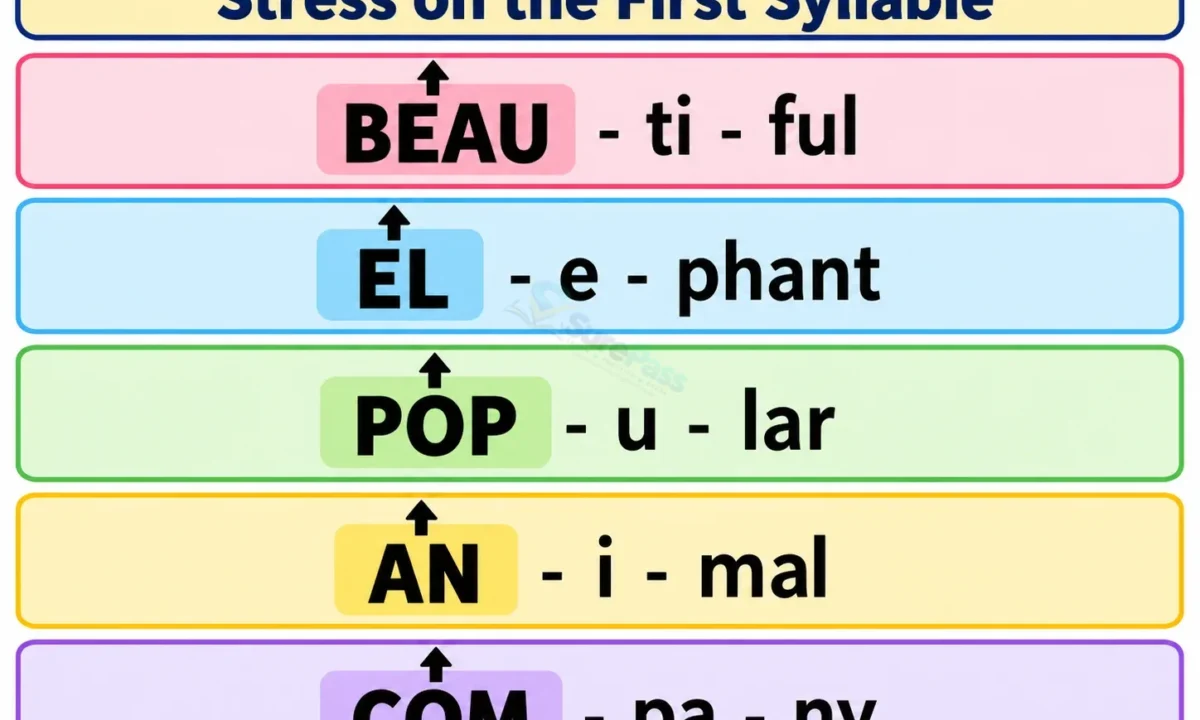
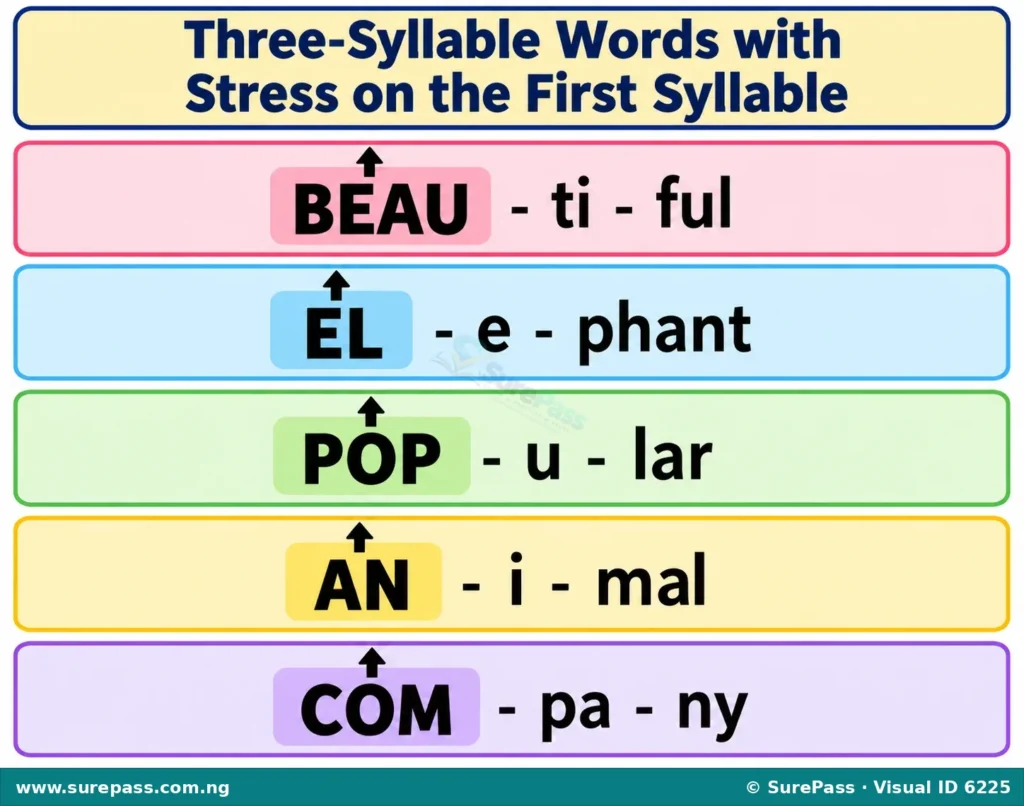
Examples of three-syllable words with stress on the first syllable include:
- BEAU-ti-ful
- ELE-phant
- PO-pu-lar
- AN-i-mal
- COM-pa-ny
- O-pe-rate
- MA-na-ger
- AC-ci-dent
- CON-fi-dent
- DI-ffi-cult
In these examples, the first syllable is pronounced with greater emphasis, making it louder, slightly longer, and often higher in pitch.
Stress on the Second Syllable
Some three-syllable words place the stress on their second syllable. This pattern is often found in verbs or words derived from verbs.
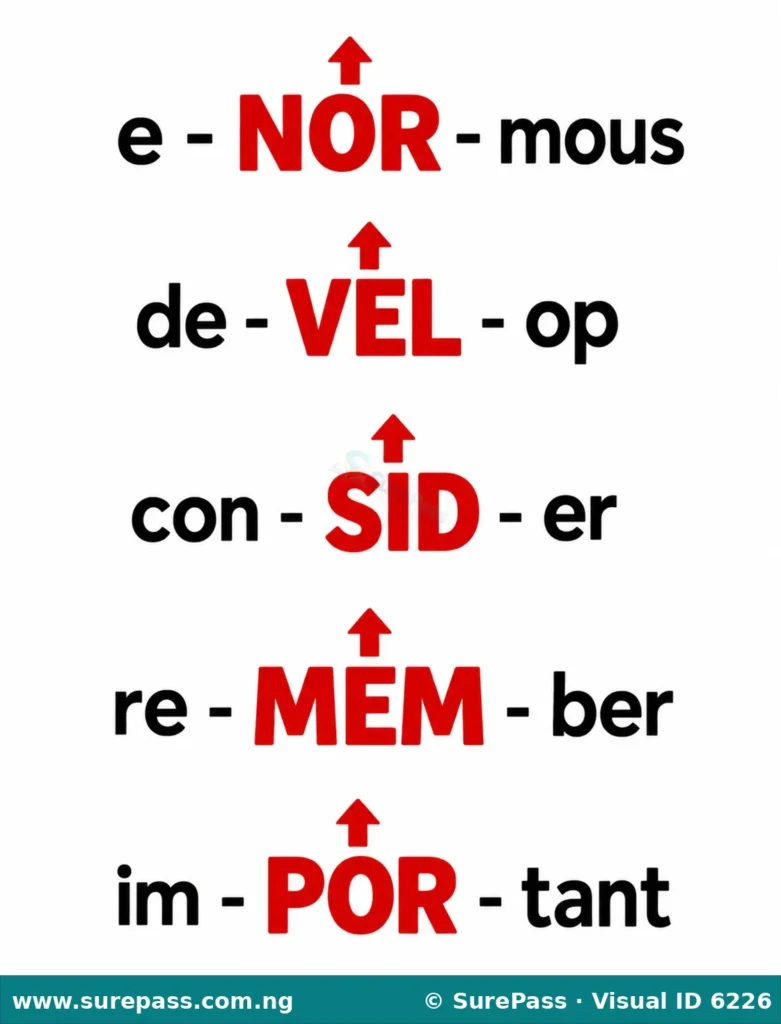
Examples of three-syllable words with stress on the second syllable include:
- e-NOR-mous
- de-VEL-op
- con-SI-der
- re-MEM-ber
- im-POR-tant
- ex-PLAIN-ing
- dis-COV-er
- ad-VAN-tage
- re-CEI-ver
- com-PU-ter
When pronouncing these words, ensure the middle syllable is given the most emphasis, making it stand out from the first and third syllables.
Stress on the Third Syllable
Fewer three-syllable words have the stress on their third syllable. This pattern is less common but still exists, particularly in words ending with certain suffixes or words of French origin.
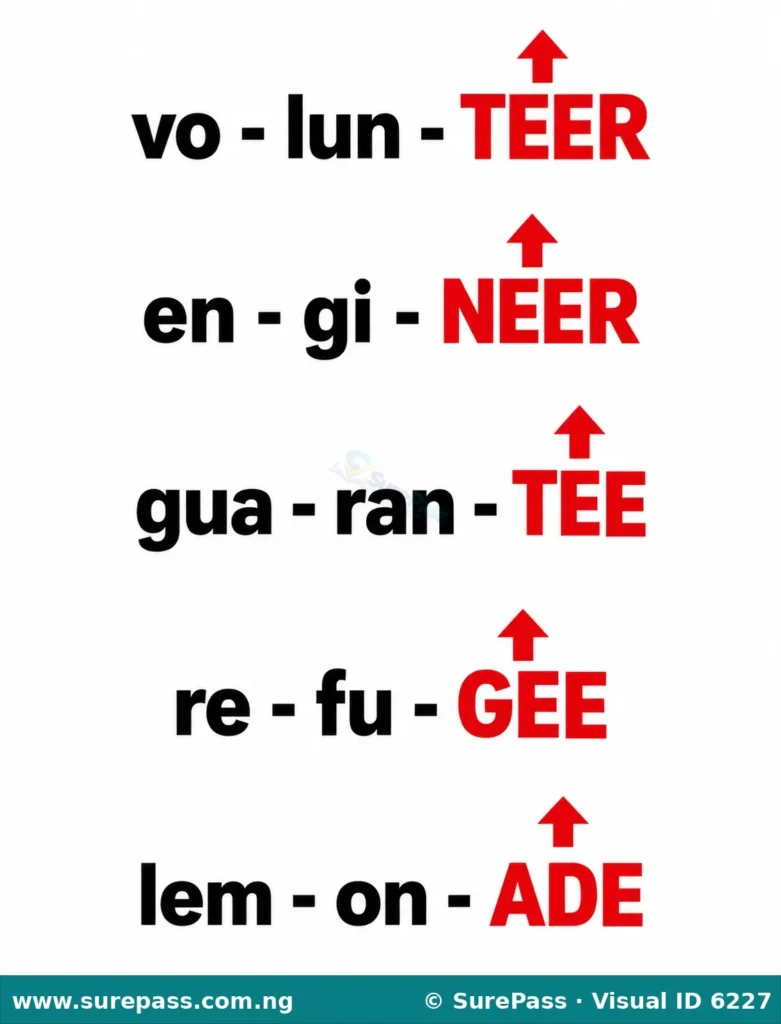
Examples of three-syllable words with stress on the third syllable include:
- vol-un-TEER
- engi-NEER
- guaran-TEE
- refu-GEE
- lemon-ADE
- under-STAND
- over-COME
- disap-PEAR
- repre-SENT
- inter-VIEW
In these words, the final syllable carries the main stress, making it the most prominent part of the word.
Recognising Patterns of Stress
While there are no absolute rules for stress placement in English, some general patterns can help in recognising where the stress falls in three-syllable words.
- Nouns and Adjectives: Many three-syllable nouns and adjectives tend to have stress on the first syllable. For example: BA-na-na, PO-si-tive, HO-li-day.
- Verbs: Many three-syllable verbs often have stress on the second syllable. For example: de-TER-mine, con-TRI-bute, in-HER-it.
- Words ending in -tion, -sion, -ic, -ity, -graphy, -logy: The stress usually falls on the syllable immediately before these suffixes. For example: com-mu-ni-CA-tion, de-ci-SION, pho-to-GRA-phic, a-bi-LI-ty. While these are often longer than three syllables, the pattern is useful for understanding stress shifts. For three-syllable words, consider words like pho-TO-graph (noun, first syllable) versus pho-TO-gra-pher (noun, second syllable).
- Compound Words: In some compound words, the stress falls on the first part of the compound. For example: SUN-flower, TEA-pot. However, many three-syllable words are not compounds.
It is important to remember that these are general tendencies, and there are always exceptions. The best way to learn correct stress is through listening, practice, and using a dictionary.
Pronouncing Three-Syllable Words Correctly
To pronounce three-syllable words correctly with the right stress, follow these steps:
- Identify the Syllables: Break the word into its individual syllables. For example, “beautiful” can be broken into “beau-ti-ful”.
- Determine the Stressed Syllable: Listen to how native speakers pronounce the word, or consult a dictionary. Dictionaries often use a mark (e.g., an apostrophe before the stressed syllable) to indicate stress. For example, ‘beau-ti-ful.
- Emphasise the Stressed Syllable: When you say the word, make the stressed syllable louder, slightly longer, and higher in pitch compared to the unstressed syllables.
- Reduce Unstressed Syllables: The unstressed syllables should be pronounced more quickly and softly. Their vowel sounds might be reduced to a schwa (/ə/) or a weak ‘i’ sound.
- Practice Regularly: Consistent practice helps to internalise the stress patterns. Read aloud, record your voice, and compare it with correct pronunciations.
Practice Activity: Identifying and Pronouncing Stress
Read the following words aloud. First, identify the stressed syllable, then pronounce the word, ensuring you place the stress correctly.
- BA-na-na
- De-CI-sion
- Un-der-STAND
- PO-li-cy
- Com-PLE-ted
- En-gi-NEER
- FA-mi-ly
- Ex-PE-rience
- Guaran-TEE
- HO-li-day
Listen to recordings of these words to check your pronunciation and adjust as needed. Pay attention to how the stressed syllable stands out and how the unstressed syllables are reduced.




0 comments
Open the discussion when you need it. Comments stay collapsed until requested so the initial article remains light.