


ARTICLE CONTENTSOn this page 6 sections
Grammatical Accuracy: Commonly Misspelt Words
Performance Objectives
By the end of the lesson, students should be able to:
- identify words that are commonly miss spelt;
- spell the words correctly;
- use the dictionary to check the spelling of such words;
- tell the meaning of such words in context.
Introduction to Commonly Misspelt Words
Accurate spelling is a fundamental aspect of effective written communication. Misspelt words can confuse readers, change the intended meaning of a sentence, and sometimes make a writer appear careless. In English, many words are commonly misspelt due to silent letters, double letters, similar-sounding letters, or irregular spelling patterns.
This unit focuses on identifying and correctly spelling some of the most frequently misspelt words in English. Mastering these words will significantly improve your grammatical accuracy and overall writing quality.
Identifying and Spelling Commonly Misspelt Words
Many English words pose challenges for spellers. Understanding the common pitfalls and paying close attention to specific letter combinations can help in mastering their correct spellings. Below is a list of words that are often misspelt, along with their correct spellings and usage examples to clarify their meanings.
Words with Double Letters
Some words are frequently misspelt because of confusion over whether to use single or double letters. Careful attention to these details is crucial.
-
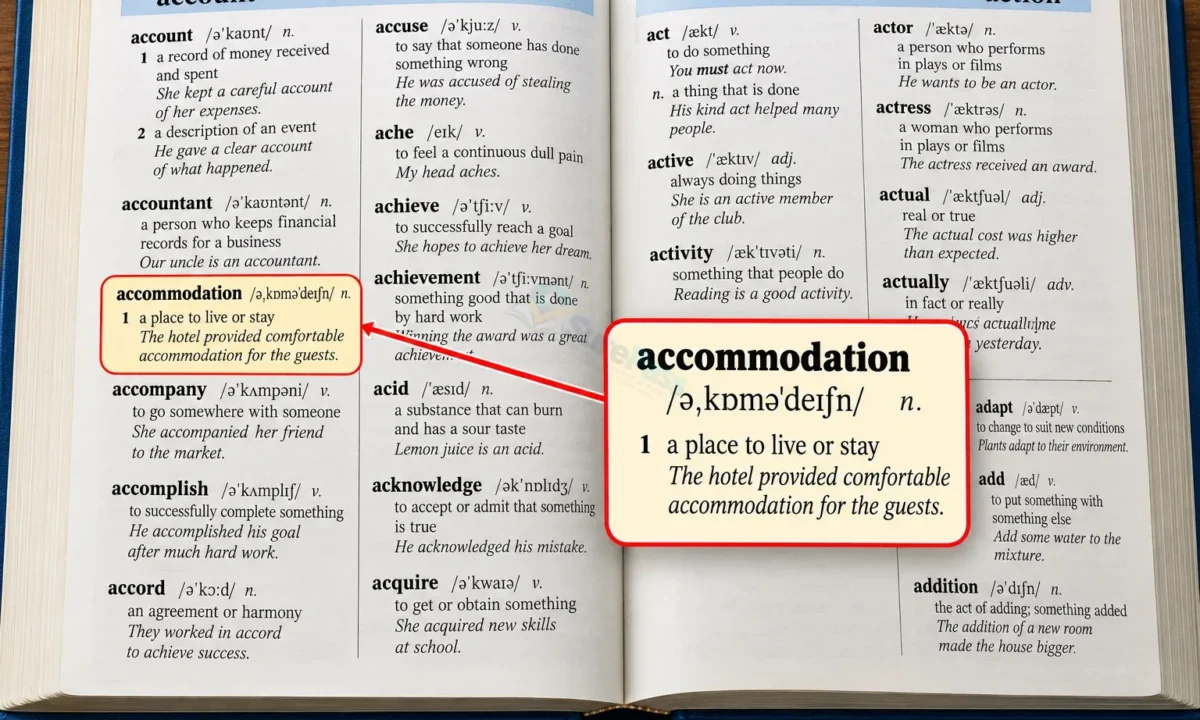
Accommodation: This word has double ‘c’ and double ‘m’.
Example: The hotel provides comfortable accommodation for guests.
-
Embarrassment: This word has double ‘r’ and double ‘s’.
Example: He felt a deep sense of embarrassment after tripping on stage.
-
Committee: This word has double ‘m’, double ‘t’, and double ‘e’.
Example: The school committee met to discuss the new project.
-
Offered: This word has double ‘f’.
Example: She offered him a glass of water.
-
Referred: This word has double ‘r’.
Example: The doctor referred the patient to a specialist.
-
Occurrence: This word has double ‘c’ and double ‘r’.
Example: The sudden power outage was an unexpected occurrence.
-
Omission: This word has double ‘s’.
Example: The omission of his name from the list was an oversight.
-
Admission: This word has double ‘s’.
Example: Admission to the university requires good grades.
-
Recommendation: This word has double ‘m’.
Example: His teacher gave him a strong recommendation for the scholarship.
-
Trafficking: This word has double ‘f’.
Example: Human trafficking is a serious crime.
Words with ‘ie’ or ‘ei’ Combinations
The “i before e except after c” rule is a common guideline, but it has exceptions. It is important to learn these words individually.
-
Receive: This word follows the “i before e except after c” rule.
Example: Did you receive the package I sent?
-
Conceive: This word also follows the “i before e except after c” rule.
Example: It is difficult to conceive of a world without electricity.
-
Deceive: This word also follows the “i before e except after c” rule.
Example: Do not try to deceive your parents about your grades.
-
Thief: This word follows the “i before e” part of the rule.
Example: The police caught the thief who stole the car.
-
Chief: This word also follows the “i before e” part of the rule.
Example: The chief of the village addressed the community.
-
Mischief: This word also follows the “i before e” part of the rule.
Example: The children were always getting into mischief.
Words with Vowel Changes or Silent Letters
These words often have tricky vowel patterns or silent letters that can lead to misspellings.
-
Bureaucracy: This word has a complex vowel sequence ‘eau’ and ‘cra’.
Example: Dealing with government bureaucracy can be frustrating.
-
Grateful: This word is often misspelt as ‘greatful’. Remember it comes from ‘gratitude’.
Example: I am very grateful for your help.
-
Dining: This word drops the ‘e’ from ‘dine’ before adding ‘-ing’.
Example: We are dining out tonight at a new restaurant.
-
Beginning: This word has a double ‘n’.
Example: The beginning of the story was very exciting.
-
Decision: This word has ‘ci’ instead of ‘si’.
Example: Making a good decision requires careful thought.
-
Across: This word has only one ‘c’. It is often misspelt with a double ‘c’.
Example: They walked across the field to reach the market.
-
Rhythm: This word is tricky because it has no vowels (a, e, i, o, u) in its main part, only ‘y’.
Example: The drummer kept a steady rhythm throughout the song.
-
Vacuum: This word has double ‘u’.
Example: She used the vacuum cleaner to clean the carpet.
Words with Similar Sounding Endings or Roots
These words are often confused due to their similar sounds or shared roots, but they have distinct spellings and meanings.
-
Succeed: This word has double ‘c’ and double ‘e’.
Example: To succeed in life, you must work hard.
-
Success: This word has double ‘c’ and double ‘s’.
Example: Hard work is the key to success.
-
Proceed: This word has double ‘e’.
Example: Please proceed with your presentation.
-
Procedure: This word has ‘ce’ before ‘dure’.
Example: The emergency procedure was clearly outlined.
-
Process: This word has double ‘s’.
Example: Learning a new language is a long process.
-
Reference: This word has ‘re’ at the beginning and ‘ence’ at the end.
Example: Always include your sources as a reference in your essays.
-
Referee: This word has double ‘e’ at the end.
Example: The referee blew the whistle to signal a foul.
Using the Dictionary to Check Spellings
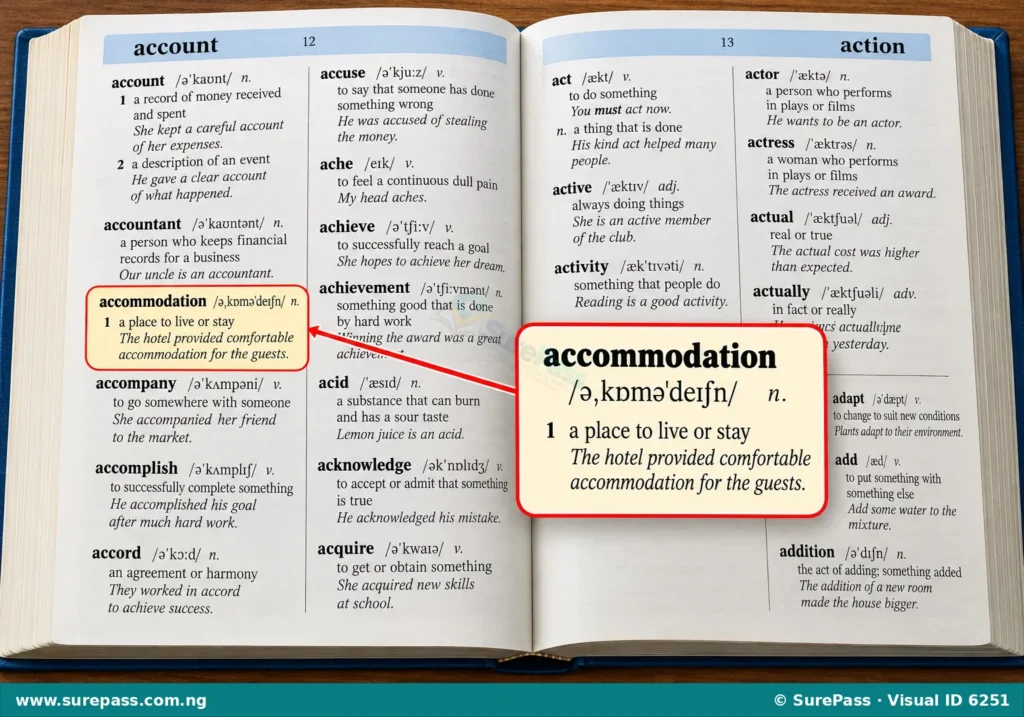
The dictionary is an essential tool for improving your spelling and vocabulary. It provides the correct spelling, pronunciation, meaning, and usage of words.
How to Use a Dictionary Effectively
The procedure for checking words in a dictionary involves the following steps:
- Locate the Word: Dictionaries are arranged alphabetically. Start by finding the first letter of the word you want to check.
- Use Guide Words: At the top of each page, there are guide words. The left guide word is the first word on that page, and the right guide word is the last word on that page. These help you quickly navigate to the correct section.
- Scan for the Word: Once you are in the correct alphabetical section, scan the entries until you find your word.
- Verify Spelling: Compare the spelling you have with the one in the dictionary. Pay attention to every letter, especially double letters, silent letters, and vowel combinations.
- Check Meaning and Usage: After confirming the spelling, read the definitions and example sentences to ensure you understand the word’s meaning and how it is used in context. This helps reinforce your understanding and prevents future errors.
Understanding Word Meanings in Context
Knowing how to spell a word correctly is important, but understanding its meaning is equally vital for effective communication. The context in which a word is used often clarifies its specific meaning, especially for words that might have multiple definitions or subtle nuances.
When you encounter a new or challenging word, do not just memorise its spelling. Take time to understand what it means in the sentence or passage. This involves looking at the surrounding words and phrases, which provide clues to the word’s intended sense. Using a dictionary to check definitions and example sentences is a good practice to ensure full comprehension.
For instance, knowing that “embarrassment” means a feeling of shame or awkwardness helps you use it correctly in a sentence like, “He felt a deep sense of embarrassment after tripping on stage,” rather than confusing it with a different emotion.


0 comments
Open the discussion when you need it. Comments stay collapsed until requested so the initial article remains light.