



ARTICLE CONTENTSOn this page 8 sections
Comprehension: Cyber Security and Online Safety
Performance Objectives
By the end of the lesson, students should be able to:
- Read passages on cyber security/Online Safety;
- Answer questions based on the passages.
Understanding Cyber Security and Online Safety
Cybersecurity is the practice of protecting systems, networks, programs and devices from digital attacks.
These digital attacks are usually aimed at accessing, changing, or destroying sensitive information, extorting money from users, or interrupting normal business processes.
Online safety is the act of maximizing a user’s personal safety and security risks to private information and property associated with using the internet.
It involves understanding the hazards associated with the digital space and developing strategies to avoid them.
Key Vocabulary of Cyber Security
To comprehend texts on digital safety, familiarity with specific terminology is essential. The following terms are frequently encountered in discussions about online security:
- Phishing: The fraudulent practice of sending emails or messages that appear to be from reputable companies to induce individuals to reveal personal information, such as passwords or credit card numbers.
- Malware: Malicious software designed to disrupt, damage, or gain unauthorized access to a computer system or mobile device.
- Digital Footprint: The permanent trail of data, posts, and digital records left behind by an individual while using the internet.
- Social Engineering: The psychological manipulation of people into performing actions or divulging confidential information.
- Two-Factor Authentication (2FA): A security process where a user provides two different authentication factors to verify their identity before gaining access to an account.
- Vulnerability: A weakness in a computer system, security procedure, or internal control that can be exploited by a cyberthreat.
Passage A: The Invisible Threat
In the contemporary digital era, the internet has transformed from a luxury into an indispensable utility. From online banking and virtual classrooms to social media interactions, human lives are increasingly anchored in cyberspace. However, this rapid digitization has also birthed a sophisticated breed of criminals who exploit the vulnerabilities of unsuspecting internet users. In Nigeria, cyber threats have evolved from crude email scams to highly targeted digital operations, making cybersecurity an urgent national and individual priority.
One of the most prevalent methods employed by cybercriminals is social engineering, particularly phishing. Phishing involves the use of deceptive emails, text messages, or websites that mimic legitimate institutions, such as commercial banks, government agencies, or telecommunications companies. The primary objective is to trick the recipient into revealing sensitive personal data, such as Bank Verification Numbers (BVN), passwords, or Personal Identification Numbers (PIN). For instance, an unsuspecting user might receive an urgent SMS claiming that their bank account has been suspended due to a lack of National Identification Number (NIN) linkage. Panic-stricken, the user clicks on the provided link, unknowingly handing over their credentials to fraudsters.
To combat these threats, individuals must cultivate cyber-smart habits. Cybersecurity experts emphasize that legitimate organizations will never request sensitive credentials via SMS or unsecured links. Furthermore, the implementation of multi-factor authentication (MFA) adds an extra layer of defense, ensuring that even if a password is compromised, unauthorized access remains blocked. As the digital landscape continues to expand, vigilance remains the ultimate shield against the invisible adversaries of the virtual world.
Comprehension Questions for Passage A
Based on Passage A, answer the following questions:
- According to the passage, what has the rapid digitization of human lives led to?
- State the primary objective of phishing as explained by the writer.
- Why does the writer describe the cybercriminals as “invisible adversaries”?
- What two solutions does the writer suggest to combat cyber threats?
- “…who exploit the vulnerabilities of unsuspecting internet users.”
- What grammatical name is given to this expression?
- What is its function in the sentence?
- For each of the following words, find another word or phrase which means the same and can replace it as used in the passage:
- indispensable
- vulnerabilities
- prevalent
- mimic
- vigilance
Passage B: Guarding the Digital Footprint
The rise of social media platforms has democratized communication, allowing individuals to share their lives, opinions, and achievements with a global audience. However, many users remain oblivious to the permanent nature of their digital footprint. A digital footprint refers to the trail of data that a person leaves behind while browsing the internet, posting on social media, or interacting online. This trail can be harvested by malicious actors, advertisers, and even future employers, often with far-reaching consequences.
On popular platforms, users frequently share real-time locations, school addresses, and personal photographs. While seemingly harmless, this information provides cybercriminals with the raw material needed for identity theft and physical tracking. For example, a cybercriminal can piece together a user’s daily routine simply by analyzing their public posts. This process, known as digital profiling, enables fraudsters to craft highly convincing scams targeted at the user or their family members.
Securing one’s digital footprint requires a deliberate shift in online behavior. Privacy settings on social media platforms should be configured to restrict access to trusted connections only. Additionally, users must exercise critical judgment before sharing any piece of information online. Once data is uploaded to the internet, retrieving it completely becomes virtually impossible. Therefore, online safety is not merely a technical configuration; it is a mindset of continuous caution and digital responsibility.
Comprehension Questions for Passage B
Based on Passage B, answer the following questions:
- What is a digital footprint according to the writer?
- Identify three groups of people who can harvest an individual’s digital footprint.
- How do cybercriminals use public posts to target individuals?
- What is the writer’s view on the permanence of online data?
- “…Once data is uploaded to the internet…”
- What grammatical name is given to this expression?
- What is its function in the sentence?
- For each of the following words, find another word or phrase which means the same and can replace it as used in the passage:
- oblivious
- harvested
- harmless
- deliberate
- retrieve
Displaying Cyber-Smartness
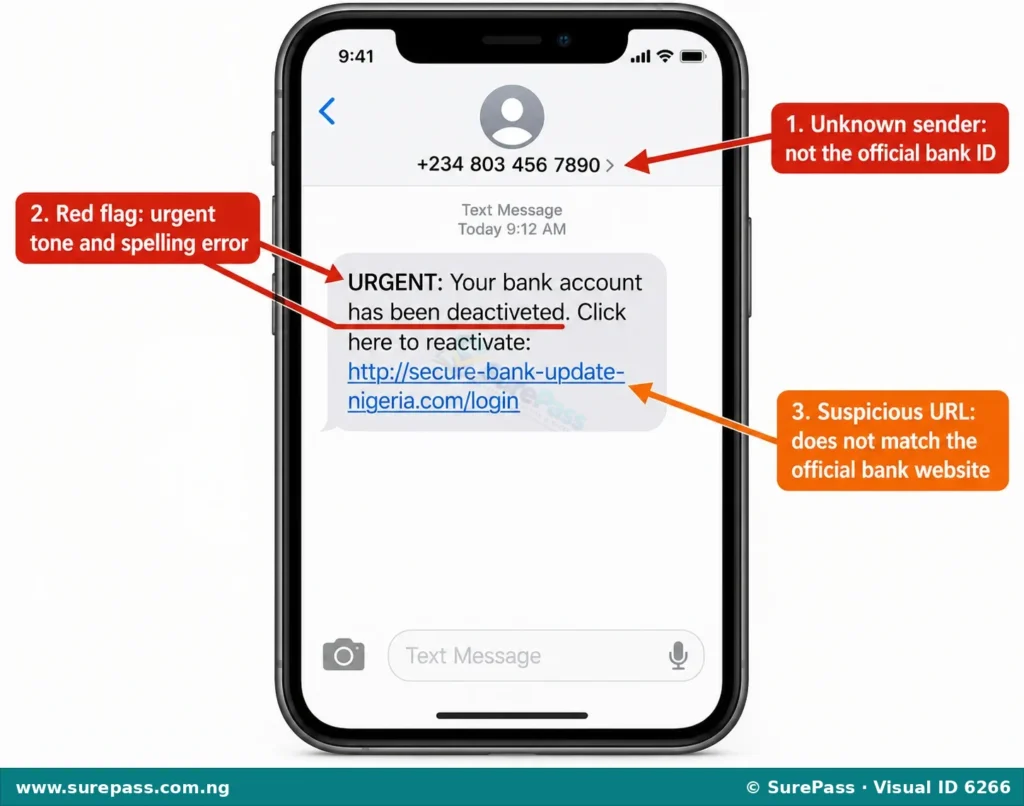
Displaying cyber-smartness is a practical skill that involves identifying and avoiding online threats in daily life. Cybercriminals often use urgency, fear, or greed to manipulate their targets. Recognizing these psychological triggers is the first step in maintaining online safety.
Observe the diagram below to understand how a typical phishing message is structured and how to identify its red flags.
To verify the legitimacy of any digital communication, the following steps should be taken:
- Check the Sender’s Address: Fraudulent emails often use addresses that look similar to official ones but contain subtle misspellings or use public domains like @gmail.com instead of corporate domains.
- Analyze the Tone: Messages that demand immediate action, threaten account suspension, or offer unexpected financial rewards are highly suspicious.
- Inspect the Links: Hovering over a link without clicking it reveals the actual destination URL. If the URL does not match the official website of the organization, it should not be clicked.
- Avoid Sharing Personal Information: Legitimate institutions do not request passwords, PINs, or full card details via email or text message.
Answers to Comprehension Questions
Passage A Answer Key
- The rapid digitization has birthed a sophisticated breed of criminals who exploit the vulnerabilities of unsuspecting internet users.
- The primary objective of phishing is to trick recipients into revealing sensitive personal data, such as BVN, passwords, or PINs.
- The writer calls them “invisible adversaries” because they operate remotely and anonymously through the internet, making them physically unseen.
- The two solutions are cultivating cyber-smart habits (such as ignoring suspicious links) and implementing multi-factor authentication (MFA).
-
- Grammatical Name: Adjectival / Relative Clause.
- Grammatical Function: It qualifies the noun phrase “a sophisticated breed of criminals”.
-
- indispensable: essential / crucial / vital / necessary
- vulnerabilities: weaknesses / loopholes / frailties
- prevalent: common / widespread / rampant
- mimic: imitate / copy / impersonate
- vigilance: watchfulness / alertness / caution
Passage B Answer Key
- A digital footprint is the trail of data that a person leaves behind while browsing the internet, posting on social media, or interacting online.
- The three groups are malicious actors (cybercriminals), advertisers, and future employers.
- Cybercriminals analyze public posts to piece together a user’s daily routine (digital profiling) and craft highly convincing targeted scams.
- The writer believes that once data is uploaded to the internet, it is permanent and virtually impossible to retrieve completely.
-
- Grammatical Name: Adverbial Clause of Time.
- Grammatical Function: It modifies the verb phrase “becomes virtually impossible”.
-
- oblivious: unaware / ignorant / unconscious
- harvested: gathered / collected / compiled
- harmless: safe / innocent / benign
- deliberate: intentional / conscious / planned
- retrieve: recover / get back / reclaim




0 comments
Open the discussion when you need it. Comments stay collapsed until requested so the initial article remains light.