



ARTICLE CONTENTSOn this page 6 sections
Vocabulary Development: Registers for Journalism, Advertising, Publishing
Performance Objectives
By the end of the lesson, students should be able to:
- identify words associated with such fields as journalism, advertising and publishing;
- state the meanings of the terms.
Every profession and field of work has its own special language, known as a register. This register consists of specific words and phrases that are commonly used and understood within that particular field. Using the correct register helps people in a profession communicate clearly and effectively with each other.
This unit explores the registers of journalism, advertising and publishing. Understanding these registers will help in comprehending news, advertisements and books more effectively.
Register of Journalism
Journalism is the activity of gathering, assessing, creating and presenting news and information. Journalists use a specific set of terms to describe their work, the processes involved and the products they create.
Words associated with journalism include:
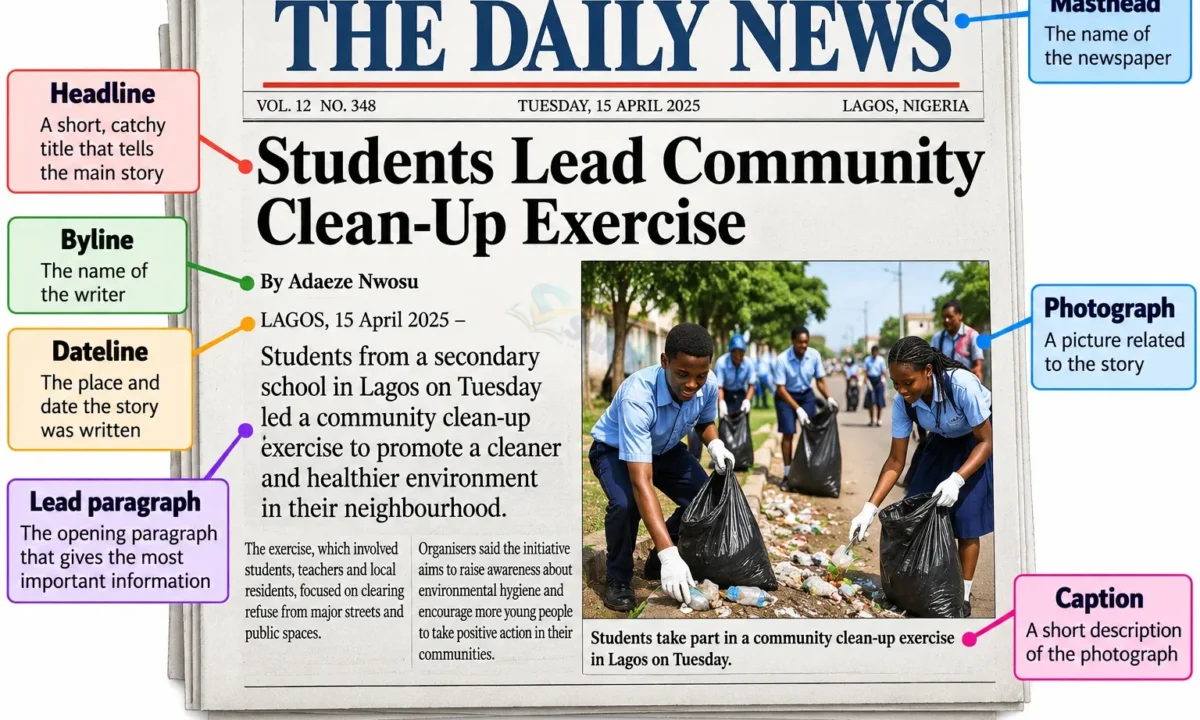
- Headline: The title of a newspaper article, usually printed in large letters at the top of the page.
- Byline: A line in a newspaper or magazine article that gives the name of the writer.
- Dateline: A line at the beginning of a news article stating the place and date of its origin.
- Lead (or Lede): The opening paragraph of a news article that summarises the most important information (who, what, when, where, why, how).
- Scoop: An exclusive news story obtained and published by one journalist or newspaper before rivals.
- Feature: A prominent article in a newspaper or magazine, often focusing on a particular topic, person or event in depth, rather than breaking news.
- Editorial: An article in a newspaper or magazine that expresses the opinion of the editor or publisher on a particular issue.
- Columnist: A journalist who writes a regular article or column for a newspaper or magazine, often expressing personal opinions.
- Correspondent: A journalist employed to report on a particular subject or send news from a distant place.
- Press Release: An official statement issued to newspapers and other media organisations, giving information on a particular matter.
- Source: A person, document or record that provides information for a news story.
- Investigative Journalism: A form of journalism in which reporters deeply investigate a single topic of interest, such as serious crimes, political corruption or corporate wrongdoing.
- Caption: A brief description accompanying an illustration, photograph or diagram.
- Masthead: The title of a newspaper or magazine at the top of the front page, often including details about the publication, such as its ownership and staff.
- Layout: The way in which text and pictures are arranged on a page.
Register of Advertising
Advertising is the activity or profession of producing advertisements for commercial products or services. The language of advertising is designed to persuade, inform and attract potential customers. It uses specific terms to describe the creation, placement and impact of advertisements.
Words associated with advertising include:
- Advert (or Ad): A notice or announcement in a public medium promoting a product, service or event.
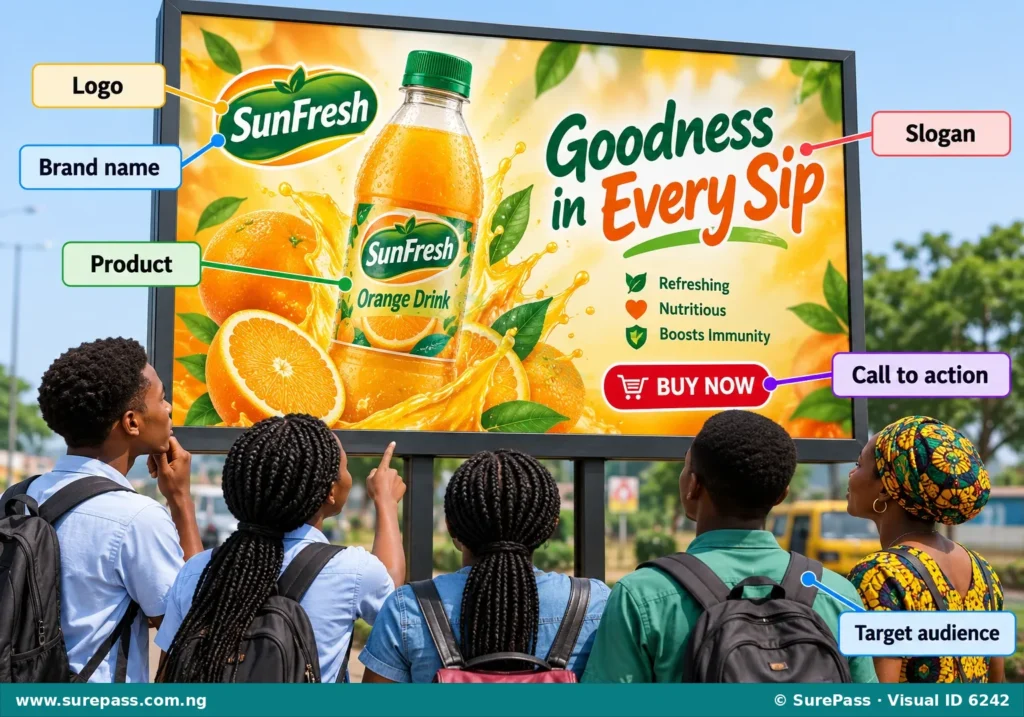
- Slogan: A short and striking or memorable phrase used in advertising.
- Jingle: A short, catchy tune or song used in advertising.
- Target Audience: The particular group of consumers at which a product or service is aimed.
- Campaign: A planned series of advertisements or promotional activities designed to achieve a specific marketing goal.
- Brand: A type of product manufactured by a particular company under a particular name.
- Logo: A symbol or other design adopted by an organisation to identify its products, uniform, vehicles, etc.
- Endorsement: A public statement or action made by a prominent person or organisation expressing support for a product or service.
- Commercial: A television or radio advertisement.
- Billboard: A large outdoor board for displaying advertisements.
- Copywriter: A person who writes the text for advertisements, publicity material, or websites.
- Media Buying: The process of purchasing advertising space or time from media outlets such as television, radio, newspapers, magazines and digital platforms.
- Call to Action (CTA): A prompt on an advertisement or website that tells the user to take some specified action, such as “Buy now” or “Learn more.”
- Demographics: Statistical data relating to the population and particular groups within it, used to define target audiences.
- Reach: The total number of different people or households exposed to an advertisement or campaign at least once over a specific period.
Register of Publishing
Publishing is the business of producing and issuing books, journals, music, software and other works for public sale or distribution. This field has its own specialised vocabulary related to the creation, production and distribution of written works.
Words associated with publishing include:
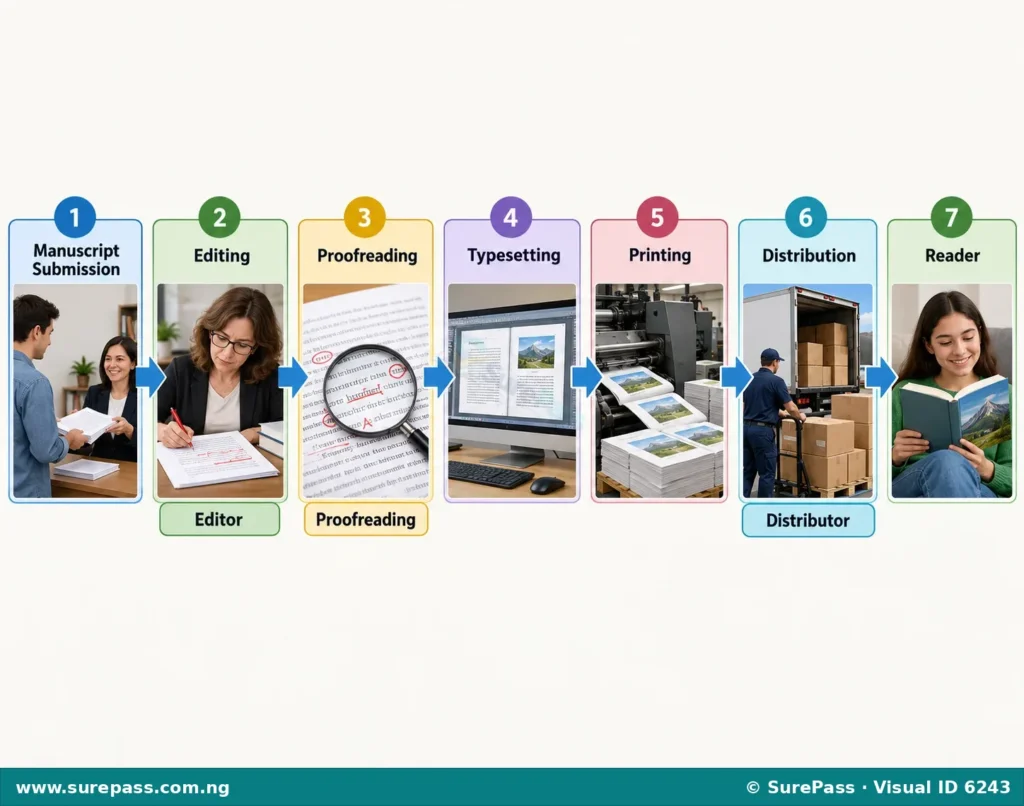
- Manuscript: An author’s text that has not yet been published.
- Editor: A person who prepares written material for publication by correcting, condensing or otherwise modifying it.
- Proofreading: The process of reading a text to detect and correct production errors in grammar, spelling, punctuation and formatting.
- Galley Proofs: Early versions of a publication, often printed on long sheets of paper, used for proofreading before final printing.
- Imprint: A publisher’s trade name under which books are published.
- ISBN (International Standard Book Number): A unique numeric commercial book identifier.
- Copyright: The exclusive legal right to print, publish, perform, film or record literary, artistic or musical material, and to authorise others to do the same.
- Royalty: A payment made by a licensee to a licensor for the right to use the licensor’s intellectual property, such as a percentage of the sales of a book.
- Distributor: A company or person that supplies goods to retailers. In publishing, they handle the logistics of getting books from the publisher to bookstores.
- Typesetting: The process of arranging text and images on a page for printing.
- Blurb: A short description of a book, film or other product written for promotional purposes and appearing on the cover or in advertisements.
- Foreword: A short introduction to a book, typically written by someone other than the author.
- Index: An alphabetical list of names, subjects, etc., with references to the places where they occur, typically found at the end of a book.
- Pagination: The sequence of numbers assigned to pages in a book or document.
- Acquisition Editor: An editor who seeks out and signs new authors and book projects for a publishing house.
Using Register-Specific Terms in Sentences
Understanding the meaning of these terms is important, but it is equally important to know how to use them correctly in sentences. This demonstrates a full grasp of their context and application.
Examples of using journalism terms:
- The headline screamed “National Team Wins Cup!” across the front page.
- Her first article carried a prominent byline, marking her debut as a journalist.
- The report from Maiduguri had a clear dateline, indicating its origin.
- The journalist ensured the lead paragraph contained all the essential facts of the story.
- The newspaper was proud to announce a major scoop on the government scandal.
- The Sunday edition always includes a lengthy feature on local heroes.
- The newspaper’s editorial strongly criticised the new policy.
- As a political columnist, he shared his views on current affairs every Tuesday.
- Our foreign correspondent sent live updates from the conflict zone.
- The company issued a press release to announce its new product.
Examples of using advertising terms:
- The new advert for the soft drink was very colourful and catchy.
- “Just Do It” is a famous slogan for a sports brand.
- Children often remember the catchy jingle from their favourite cereal commercial.
- The company’s new phone is aimed at a young, tech-savvy target audience.
- The marketing team launched a new advertising campaign to boost sales.
- The brand of soap is known for its natural ingredients.
- The company’s new logo features a stylised eagle.
- A popular musician provided an endorsement for the new energy drink.
- The television commercial aired during prime time.
- Large billboards along the highway promoted the upcoming music festival.
Examples of using publishing terms:
- The author submitted her completed manuscript to the publishing house.
- The editor suggested several changes to improve the clarity of the text.
- Before printing, the book underwent a final round of proofreading.
- The author carefully reviewed the galley proofs for any remaining errors.
- “SurePass Books” is a well-known imprint in educational publishing.
- Every published book has a unique ISBN for identification.
- The author holds the copyright to her novel, protecting her intellectual property.
- Authors receive a percentage of book sales as royalty payments.
- The distributor ensures that books reach bookstores across the country.
- The book’s elegant design was a result of careful typesetting.




0 comments
Open the discussion when you need it. Comments stay collapsed until requested so the initial article remains light.