



ARTICLE CONTENTSOn this page 7 sections
Rubuta Wasiƙa da Aika Saƙo Ta Intanet
Performance Objectives
By the end of the lesson, students should be able to:
- Fahimtar ma’anar sassauƙar wasiƙa tare da tattauna matakan rubuta wasiƙa.
- Rubuta wasiƙa zuwa ga aboki don faɗa masa abin da ya faru a makaranta.
- Amfani da intanet don aika saƙon wasiƙa a kan abin da ya faru a makarantarsu.
- Karanta sassauƙar wasiƙa.
- Aika wasiƙa ta hanyar intanet.
What is a Letter? (Menene Wasiƙa?)
A letter is a written message sent from one person to another, or from one place to another, to share information.
In Hausa, a letter is called wasiƙa. Traditionally, letters are written on paper and sent through a post office (gidan waya) or delivered by hand. Today, people also write and send letters electronically using the internet.
Parts of a Simple Letter (Sassan Wasiƙa Mai Sauƙi)
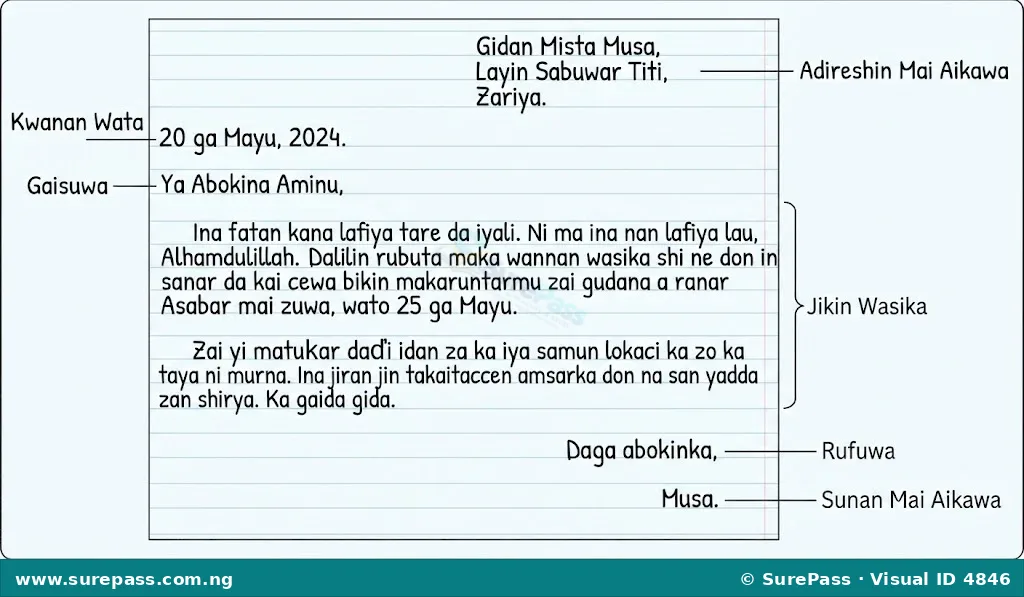
A simple informal letter has specific parts that help the reader understand the message clearly. The six main parts of a simple letter in Hausa are:
- Adireshin Mai Aikawa (Sender’s Address)
- Kwanan Wata (Date)
- Gaisuwa (Salutation)
- Jikin Wasiƙa (Body of the Letter)
- Rufuwa (Closing)
- Sunan Mai Aikawa (Sender’s Name)
1. Adireshin Mai Aikawa (Sender’s Address)
This is the address of the person writing the letter. It is written at the top right-hand corner of the paper. It helps the receiver know where the letter came from.
2. Kwanan Wata (Date)
This is the date when the letter was written. It is placed directly below the sender’s address.
3. Gaisuwa (Salutation)
This is the greeting used to open the letter. In Hausa, common greetings for friends include “Ya Abokina,” (My friend) or “Zuwa ga…” (To…).
4. Jikin Wasiƙa (Body of the Letter)
This is the main part of the letter where the actual message is written. It contains the details of what happened or what the writer wants to share.
5. Rufuwa (Closing)
This is how the letter is ended. Common Hausa closings for informal letters include “Daga abokinka,” (From your male friend) or “Daga ƙanwarki,” (From your younger sister).
6. Sunan Mai Aikawa (Sender’s Name)
This is the name of the person who wrote the letter. It is written directly below the closing.
How to Write a Letter (Yadda Ake Rubuta Wasiƙa)
Writing a letter involves following a simple step-by-step process. The steps for writing a simple letter are:
- Write the sender’s address (adireshin mai aikawa) and the date (kwanan wata) at the top right corner of the page.
- Write a friendly greeting (gaisuwa) on the left side, just below the level of the date.
- Write the main message in the body of the letter (jikin wasiƙa), starting on a new line below the greeting.
- End the letter with an appropriate closing (rufuwa) below the body.
- Write the sender’s name (sunan mai aikawa) directly under the closing.
Reading a Simple Letter (Karanta Sassauƙar Wasiƙa)
Below is an example of a simple letter written by a pupil named Musa to his friend Aminu, describing recent events at his school:
Gidan Malam Musa,
Layin Makarantar Firamare,
Kano.
15 ga Oktoba, 2024.
Ya Abokina Aminu,
Ina fatan kana lafiya. Ni ma ina lafiya kalau. Na rubuto maka wannan wasiƙar ne don in faɗa maka abin da ya faru a makarantarmu a makon da ya gabata.
A ranar Talata, mun yi gasar wasan kwaikwayo a makaranta. Ajinmu ya yi wasan kwaikwayo mai ban dariya game da wani yaro mai son cin abinci sosai. Kowa ya yi dariya sosai, har Malam Musa ya yaba mana. Mun ci matsayi na biyu a gasar!
Bayan haka, a ranar Alhamis, mun je yawon shakatawa zuwa gidan tarihi na Kano. Mun ga tsofaffin kayan tarihi da yawa kuma mun koyi abubuwa masu yawa game da tarihin garinmu. Ya kasance rana mai daɗi sosai.
Ina fatan za ka zo makaranta nan ba da jimawa ba don mu ci gaba da karatu tare. Ina jiran wasiƙarka.
Daga abokinka,
Musa.
To read and understand a letter properly, the following steps should be followed:
- Read the sender’s address and date first to know where and when the letter was written.
- Look at the salutation to identify who the letter is addressed to.
- Read the body of the letter slowly, sentence by sentence, to understand the main message.
- Check the closing and the name at the end to identify the writer.
- Ask a teacher or use a dictionary to find the meaning of any unfamiliar Hausa words.
Based on the letter above, answer the following questions:
- Wane ne ya rubuta wasiƙar? (Who wrote the letter?)
- Zuwa ga wane ne aka aikawa da wasiƙar? (Who was the letter sent to?)
- Wane abu ne ya faru a makaranta a ranar Talata? (What happened at school on Tuesday?)
- Wane wuri ne ɗaliban suka ziyarta a ranar Alhamis? (Which place did the students visit on Thursday?)
Using the Internet to Send Messages (Amfani da Intanet Don Aika Saƙo)
The internet is a global network of computers and mobile devices that allows people to share information and send messages instantly across the world.
In modern times, people use the internet to send letters and messages quickly. Instead of writing on paper and waiting days for delivery, messages can be sent as emails (saƙon imel) or text messages (saƙon tes) through mobile applications.
How to Send a Letter via Email (Yadda Ake Aika Wasiƙa Ta Imel)
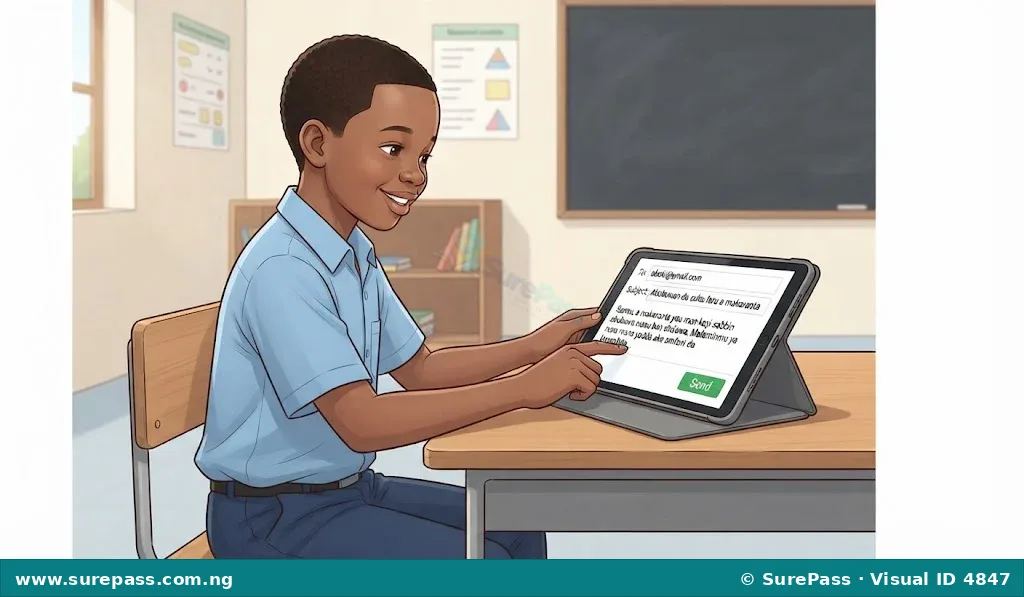
Sending a letter through the internet using an email application involves the following steps:
- Open the email application (manhajar imel) on a computer, tablet, or smartphone connected to the internet.
- Click on the “Compose” or “New Message” button to start a new letter.
- Type the recipient’s email address in the “To” (Zuwa ga) field.
- Type a short title for the letter in the “Subject” (Maudu’i) field, such as “Abubuwan da suka faru a makaranta” (Things that happened at school).
- Type the letter in the main message box, starting with a greeting, followed by the body, and ending with a closing and name.
- Review the message to ensure there are no spelling mistakes.
- Click the “Send” (Aika) button to deliver the message instantly.



0 comments
Open the discussion when you need it. Comments stay collapsed until requested so the initial article remains light.