


ARTICLE CONTENTSOn this page 5 sections
Introduction to Artificial Intelligence (AI)
Performance Objectives
By the end of the lesson, students should be able to:
- describe the concept of artificial intelligence;
- explain machine learning as a specific type of artificial intelligence;
- process and analyze experimental data using an artificial intelligence tool.
Understanding Artificial Intelligence (AI)
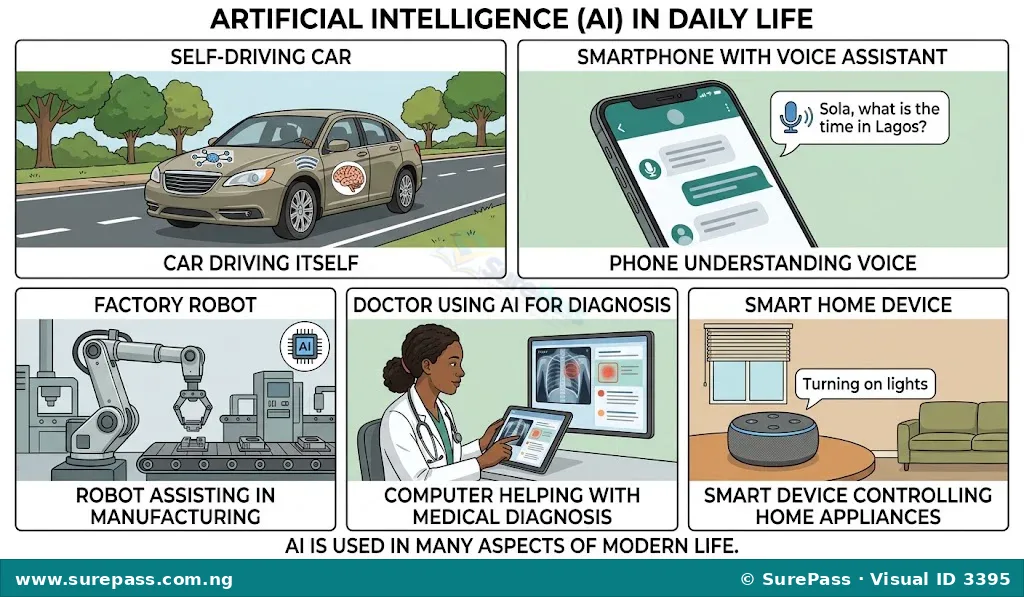
Artificial Intelligence, commonly known as AI, is a field of computer science that focuses on creating machines capable of performing tasks that typically require human intelligence. These tasks include learning, problem-solving, decision-making, understanding language, and recognising patterns.
The goal of AI is to enable computers to think, reason, and act in ways that mimic human cognitive abilities. This allows machines to automate complex processes and assist humans in various activities.
Brief History of Artificial Intelligence
The idea of intelligent machines has existed for centuries in myths and stories, but the formal study of Artificial Intelligence began in the mid-20th century. Here is a brief overview of its development:
- Early Concepts (1940s-1950s): The foundations of AI were laid by mathematicians and logicians who explored the possibility of machines performing logical reasoning. Key figures like Alan Turing proposed the “Turing Test” in 1950, a method to determine if a machine can exhibit intelligent behaviour indistinguishable from a human.
- Birth of AI (1956): The term “Artificial Intelligence” was coined at a workshop held at Dartmouth College in the United States. This event is widely considered the official birth of AI as a field of study. Researchers began developing programs that could solve mathematical problems and play simple games.
- Periods of Growth and “AI Winters” (1960s-1990s): AI saw periods of rapid progress, followed by “AI winters” where funding and interest declined due to unfulfilled promises and limitations of technology. During this time, expert systems were developed, which were programs designed to mimic the decision-making ability of a human expert in a specific field.
- Resurgence and Modern AI (2000s-Present): Advances in computing power, the availability of large amounts of data, and new algorithms led to a significant resurgence in AI. This period has seen breakthroughs in areas like machine learning, natural language processing, and computer vision, making AI a prominent part of modern technology.
Importance of Artificial Intelligence
Artificial Intelligence is becoming increasingly important in various aspects of life and technology. Its applications are transforming industries and improving daily experiences. The importance of AI includes:
- Automation of Tasks: AI can automate repetitive and time-consuming tasks, freeing up human workers to focus on more creative and complex problems. This increases efficiency in industries like manufacturing and administration.
- Improved Decision-Making: AI systems can analyse vast amounts of data much faster and more accurately than humans, providing insights that lead to better decisions in business, healthcare, and finance.
- Enhanced Problem-Solving: AI is used to solve complex problems in scientific research, engineering, and logistics, such as discovering new materials or optimising supply chains.
- Personalised Experiences: AI powers recommendation systems in online shopping, streaming services, and social media, offering personalised content and products to users.
- Advancements in Healthcare: AI assists in diagnosing diseases, developing new drugs, and personalising treatment plans for patients, leading to better health outcomes.
- Safety and Security: AI is used in surveillance systems, fraud detection, and cybersecurity to identify threats and protect individuals and organisations.
- Accessibility: AI tools like voice assistants and translation software make technology more accessible to people with disabilities and facilitate communication across language barriers.
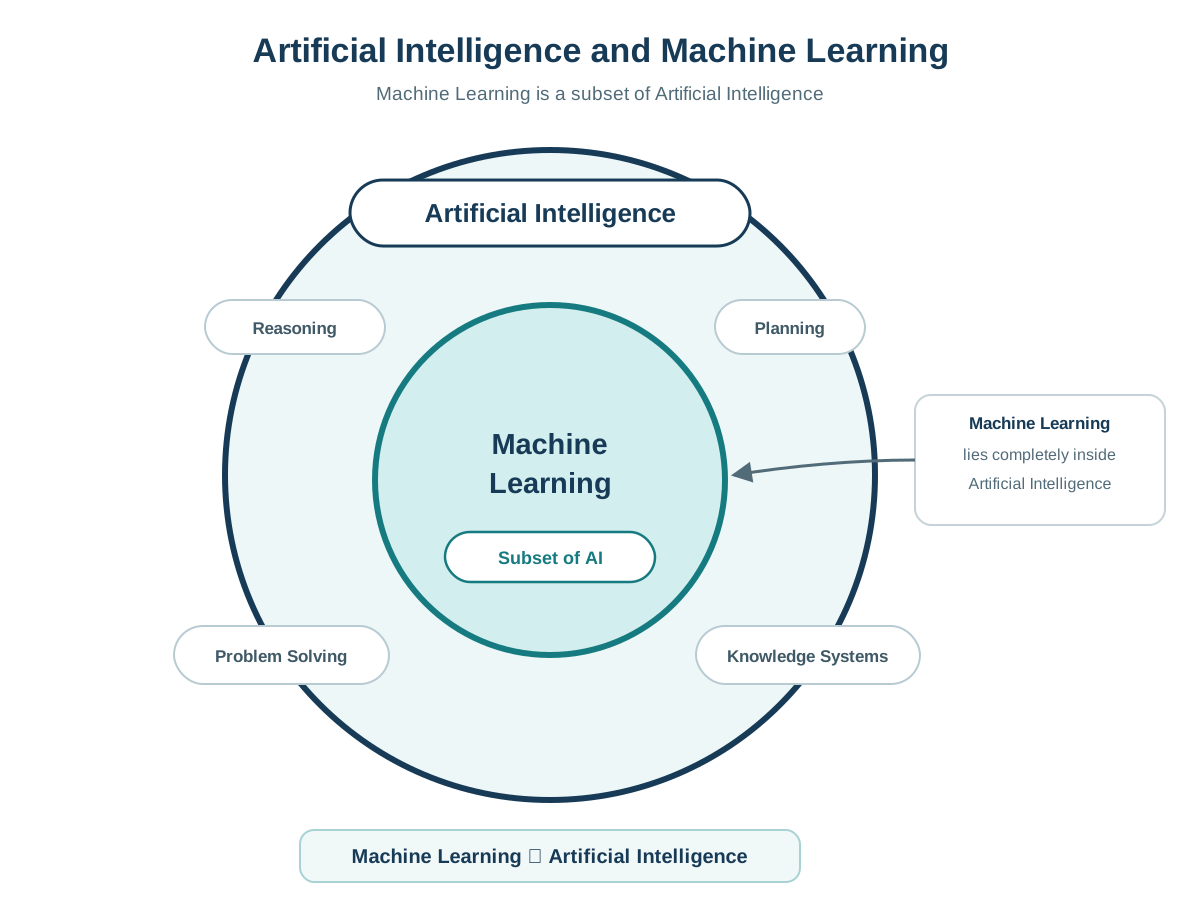
Machine Learning as a Subset of Artificial Intelligence
Machine Learning (ML) is a specific branch of Artificial Intelligence that enables systems to learn from data, identify patterns, and make decisions with minimal human intervention. It is a core method through which many AI systems achieve intelligence.
The fundamental idea behind machine learning is to “train” a computer model using large datasets. Instead of being explicitly programmed for every possible scenario, the machine learns to recognise relationships and make predictions or classifications based on the data it has processed.
For example, if a machine learning model is trained with thousands of images of cats and dogs, it can learn to distinguish between them without being told specific rules like “cats have whiskers” or “dogs bark.” It discovers these patterns on its own.
One common type of machine learning involves artificial neural networks, which are inspired by the structure and function of the human brain. These networks consist of interconnected nodes that process information, allowing the system to learn complex patterns from data.
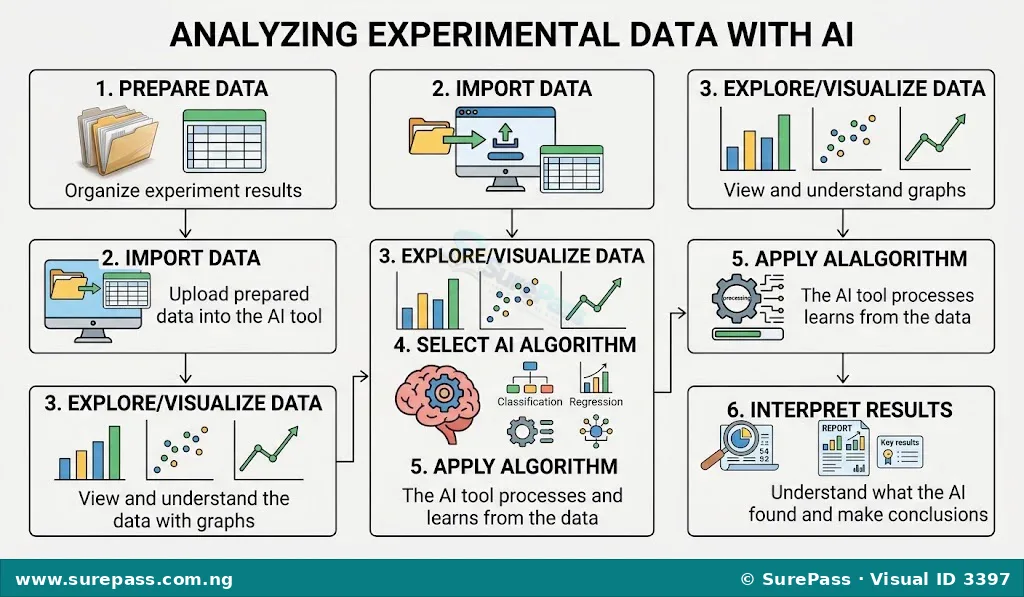
Analyzing Experimental Data Using an Artificial Intelligence Tool
In physics, experiments often generate large amounts of data. Analysing this data manually can be time-consuming and prone to human error. Artificial Intelligence tools, particularly those based on machine learning, can help process, interpret, and find patterns in experimental data more efficiently.
An AI tool can be used to perform tasks such as:
- Data Cleaning: Identifying and correcting errors or inconsistencies in the data.
- Pattern Recognition: Discovering hidden trends or relationships within the data that might not be obvious to a human observer.
- Prediction: Forecasting future outcomes or values based on past experimental results.
- Classification: Grouping data points into different categories based on their characteristics.
Procedure for Analyzing Experimental Data with an AI Tool
This procedure outlines the general steps involved in using an AI-supported tool, such as MATLAB, to analyse experimental data. The specific commands or interface may vary depending on the software used.
The required resources are:
- A desktop or laptop computer with sufficient RAM.
- An internet connection (if the tool requires online access or updates).
- A web browser (if using a web-based AI tool or for accessing documentation).
- AI-ready software (e.g., MATLAB, Python with AI libraries, or a simpler online data analysis tool).
- Experimental data in a suitable digital format (e.g., CSV, Excel spreadsheet).
The procedure involves the following steps:
- Prepare the Experimental Data:
- Ensure your experimental data is organised in a structured format, such as a spreadsheet (e.g., Microsoft Excel or Google Sheets).
- Each column should represent a different variable (e.g., time, temperature, voltage, current), and each row should be a separate measurement or observation.
- Save the data in a format compatible with your AI tool, commonly a Comma Separated Values (CSV) file or an Excel workbook.
- Launch the AI Tool:
- Open the AI-ready software on your computer (e.g., MATLAB, or a web browser if using an online tool).
- Ensure the software is updated and ready for use.
- Import the Data:
- Within the AI tool, locate the option to import data. This is often found under “File” > “Import Data” or a similar menu.
- Select your prepared experimental data file (e.g., `experiment_results.csv`).
- Verify that the data has been imported correctly, checking column headers and data types.
- Explore and Visualise Data (Optional but Recommended):
- Use the tool’s plotting functions to create graphs (e.g., scatter plots, line graphs, histograms) of your data.
- Visualisation helps in understanding the data distribution, identifying outliers, and observing initial trends before applying AI algorithms.
- Select an AI/Machine Learning Algorithm:
- Based on the goal of your analysis (e.g., predicting a value, classifying data points, finding relationships), choose an appropriate AI or machine learning algorithm.
- For SS1, focus on simpler tasks like linear regression for predicting a continuous value or basic clustering for grouping data.
- Many AI tools have built-in functions or toolboxes for common algorithms.
- Apply the Algorithm:
- Configure the chosen algorithm with your imported data. This usually involves specifying which columns are input variables and which is the target variable (if applicable).
- Run the algorithm. The tool will process the data and generate results based on the algorithm’s function.
- Interpret the Results:
- Examine the output from the AI tool. This might include statistical measures, predicted values, classifications, or visualisations of patterns found.
- For example, if using linear regression, the tool might provide an equation that describes the relationship between your variables.
- Compare the results with your initial hypotheses or expected outcomes from the experiment.
- Document and Report:
- Save your analysis, including the processed data, generated plots, and the results from the AI algorithm.
- Summarise your findings, explaining what the AI tool revealed about your experimental data.




0 comments
Open the discussion when you need it. Comments stay collapsed until requested so the initial article remains light.