



ARTICLE CONTENTSOn this page 8 sections
La taille, les couleurs et les formes
Performance Objectives
By the end of the lesson, students should be able to:
- Écouter, et observer les tailles, les formes et les couleurs des objets à l’école et à la maison (rouge, vert, grand, petit, ronde, carré).
- Prononcer bien les mots rencontrés.
- Décrire les tailles des objets à l’école et à la maison en français simple….
Introduction
This unit introduces French words for describing the size, colour, and shape of everyday objects. Learners will practise listening to and pronouncing these words. The unit also explains how to use these French words to describe things seen at school and at home.
La Taille (Size)
To describe how big or small an object is, specific words for size are used. In French, “la taille” refers to size.
Vocabulaire pour la Taille (Vocabulary for Size)
French words for describing size include:
- Grand: big, tall (used for masculine singular objects)
- Grande: big, tall (used for feminine singular objects)
- Petit: small (used for masculine singular objects)
- Petite: small (used for feminine singular objects)
When describing an object, the size word (adjective) must match the gender of the object. For example, “un livre” (a book) is a masculine noun, so “grand” is used to say “un grand livre” (a big book). “Une table” (a table) is a feminine noun, so “grande” is used to say “une grande table” (a big table).
Observe the image below showing objects of different sizes.
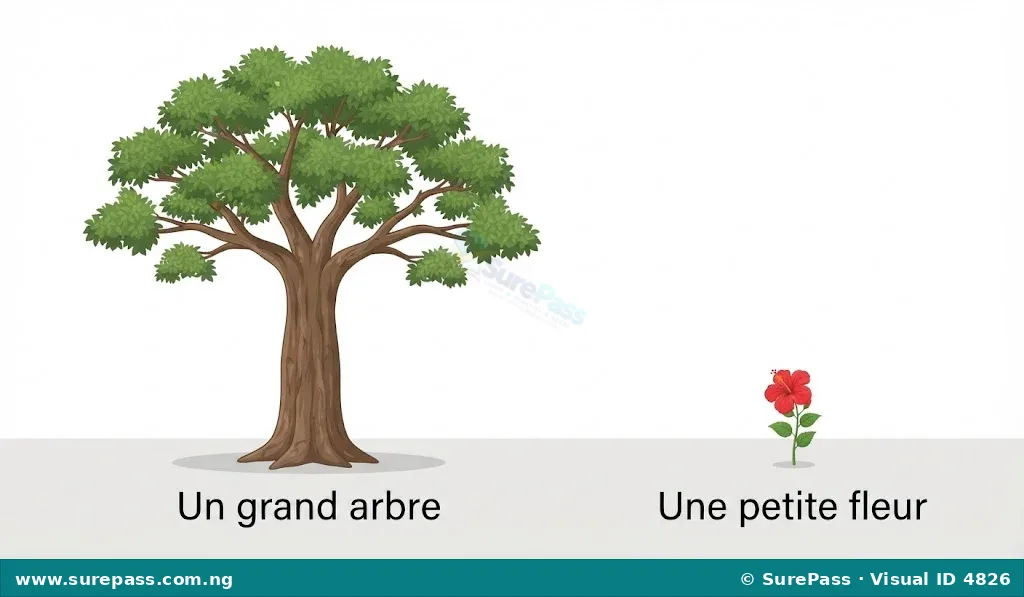
Examples of how to use these words in sentences include:
- Un ballon est grand. (A ball is big.)
- Une chaise est petite. (A chair is small.)
- Le tableau est grand. (The blackboard is big.)
- La gomme est petite. (The eraser is small.)
Les Couleurs (Colours)
Colours help to describe objects more clearly. In French, “les couleurs” means colours.
Vocabulaire pour les Couleurs (Vocabulary for Colours)
French words for colours include:
- Rouge: red (used for both masculine and feminine singular objects)
- Vert: green (used for masculine singular objects)
- Verte: green (used for feminine singular objects)
Like size words, colour words also agree with the object’s gender. The word “rouge” remains the same for both masculine and feminine singular nouns. “Vert” changes to “verte” for feminine singular nouns.
Look at the colours of the objects shown below.
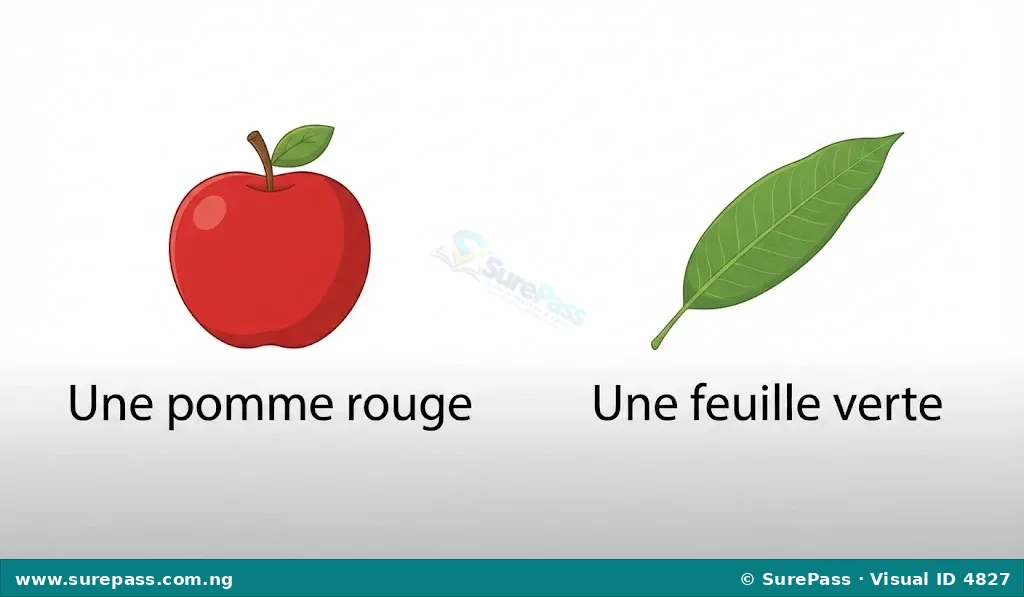
Examples of how to use these words in sentences include:
- Le ballon est rouge. (The ball is red.)
- La chaise est verte. (The chair is green.)
- Le tableau est vert. (The blackboard is green.)
- La voiture est rouge. (The car is red.)
Les Formes (Shapes)
Shapes describe the outline of an object. In French, “les formes” means shapes.
Vocabulaire pour les Formes (Vocabulary for Shapes)
French words for shapes include:
- Rond: round (used for masculine singular objects)
- Ronde: round (used for feminine singular objects)
- Carré: square (used for masculine singular objects)
- Carrée: square (used for feminine singular objects)
Shape words also agree with the object’s gender. “Rond” changes to “ronde” for feminine singular nouns. “Carré” changes to “carrée” for feminine singular nouns.
Observe the shapes of the items in the image.
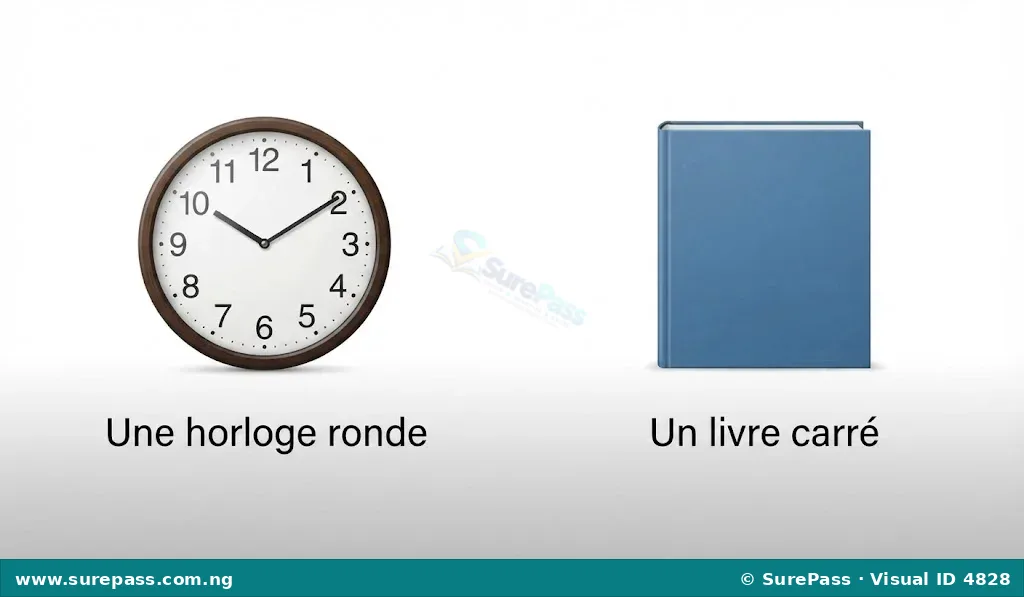
Examples of how to use these words in sentences include:
- Le ballon est rond. (The ball is round.)
- La table est carrée. (The table is square.)
- Le livre est carré. (The book is square.)
- La pièce de monnaie est ronde. (The coin is round.)
Décrire les Objets (Describing Objects)
The words for size, colour, and shape can be combined to describe objects in simple French sentences. In French, descriptive words (adjectives) usually come after the noun, and they must agree in gender with the noun they describe.
Décrire les Objets à l’École (Describing Objects at School)
Many objects at school can be described using the words learned:
- Le tableau (The blackboard): C’est un grand tableau vert. (It is a big green blackboard.)
- La chaise (The chair): C’est une petite chaise rouge. (It is a small red chair.)
- Le livre (The book): C’est un petit livre carré. (It is a small square book.)
- La table (The table): C’est une grande table carrée. (It is a big square table.)
Décrire les Objets à la Maison (Describing Objects at Home)
Many objects in the home can also be described:
- Le ballon (The ball): C’est un grand ballon rond et rouge. (It is a big round red ball.)
- La boîte (The box): C’est une petite boîte carrée et verte. (It is a small square green box.)
- Le tapis (The rug): C’est un grand tapis vert. (It is a big green rug.)
- La tasse (The cup): C’est une petite tasse ronde et rouge. (It is a small round red cup.)
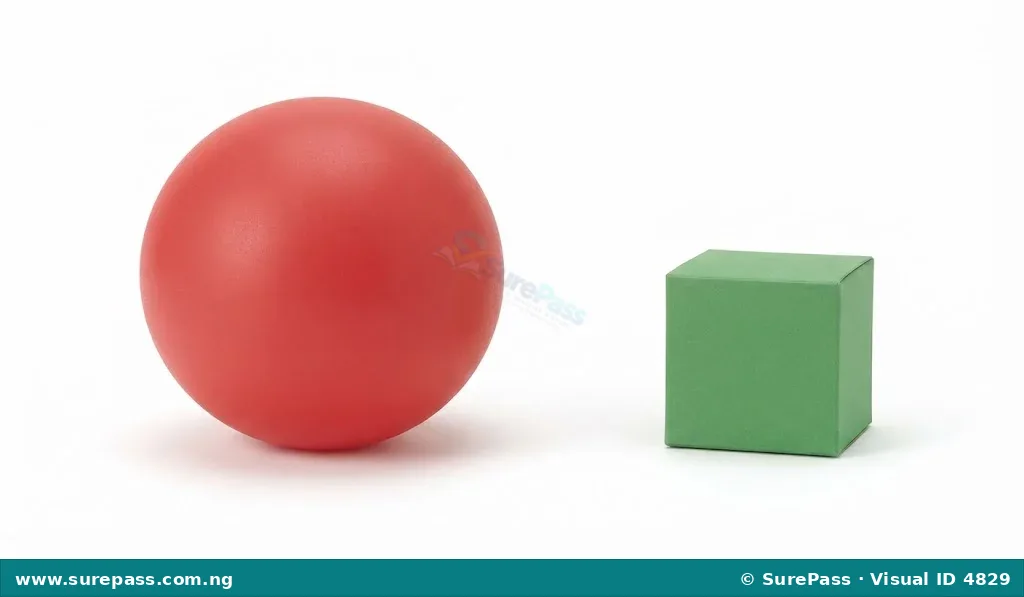
Look at the image below and try to describe the objects using French words for size, colour, and shape.
Prononciation (Pronunciation)
Correct pronunciation of French words is important for clear communication. Learners should listen carefully when the teacher says these words and try to repeat them.
Conseils de Prononciation (Pronunciation Tips)
- “Grand” and “Petit”: The ‘d’ and ‘t’ at the end of “grand” and “petit” are usually silent when followed by a consonant or at the end of a sentence. For “grande” and “petite”, the final ‘e’ is silent, but it causes the ‘d’ and ‘t’ before it to be pronounced.
- “Rouge”: The ‘ou’ sound is similar to ‘oo’ in the English word ‘moon’. The ‘ge’ sound is similar to the ‘s’ in the English word ‘measure’.
- “Vert”: The ‘t’ at the end of “vert” is usually silent. The ‘er’ sounds like ‘air’ in English. For “verte”, the ‘t’ is pronounced.
- “Rond”: The ‘on’ creates a nasal sound, similar to saying ‘ohn’ without fully closing the mouth. The ‘d’ is silent. For “ronde”, the ‘d’ is pronounced.
- “Carré”: The ‘rr’ is rolled slightly, and the ‘é’ sounds like ‘ay’ in the English word ‘day’. For “carrée”, the pronunciation is the same as “carré”.
Practice saying these words aloud:
- Grand, grande
- Petit, petite
- Rouge
- Vert, verte
- Rond, ronde
- Carré, carrée


0 comments
Open the discussion when you need it. Comments stay collapsed until requested so the initial article remains light.