



ARTICLE CONTENTSOn this page 7 sections
La lecture simple en français
Performance Objectives
By the end of the lesson, students should be able to:
- Lire et comprendre des mots simples sur des affiches,
- Lire et comprendre des phrases simples en français
Introduction à la lecture simple en français
Simple reading in French is the ability to recognise, pronounce, and understand basic French words and short sentences.
Reading simple texts helps learners build vocabulary, improve pronunciation, and develop communication skills. It forms the foundation for understanding written French in everyday life. This unit focuses on reading basic French words, recognizing them on posters, and understanding simple sentences.
La lecture des mots simples
Reading simple words in French involves looking at the letters, pronouncing the sounds correctly, and connecting the word to its meaning. Many French words have phonetic patterns that become familiar with practice. Saying these words aloud helps to build confidence and correct pronunciation.
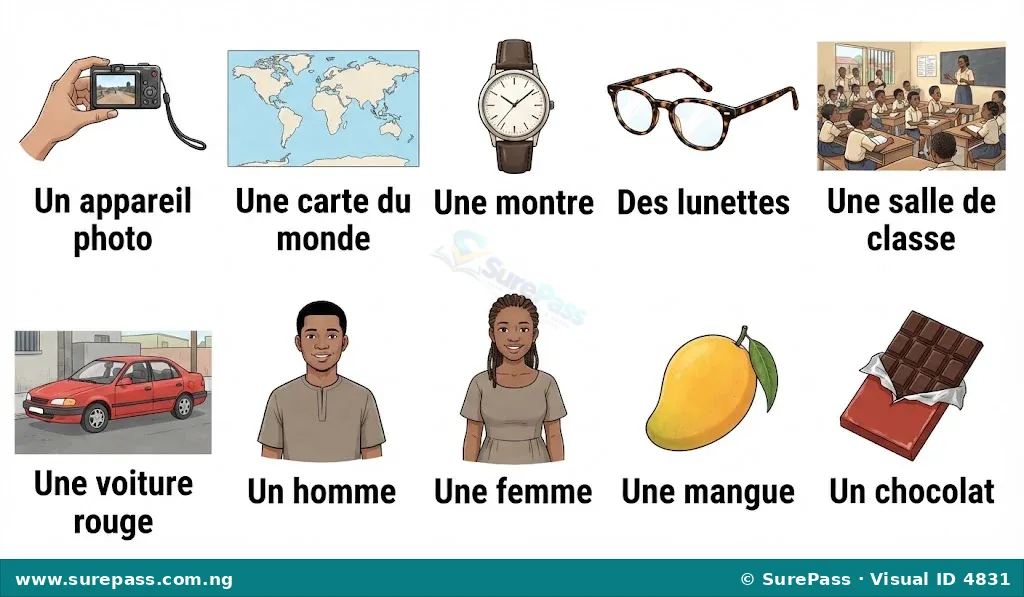
Examples of simple French words with their pronunciation guides and English meanings include:
- photo: (fah-toh) – photo
- carte: (kart) – map or card
- montre: (mohn-truh) – watch
- lunettes: (loo-net) – glasses
- classe: (klahs) – class or classroom
- voiture: (vwah-toor) – car
- homme: (om) – man
- femme: (fam) – woman
- mangue: (mahng) – mango
- chocolat: (shoh-koh-lah) – chocolate
Comprendre les mots simples
Understanding simple French words is made easier by connecting each word to a physical object, an image, or its English equivalent. When a word is read, associating it with a visual representation helps to lock the meaning in memory.
For instance, the word “voiture” represents a car, while “mangue” represents a mango fruit. Making these mental connections helps learners read fluently without translating every word slowly.
La lecture des mots simples sur des affiches
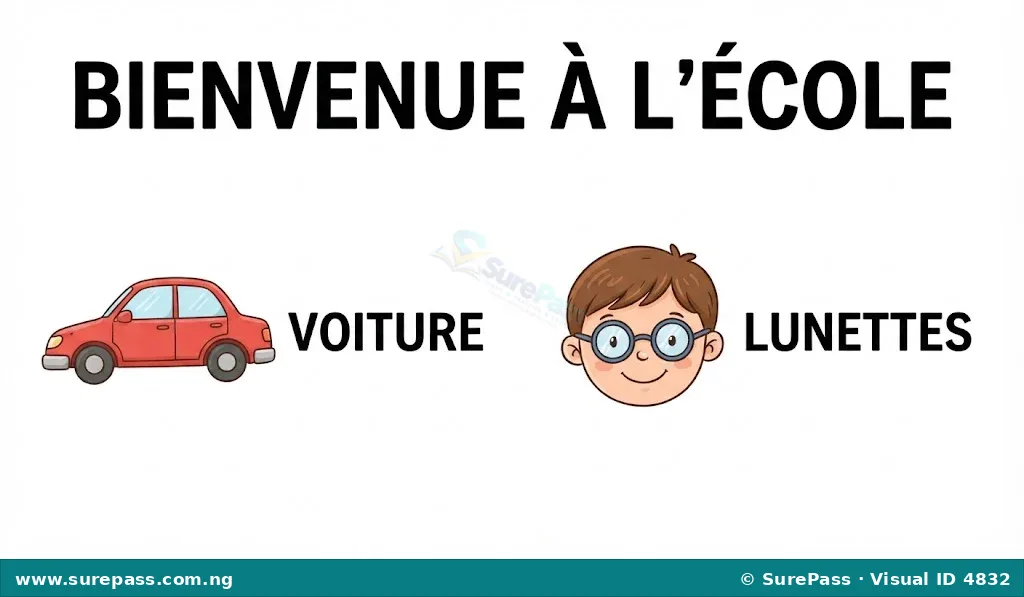
Posters, signs, and notices in public places often use simple, bold words to convey messages quickly. Recognising these words helps people navigate French-speaking environments, such as schools, shops, and streets. These words are usually written in large, clear letters and are often accompanied by pictures.
Common French words found on posters and signs include:
- BIENVENUE: (byen-vuh-noo) – Welcome
- OUVERT: (oo-vair) – Open
- FERMÉ: (fair-may) – Closed
- ÉCOLE: (ay-kol) – School
- VENTE: (vahnt) – Sale
- ATTENTION: (ah-tahn-syohn) – Attention / Warning
La lecture des phrases simples en français
A simple sentence in French is a group of words that expresses a complete thought.
A simple sentence typically contains a subject (the person or thing performing the action) and a verb (the action itself). Reading sentences helps learners understand how words work together to convey complete ideas.
Examples of simple French sentences with their pronunciation guides and English meanings include:
- C’est une photo. (Say oon fah-toh.) – It is a photo.
- J’ai une carte. (Zhay oon kart.) – I have a map/card.
- Il a une montre. (Eel ah oon mohn-truh.) – He has a watch.
- Elle porte des lunettes. (El port day loo-net.) – She wears glasses.
- La classe est grande. (Lah klahs eh grahnd.) – The classroom is big.
- La voiture est rouge. (Lah vwah-toor eh rooj.) – The car is red.
- C’est un homme. (Say uhn om.) – It is a man.
- C’est une femme. (Say oon fam.) – It is a woman.
- J’aime la mangue. (Zhem lah mahng.) – I like mango.
- Je mange du chocolat. (Zheh mahnj doo shoh-koh-lah.) – I eat chocolate.
When reading these sentences, it is helpful to identify the individual words first, then read the entire sentence aloud to practice pronunciation and flow.
Pratiquer la lecture et la compréhension
Regular practice is essential for developing reading fluency and comprehension in French. Engaging in structured activities helps reinforce word recognition, spelling, and pronunciation.
The main activities for practising French reading skills include:
- Écouter et répéter (Listen and repeat): Learners listen to French words and sentences spoken by a teacher or an audio recording, then repeat them aloud to match the correct pronunciation.
- Associer les mots et les images (Match words and images): Learners look at pictures and connect them with the corresponding French words to reinforce vocabulary.
- Compléter les mots (Complete the words): Learners fill in missing letters to complete simple French words, which improves spelling and word recognition.
Examples of words to complete include:
- ch-t: (chat – cat)
- ban-ne: (banane – banana)
- j-pe: (jupe – skirt)
- Lire à haute voix (Read aloud): Learners read simple French words and sentences aloud to build confidence, fluency, and correct pronunciation.





0 comments
Open the discussion when you need it. Comments stay collapsed until requested so the initial article remains light.