



ARTICLE CONTENTSOn this page 9 sections
Apprendre les numéros en français 0-20
Performance Objectives
By the end of the lesson, students should be able to:
- Lister les numéros de 0 à 20 en langue française.
- Prononcer correctement ces numéros
- Identifier ces numéros.
Introduction aux Nombres en Français
Learning numbers is an important step in speaking and understanding French. Numbers are used every day for counting, telling age, giving phone numbers, and many other things. In this unit, learners will discover how to say, read, write, and identify numbers from 0 to 20 in French.
Les Nombres de 0 à 10
The first step is to learn the numbers from zero to ten. Each number has a unique French name and pronunciation. It is important to listen carefully and practise saying each one aloud.
The numbers from 0 to 10 are:
- 0: zéro (zay-roh)
- 1: un (uhng)
- 2: deux (duh)
- 3: trois (trwah)
- 4: quatre (katr)
- 5: cinq (sank)
- 6: six (sees)
- 7: sept (set)
- 8: huit (weet)
- 9: neuf (nuhf)
- 10: dix (dees)
Observe the numbers from 0 to 10 in French below.
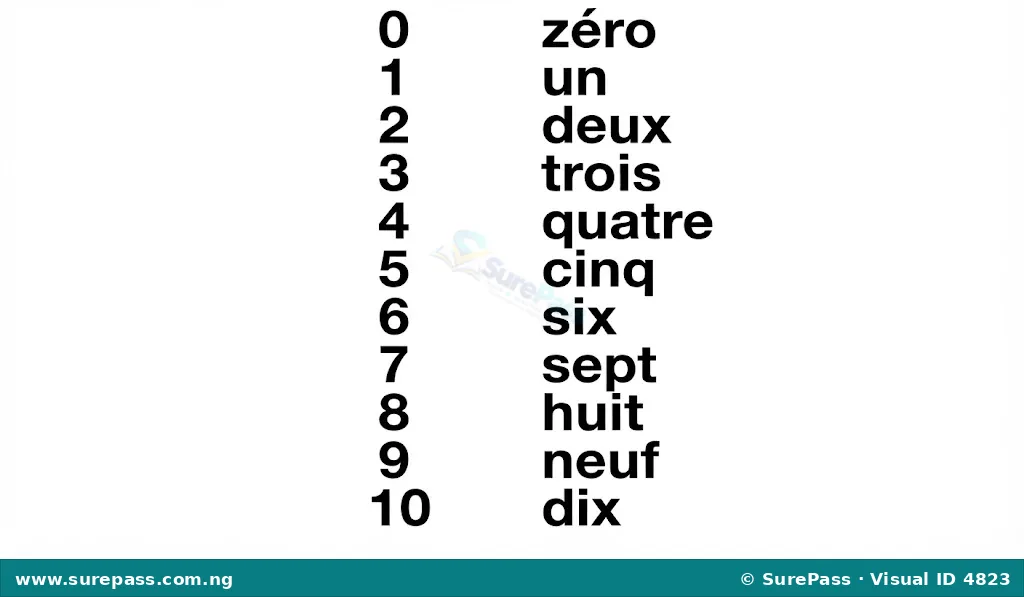
Prononciation des Nombres 0-10
Correct pronunciation is key to speaking French well. Pay attention to the sounds, especially the ‘r’ sound in “zéro” and “trois”, and the nasal sound in “un” and “cinq”. Listening to a French speaker or audio recordings can help improve pronunciation.
Les Nombres de 11 à 20
After mastering numbers 0 to 10, the next step is to learn numbers from eleven to twenty. These numbers also have specific names that need to be memorised.
The numbers from 11 to 20 are:
- 11: onze (ohnz)
- 12: douze (dooz)
- 13: treize (trehz)
- 14: quatorze (kah-torz)
- 15: quinze (kanz)
- 16: seize (sez)
- 17: dix-sept (dee-set)
- 18: dix-huit (deez-weet)
- 19: dix-neuf (deez-nuhf)
- 20: vingt (vang)
Look at the numbers from 11 to 20 in French below.
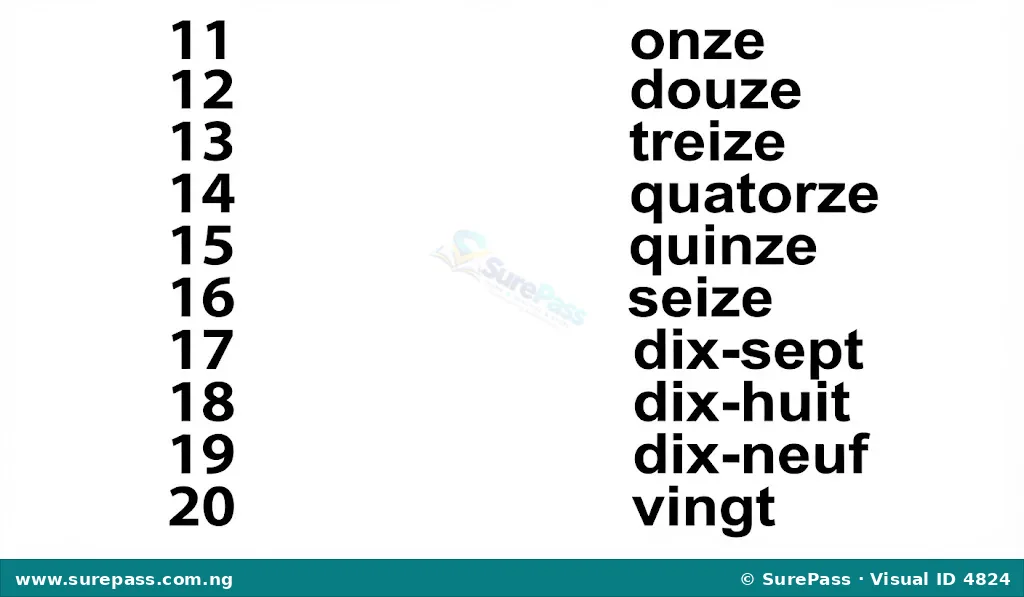
Prononciation des Nombres 11-20
Notice how numbers 17, 18, and 19 are formed by combining “dix” (ten) with “sept” (seven), “huit” (eight), and “neuf” (nine). The ‘x’ in “dix” is pronounced like a ‘z’ sound when followed by a vowel sound, as in “dix-huit” and “dix-neuf”. The number “vingt” has a nasal ‘in’ sound.
Identifier les Nombres
Identifying numbers means recognising them when they are spoken or written. This skill is important for understanding French conversations and texts. Learners can practise by listening to numbers and pointing to the correct written form, or by seeing a number and saying its French name.
Look at the numbers below and try to say their French names. Then, try to write them down.
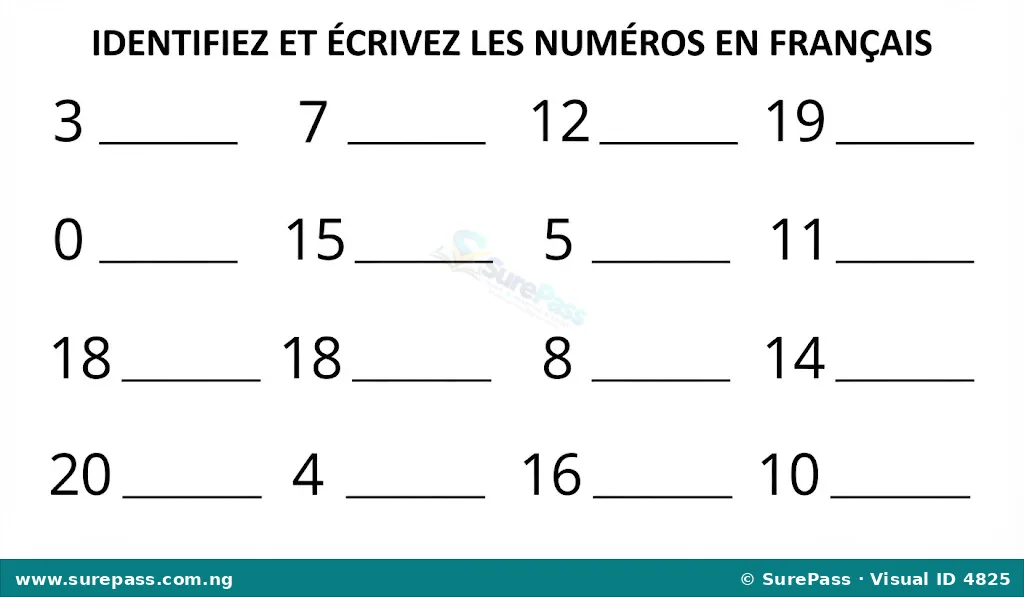
Expression Orale avec les Nombres
Speaking French numbers helps to build confidence and fluency. This can be done through simple counting, singing songs, or asking and answering questions.
Chanter les Nombres
Singing rhymes and songs is a fun way to remember French numbers. Many French children’s songs use numbers from 0 to 20. Practising these songs helps with memorisation and pronunciation.
Demander et Dire l’Âge
One common way to use numbers in French is to talk about age. To ask someone’s age, you say: “Quel âge as-tu?” (How old are you?). To answer, you say: “J’ai [number] ans.” (I am [number] years old).
Here is how to practise asking and answering about age:
- Asking a friend’s age:
A: “Quel âge as-tu?”
B: “J’ai [number] ans.”
For example, if a friend is 9 years old, they would say: “J’ai neuf ans.”
- Asking about someone else’s age (e.g., a sibling):
A: “Quel âge a ton frère/ta sœur?” (How old is your brother/sister?)
B: “Il/Elle a [number] ans.” (He/She is [number] years old.)
For example, if a sister is 12 years old, one would say: “Elle a douze ans.”
Écrire les Nombres
Writing the numbers correctly is as important as saying them. This involves knowing the correct spelling for each number from 0 to 20. Practising writing helps to reinforce memory and prepares learners for written tasks in French.
When writing numbers, pay attention to accents and silent letters. For example, “zéro” has an accent, and the ‘x’ in “dix” is usually silent unless followed by a vowel sound in a phrase.
Révision des Nombres 0-20
Regular practice helps to master French numbers. Learners should try to:
- Count from 0 to 20 aloud every day.
- Write the numbers from 0 to 20 without looking at notes.
- Listen to French songs or videos that feature numbers.
- Ask friends their age in French and answer when asked.





0 comments
Open the discussion when you need it. Comments stay collapsed until requested so the initial article remains light.