


ARTICLE CONTENTSOn this page 12 sections
Myths and Legends
Performance Objectives
By the end of the lesson, students should be able to:
- identify features of myths/legends;
- explain the themes of myths/legends;
- retell myths/legends;
- identify the moral lesson to be learnt from myths/legends; and
- narrate any myths/legends.
Introduction to Myths and Legends
Oral literature is a major part of African culture. Long before books were written, communities preserved their history, beliefs, and values through spoken stories. Myths and legends are two important forms of prose narratives in oral literature that have been passed down through generations.
Meaning of Myths
A myth is a traditional story that explains the early history of a society, the origins of the world, or natural phenomena, typically involving supernatural beings or gods.
Myths are sacred stories that are often treated as true by the communities that created them. They explain deep questions about life, such as how the earth was formed, why death exists, or how humans discovered fire. The characters in myths are usually gods, goddesses, spirits, or first ancestors.
Meaning of Legends
A legend is a traditional story about historical figures or events that is popularly believed to be true but cannot be fully verified by historical facts.
Legends are built around real human beings who performed extraordinary deeds. Over time, as these stories are retold, the details become exaggerated to make the heroes seem larger than life. Unlike myths, which are set in a timeless past before the world took its current shape, legends are set in a specific historical time and place.
Differences Between Myths and Legends
While both forms of storytelling are ancient and contain supernatural elements, they differ in several ways.
The main differences between myths and legends include:
- Characters: Myths feature gods, goddesses, and spirits, while legends feature human heroes who may have possessed extraordinary strength or wisdom.
- Setting: Myths take place in a primordial world or a spiritual realm before recorded history, whereas legends are set in real, identifiable historical places and times.
- Purpose: Myths explain the origins of life, nature, and religious practices, while legends celebrate heroic deeds, historical events, and national pride.
- Belief: Myths are often tied to religious worship and sacred rituals, while legends are told as historical accounts that have been embellished over time.
Features of Myths and Legends
Myths and legends share distinct characteristics that make them easy to recognise in literature.
The primary features of myths and legends are:
- Supernatural Figures: Both genres contain characters with extraordinary powers. In myths, these are gods like Amadioha or Thor. In legends, these are human heroes with superhuman strength, such as Samson or Bayajidda.
- Superstitious Beliefs: The stories often reflect the belief systems of the society, including magic, curses, taboos, destiny, and the active involvement of spirits in human affairs.
- Cultural Significance: They reflect the values, fears, and hopes of the society that created them.
- Oral Origin: They were originally spoken, chanted, or sung before being written down in books.
Themes of Myths and Legends
A theme is the central idea or message in a story. Myths and legends carry deep themes that teach people how to live and understand the world.
Common themes in myths and legends include:
- Heroism and Sacrifice: Legends often focus on a hero who risks their life to save their community from danger, monsters, or oppressors.
- Good Versus Evil: There is usually a clear conflict between forces of good (heroes, benevolent gods) and forces of evil (monsters, wicked rulers, malevolent spirits), with good ultimately triumphing or teaching a lesson.
- Fate and Destiny: Many stories show that human beings cannot escape their destiny or the decrees of the gods.
- Pride and Disobedience: Characters who show excessive pride (hubris) or disobey the instructions of the gods or elders usually face severe consequences.
African and Non-African Tales
Every culture in the world has its own collection of myths and legends. Below are examples from African and non-African traditions.
An African Myth: The Yoruba Creation Story
In the beginning, the world was nothing but water and mist. Olodumare, the supreme god, lived in the sky. He sent Obatala down to create dry land. Obatala was given a snail shell filled with sand, a five-toed hen, and a chameleon. Obatala poured the sand onto the water, and the hen began to scratch and scatter the sand across the water, creating dry land. The chameleon was sent to walk on the land to test if it was firm enough. Once the land was dry and solid, Olodumare created trees and breathed life into the first humans, establishing the sacred city of Ile-Ife.
The moral lesson of this myth is the importance of careful planning, cooperation, and the belief in a higher power that guides creation.
An African Legend: Moremi Ajasoro of Ile-Ife
Moremi was a beautiful and brave queen in ancient Ile-Ife. At that time, the people of Ife were constantly raided and enslaved by a mysterious group known as the Igbo people (forest people), who appeared like spirits covered in raffia leaves. Determined to save her people, Moremi made a vow to the river goddess, Esimirin, promising to sacrifice her most precious possession if she could discover the secret of the raiders. She allowed herself to be captured during a raid. In captivity, her beauty attracted the king of the raiders, and she became his wife. She eventually discovered that the raiders were ordinary humans wearing costumes made of dry grass and bamboo. The secret to defeating them was to attack them with burning torches.
Moremi escaped, returned to Ile-Ife, and shared the secret. The people of Ife defeated the raiders using fire. To fulfill her vow, Moremi had to sacrifice her only son, Oluorogbo, to the river goddess. She is remembered today as a symbol of ultimate sacrifice and patriotism.
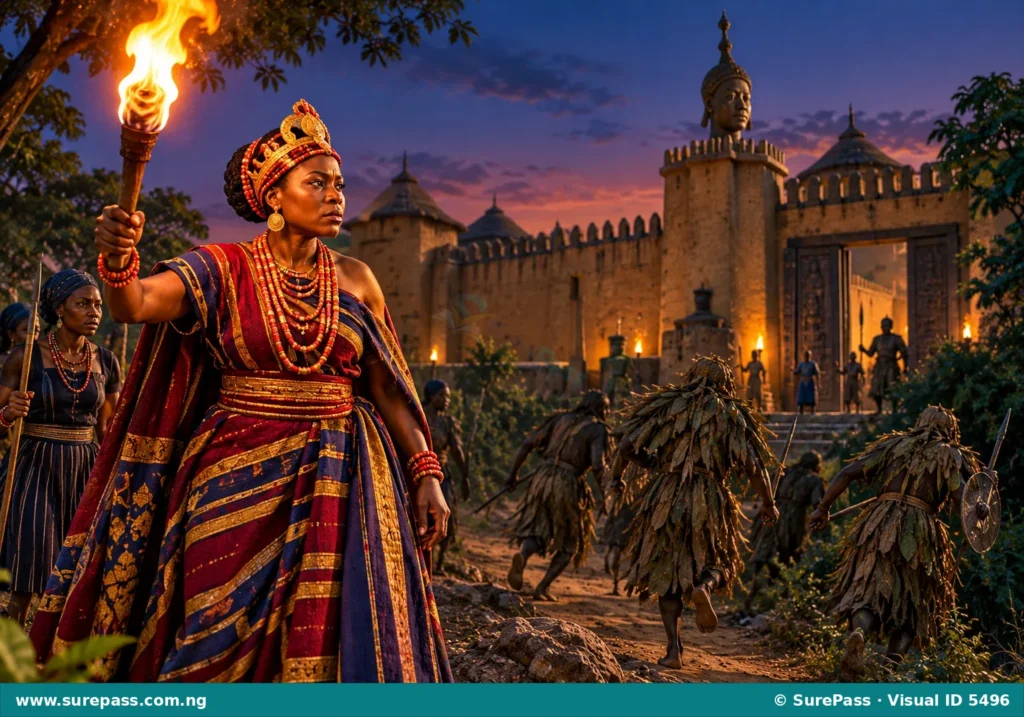
The moral lesson of this legend is that leadership requires selflessness, courage, and sacrifice for the collective good of the community.
A Non-African Myth: Pandora’s Box (Greek Myth)
In ancient Greek mythology, Pandora was the first human woman created by the gods. Zeus, the king of the gods, gave Pandora a beautiful box as a gift but strictly warned her never to open it. For a long time, Pandora resisted the urge, but her curiosity eventually grew too strong. One day, she lifted the lid of the box. Immediately, all the evils, diseases, pain, and sorrows of the world flew out, spreading across the earth. Terrified, Pandora quickly closed the lid, but it was too late. However, one thing remained at the very bottom of the box: Hope.
The moral lesson of this myth is that disobedience and uncontrolled curiosity can lead to harmful consequences, but even in the darkest times, hope remains to help humans endure suffering.
A Non-African Legend: Robin Hood (English Legend)
Robin Hood was a legendary outlaw and highly skilled archer who lived in Sherwood Forest in Nottinghamshire, England. During a time when the poor were heavily taxed and oppressed by the cruel Sheriff of Nottingham, Robin Hood formed a band of followers known as the “Merry Men.” He fought against injustice by robbing the wealthy nobles and corrupt officials who passed through the forest, and distributing the money to the starving peasants. He became a hero to the common people and a symbol of justice.
The moral lesson of this legend is that people should stand up against oppression and show compassion to the poor and needy.
Storytelling Techniques: How to Narrate Myths and Legends
Storytelling is an active performance. To retell a myth or legend effectively, a narrator must engage the audience and bring the characters to life.
The procedure for narrating a story effectively involves the following steps:
- Understand the Plot: Memorise the key events of the story from the beginning, through the middle, to the end. Do not try to memorise every word; instead, focus on the sequence of events.
- Use Vocal Variety: Change the pitch, volume, and speed of the voice to match the characters and the mood. Use a deep, booming voice for a giant or a god, and a soft, gentle voice for a frightened character.
- Incorporate Body Language: Use hand gestures, facial expressions, and body movements to show action. For example, mimic the act of shooting an arrow when describing Robin Hood, or look around fearfully when describing Pandora opening the box.
- Maintain Eye Contact: Look directly at the audience to keep them engaged and to make them feel part of the story.
- Use Repetition and Songs: Many African tales include short songs or chants. Sing these parts clearly and encourage the audience to join in the chorus.
- State the Moral Lesson: Always conclude the narration by explaining the lesson that the audience should learn from the story.
Summary of Key Points
The main concepts covered in this unit include:
- Myths are sacred stories about gods and the origins of the world, while legends are stories about historical human heroes whose deeds have been exaggerated over time.
- The key features of myths and legends are supernatural figures and superstitious beliefs.
- Major themes include heroism, sacrifice, good versus evil, and the consequences of pride.
- African examples include the Yoruba Creation Myth and the Legend of Moremi, while non-African examples include the Greek myth of Pandora’s Box and the English legend of Robin Hood.
- Effective storytelling requires vocal variety, body language, eye contact, and a clear moral lesson.
Evaluation Exercises
Answer the following questions to test your understanding of the unit:
- Define the term “myth” and give one example of an African myth.
- Define the term “legend” and give one example of a non-African legend.
- Identify and explain two major features of myths and legends.
- Based on the legend of Moremi Ajasoro, explain the theme of sacrifice and state the moral lesson of the story.
- What is the main difference between the characters found in myths and those found in legends?
- List three techniques that a storyteller should use to make a narration interesting to an audience.



0 comments
Open the discussion when you need it. Comments stay collapsed until requested so the initial article remains light.