



ARTICLE CONTENTSOn this page 8 sections
Introduction to Literature
Performance Objectives
By the end of the lesson, students should be able to:
- explain the meaning of literature as well as the genres (prose, drama and poetry);
- identify types of literature (oral & written);
- explain ways literature reflects different aspects of life.
Meaning of Literature
Literature is any written or spoken work of art that uses language to express human ideas, feelings, experiences and imagination.
The word “literature” is derived from the Latin word “littera”, which means a letter of the alphabet. Originally, this referred to written records or letters. Over time, the meaning expanded to include spoken stories, songs and performances. Literature is not just about writing down facts; it is a creative way of using language to paint pictures with words, tell stories, share emotions and teach important lessons about the world.
Through literature, writers and storytellers capture the experiences of individuals and societies. It serves as a record of human thoughts and actions across different times and places.
The Three Major Genres of Literature
Literature is divided into three main categories, which are known as genres. Each genre has its own unique structure, style and purpose.
The three major genres of literature are:
- Prose
- Drama
- Poetry
1. Prose
Prose is a genre of literature that is written in continuous, ordinary language using sentences and paragraphs.
Unlike poetry, prose does not follow a strict rhythmic pattern or line structure. It is the closest genre to everyday spoken language. Prose is used to tell stories, describe events or explain ideas in detail. It is divided into two main categories: fiction (stories created from the imagination, such as novels and short stories) and non-fiction (factual accounts of real events, such as biographies and histories).
Examples of prose works include novels, novellas, short stories, essays and biographies.
2. Drama
Drama is a genre of literature that is written in dialogue and is intended to be performed on a stage by actors.
A work of drama is commonly called a play. Instead of using a narrator to tell a story, drama relies on characters speaking directly to one another. It contains stage directions, which are instructions written in brackets to guide the actors on how to move, speak and express emotions. Drama is divided into acts and scenes, which represent different parts and locations of the story.
Examples of drama include tragedies (sad plays), comedies (humorous plays) and tragicomedies (plays that combine both sad and happy elements).
3. Poetry
Poetry is a genre of literature that uses imaginative language, rhythm and imagery arranged in lines and stanzas to express deep feelings and ideas.
Poetry is highly concentrated and musical. Poets choose words carefully for their sounds and meanings. Instead of sentences and paragraphs, poetry is written in lines and groups of lines called stanzas. It often uses figurative language, such as similes and metaphors, to create vivid mental pictures for the reader.
Examples of poetry include songs, ballads, lyrics, odes and traditional praise poems.
Types of Literature
Literature is broadly classified into two major types based on how it is created, preserved and shared with an audience.
The two major types of literature are:
- Oral Literature
- Written Literature
1. Oral Literature
Oral literature is literature that is preserved and passed down from one generation to another by word of mouth.
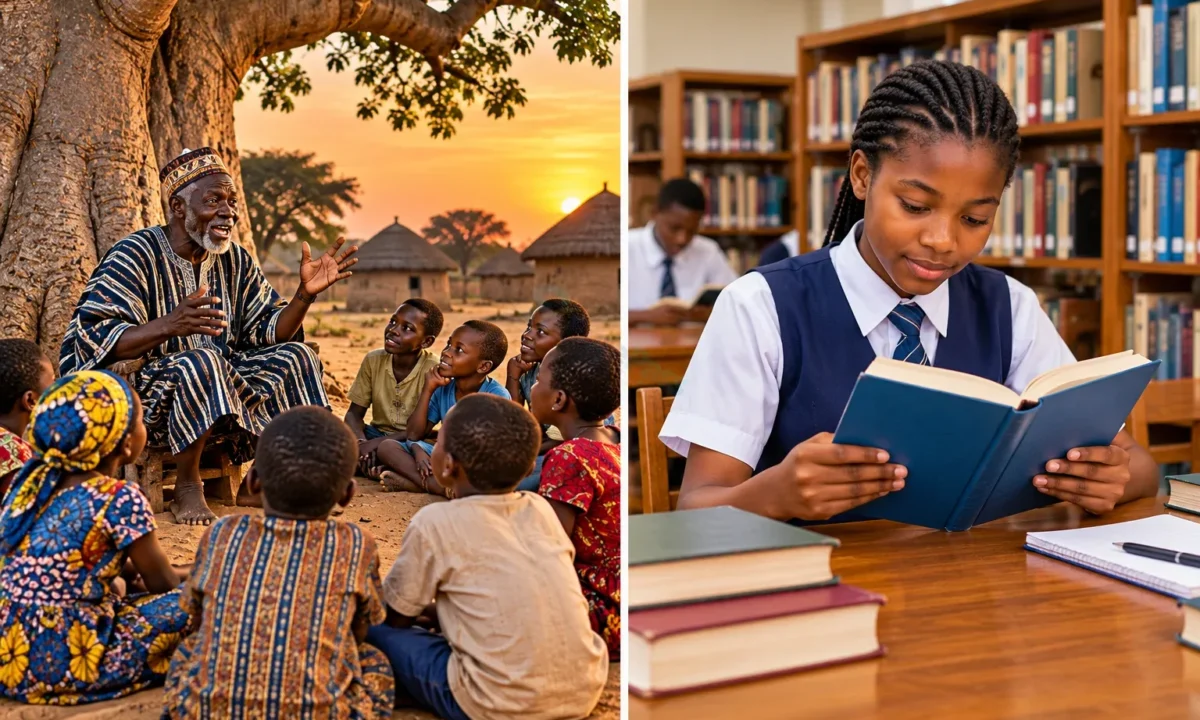
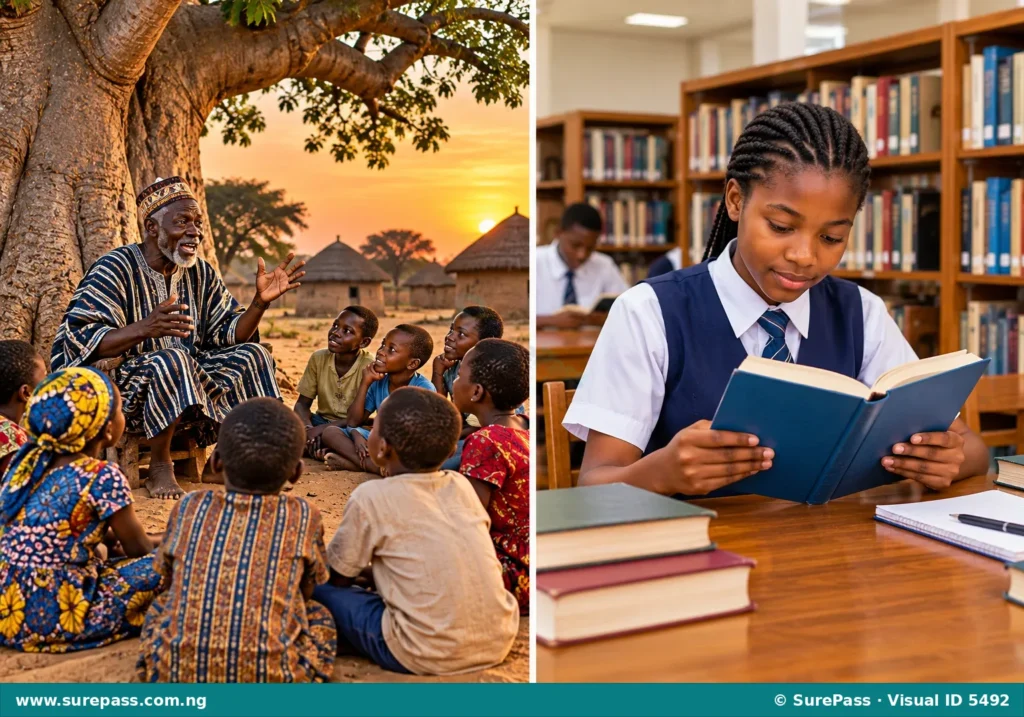
This is the oldest type of literature, existing long before writing systems were invented. It relies on spoken words, performance, gestures and facial expressions. In many traditional African societies, oral literature is shared during evening gatherings around a fire or in a village square. The storyteller, often an elder, performs the story, and the audience participates by singing, clapping or answering riddles.
Common forms of oral literature include:
- Folktales (traditional stories about animals or humans that teach moral lessons);
- Myths (stories that explain the origins of the world, gods or natural phenomena);
- Legends (stories about historical heroes and great deeds);
- Proverbs (short, wise sayings that express truth or advice);
- Riddles (word puzzles designed to test the cleverness of the listener);
- Traditional songs and chants.
2. Written Literature
Written literature is literature that is recorded in printed or digital form using letters, words and symbols.
This type of literature emerged with the development of writing systems. Unlike oral literature, which can change slightly each time it is retold, written literature is permanent and remains exactly as the author wrote it. It allows stories and ideas to travel across great distances and survive for centuries without being altered. Written literature is usually created by a single, identifiable author.
Common forms of written literature include:
- Novels and short story collections;
- Published plays and scripts;
- Poetry anthologies;
- Biographies, autobiographies and memoirs.
Ways Literature Reflects Different Aspects of Life
Literature is often described as a mirror of society. This means that literature reflects the real-world experiences, beliefs, struggles and triumphs of human beings.
Literature reflects different aspects of human life in the following ways:
- Reflecting Culture and Tradition: Literature documents the customs, festivals, food, clothing, language and religious beliefs of a group of people. By reading stories from different parts of Nigeria or the world, readers learn how different societies live, celebrate and worship.
- Teaching Morals and Values: Many literary works, especially folktales and children’s stories, are designed to teach lessons about right and wrong. They show the consequences of greed, laziness, dishonesty and pride, while rewarding virtues like honesty, hard work, respect and kindness.
- Recording History: Writers often base their stories on real historical events, such as wars, migrations, political changes and social struggles. Literature helps preserve the memory of these events, allowing modern readers to understand how people lived and felt during those times.
- Addressing Social Issues: Literature highlights the problems within a society, such as poverty, corruption, injustice, discrimination and inequality. By exposing these issues, writers encourage readers to think critically about their environment and work toward positive change.
- Expressing Human Emotions: Literature captures the universal feelings that all humans experience, such as love, joy, grief, fear, anger and hope. Reading about a character who faces similar emotional struggles helps individuals feel understood and connected to the rest of humanity.
Summary
Literature is a creative expression of human life through language. It is divided into three main genres: prose (written in paragraphs), drama (written in dialogue for performance) and poetry (written in rhythmic stanzas). Based on how it is preserved, literature exists as either oral literature (passed down by word of mouth) or written literature (recorded in print). Ultimately, literature serves as a powerful mirror that reflects culture, history, morals, social issues and human emotions, helping people understand themselves and the world around them.
Evaluation Guide
Answer the following questions to review the lesson:
- Define literature in your own words.
- Identify and explain the three major genres of literature.
- What is the main difference between oral literature and written literature?
- List three examples of oral literature.
- Explain three ways in which literature reflects different aspects of human life.




0 comments
Open the discussion when you need it. Comments stay collapsed until requested so the initial article remains light.